We frequently hear the term oncology in health discussions, news media, or hospital settings. In those moments, it is natural to wonder about its exact meaning, scope, and the different branches that compose it to confront one of the most complex conditions in modern medicine.
What Is Oncology?
If you are looking for the definition of oncology, it is the branch of medicine and science dedicated to studying cancer at all its stages. Therefore, cancerology or oncology is not limited merely to designing treatment schemes; its scope covers a continuous process that includes prevention, timely diagnosis, definitive treatment, controlling disease progression, follow-up care, and comprehensive patient support.
The specialist in this field, the oncologist, actively participates from the initial suspicion of a tumor, coordinating efforts with other healthcare professionals to determine the extent of the condition and ensure that every stage of care meets strict clinical standards.
What Does Oncology Study?
Within medicine, oncology is an exceptionally broad specialty. To understand what oncology studies, it is necessary to look beyond treatment and break down its primary subjects of study and research:
- Cancer as a disease: Its causes, cellular-level mechanisms of development, and risk factors.
- Tumor behavior: The difference between benign and malignant formations, as well as their capacity to spread (metastasis).
- Diagnostic methods: The development and application of advanced tools to accurately identify tumor cells.
- Treatment options: The continuous evaluation of clinical, surgical, and technological therapies to combat the disease.
- Patient progress: Monitoring response to treatment and quality of life during and after the oncological process.
- Prevention and early detection: Screening strategies (such as mammograms or check-ups) to identify anomalies before clinical symptoms appear.
Clinical Oncology and Medical Oncology: What Is the Difference?
In current medical vocabulary, it is common to encounter the terms clinical oncology and medical oncology, which can cause confusion for patients. Although in some institutions or countries they are used almost synonymously, there is a distinction in their primary focus that is valuable to know.
On one hand, clinical oncologists focus on the overall management and comprehensive care of the cancer patient. This specialist evaluates the patient holistically, coordinates the diagnosis, formulates the general strategy alongside other physicians, and oversees long-term follow-up.
On the other hand, medical oncology refers more specifically to the active treatment of the disease through systemic therapies—that is, medications that travel throughout the body to destroy cancer cells. What truly matters for the patient is not the academic discussion of these terms, but rather understanding which specialist participates in each stage of their diagnosis, treatment, and follow-up.
Types of Oncology
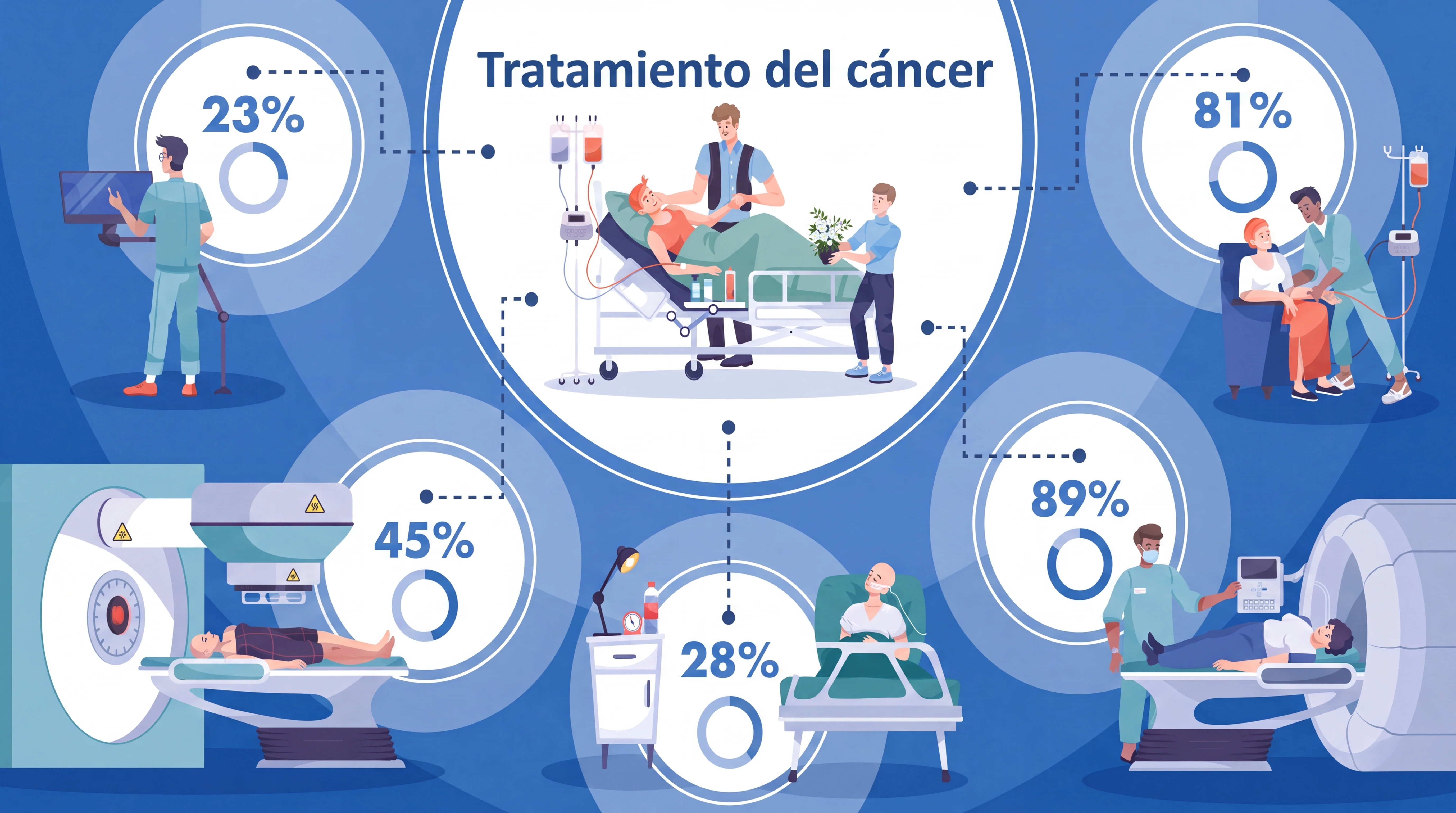
The complexity of cancer requires medicine to be divided into subspecialties dedicated to addressing specific treatment modalities or particular patient profiles. The following table outlines the main types of oncology and their fields of action:
Type of Oncology |
Focus |
Examples of Intervention |
| Medical Oncology | Systemic treatments acting throughout the entire body. | Chemotherapy, immunotherapy, targeted therapy, hormone therapy. |
Radiation Oncology |
Use of controlled ionizing radiation to destroy tumor cells. | External beam radiation, precision radiation therapy, combined treatments. |
| Surgical Oncology | Diagnosis, staging, or removal of tumors via surgery. | Biopsies, tumor resections, complex oncological surgeries. |
| Pediatric Oncology | Specialized approach to cancer in children and adolescents. | Diagnosis, age-adapted treatment, and pediatric follow-up. |
Gynecologic Oncology |
Diagnosis and treatment of cancers of the female reproductive system. | Ovarian, cervical, endometrial, and vulvar cancers, among others. |
Urologic Oncology |
Cancers of the urinary system (both sexes) and male reproductive system. | Prostate, bladder, kidney, and testicular cancers, among others. |
Why Cancer Care Is Typically Multidisciplinary

No single specialist can or should manage a cancer patient’s entire care plan alone. Because tumor type, clinical stage, anatomical location, and overall patient health vary drastically from person to person, designing a care plan requires multi-specialty collaboration.
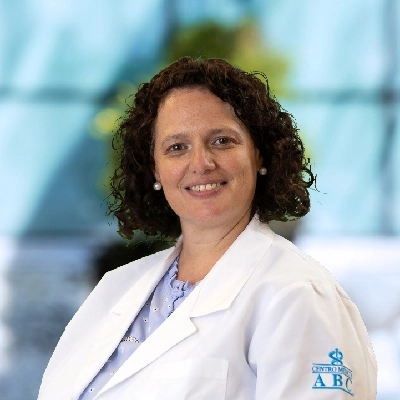
According to Dr. Dolores De La Mata Moya, a radiation oncologist at Centro Médico ABC, cancer treatment involves comprehensive patient care with various specialists: "At our healthcare institution, we have multidisciplinary teams focused on different treatments for this condition," notes the specialist.
In these joint evaluation sessions (known medically as tumor boards), experts in medical oncology, surgical oncology, radiation oncology, pathology, imaging, nuclear medicine, genetics, nutritional support, psycho-oncology, and palliative care may participate. The core goal of this coordinated effort is to make personalized, evidence-based decisions that maximize the chances of success. Furthermore, thanks to current technological advances, there are medical oncologists with organ- or disease-specific subspecialties, such as breast cancer or lung cancer.
Cancer Care at Centro Médico ABC
The care model at the Cancer Center of Centro Médico ABC is designed to ease patient uncertainty from the very first moment. The experience is distinguished by offering a clear, structured path built on the following pillars:
- Comprehensive Evaluation: From the initial consultation or the moment a gastroenterologist, surgeon, or mastologist suspects a lesion, the patient is supported by an interconnected system, allowing the entire process to occur within the same institution.
- Imaging and Molecular Diagnosis: We utilize state-of-the-art technology essential for radiological diagnosis, backed by international accreditations such as those from the American College of Radiology (ACR) in mammography and magnetic resonance imaging, alongside advanced tools for molecular and genetic testing.
- Access to Cutting-Edge Therapies: Patients have access to targeted therapies, specialized genetic testing, and next-generation radiation therapy pioneering in Latin America.
- Multidisciplinary Teamwork and Personalized Follow-Up: Each case is reviewed jointly to offer coordinated, safe, and compassionate treatment pathways at every stage of recovery.
At the Cancer Center of Centro Médico ABC, we can provide specialized care and answer all your questions about oncology, its scope, and the best path forward for your health. Contact us today to schedule an evaluation with our specialists!
Frequently Asked Questions
Fuentes:
Dra. Dolores De la Mata Moya – Radio-oncóloga del Centro Médico ABC
Mayo Clinic, MedlinePlus