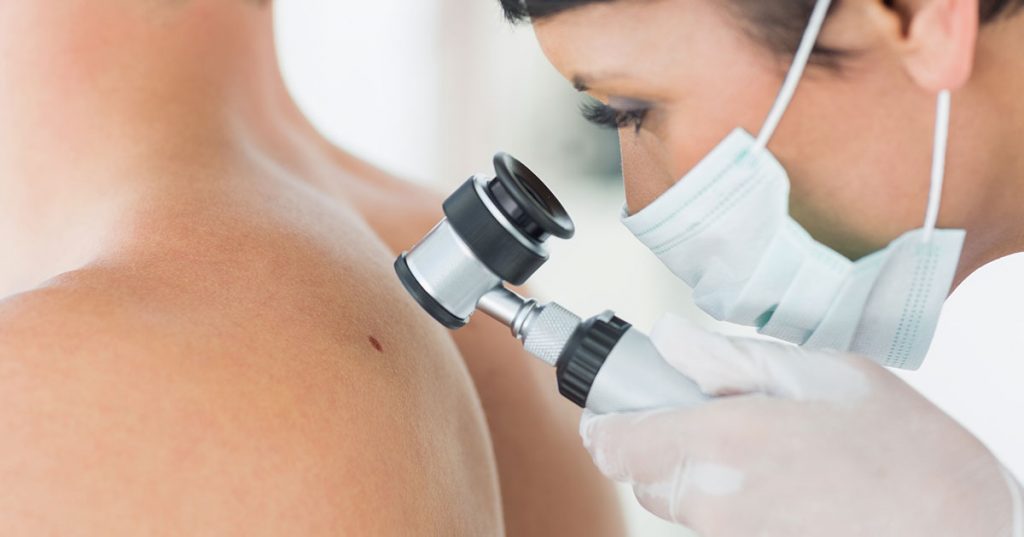
It is important to understand what skin cancer looks like, as one in five people will develop it at some point in their lives, points out Dr. María Eugenia Solloa Roncero, a dermatologist specialist at Centro Médico ABC. When asking what skin cancer is, it is defined as the rapid, abnormal, and disorganized growth of certain cells in the skin.
How Skin Cancer Starts
There are several risk factors that can lead to skin cancer. For instance, men are more prone to developing it, as well as individuals over 50 years old and those with fair skin—though it is important to know that people with darker skin tones can also develop it.
The most significant factor in the development of skin cancer is exposure to ultraviolet (UV) radiation, which can come from direct or indirect sunlight, or from the use of tanning beds. Dr. Solloa notes that while it is common to believe that tanning beds carry no risk, they are actually a recognized factor in the onset of skin cancer.
Genetic changes—especially in patients who have had melanoma or have a family history of it across generations—result in what are known as mutations, which can alter physical characteristics and lead to the development of melanoma.
What Skin Cancer Looks Like
Broadly speaking, skin tumors are divided into three main types:
- Basal Cell Carcinoma: Also known as basalioma, this appears in the basal cells of the skin. It presents as a small bump in various colors—it may look like a tiny pearl on the surface of the skin, have a pinkish or reddish tone, or, in some cases, be slightly more pigmented.
- Squamous Cell Carcinoma (Epidermoid Carcinoma): This type usually presents as an ulcer on the surface of the skin, like a small sore. It may be covered in scales, taking on a thicker, warty appearance.
- Melanoma: This is the least frequent type of skin cancer, but it is the most feared because it accounts for the majority of skin cancer deaths worldwide. With melanoma, we notice a spot or mole changing as we age. Not every mole indicates melanoma, but if a mole shows uncontrolled growth, sudden changes in shape or color, or lacks symmetry, you should consult a dermatologist.
The ABCDEs of Melanoma
When discussing melanoma, there are five key elements to look for in moles or skin cancer spots. This is known as the ABCDE of melanoma, explains Dr. Solloa:
- Asymmetry: Normally, moles—regardless of their shape—are symmetrical if you divide them into quarters. If a mole has uneven areas or loses its symmetry, it raises suspicion for melanoma.
- Border: Unlike a normal mole with a clearly defined outline, a melanoma border often features small notches, jagged edges, or irregularities.
- Color: Varied coloration is another key sign. A normal mole typically has one or two shades, whereas melanoma can feature multiple colors, including light brown, dark brown, blackish, grayish, or even bluish areas.
- Diameter: Conventional moles generally have a diameter under 6 millimeters. Any lesion exceeding this size should be evaluated for melanoma.
- Evolving: Evolution refers to changes in the mole over time. You may have had a mole since childhood that grew proportionally as you grew, which is normal if stable. However, if growth happens abruptly, or if a new mole changes shape rapidly, you should see a dermatologist for an evaluation.
Understanding these characteristics helps identify what skin cancer looks like and ensures early medical evaluation if you notice anything unusual, such as new spots or growths.
How to Prevent Skin Cancer
"There is a widespread belief that if we stay in an office or at home all day, we don’t need sunscreen," says Dr. Solloa. "However, windows in homes and workplaces allow sunlight to pass through constantly, which is why daily sunscreen application is essential."
If your daily routine involves working outdoors, in agriculture, or on construction sites, protecting your skin with a sun protection factor (SPF) of 50 or higher is even more critical.
How often you should apply sunscreen depends on your daily activities:
- Low/No direct exposure: Applying it once a day may be sufficient.
- Outdoor exposure: Reapplication should occur roughly every four hours.
- Water or sweat exposure: If your activities involve constant contact with water (pools or the beach), sweating, or frequent wiping of the skin, reapply every two hours—or whenever you feel the sunscreen has worn off.
Additionally, clothing is a powerful defense against sun exposure. Using hats, long pants, sleeves, sunglasses, and other accessories helps protect as much skin as possible, allowing you to reserve sunscreen for areas left exposed by fabric.
At the Cancer Center at Centro Médico ABC, we provide specialized care. Contact us today!