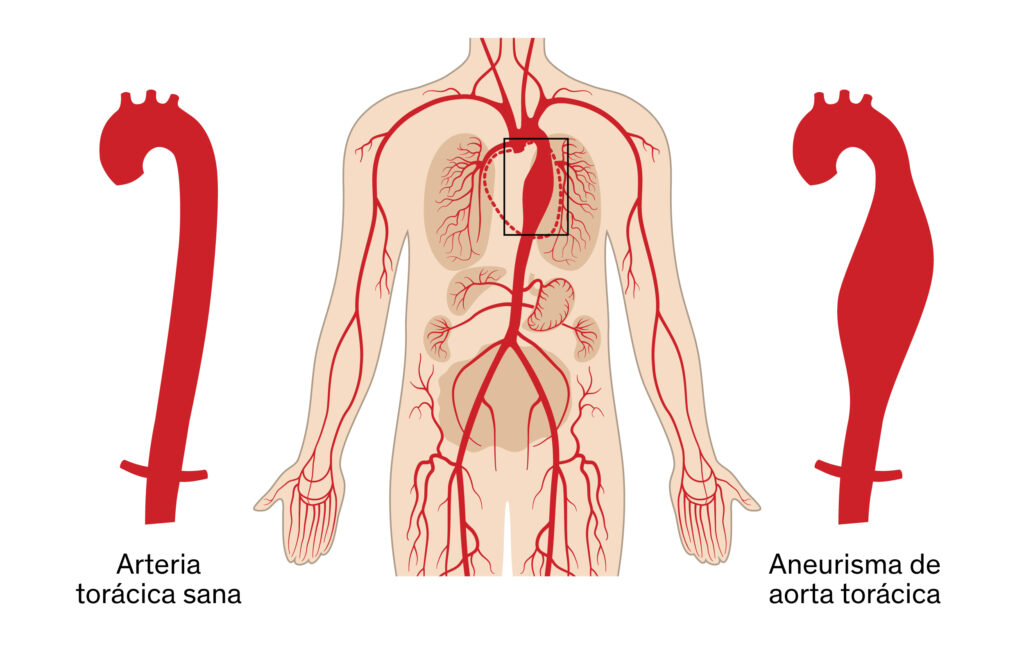
A thoracic aortic aneurysm is known as an abnormal dilation in a section of the aorta located in the chest, presenting a health risk if not treated in time.
Abdominal Aorta
The abdominal aorta is the portion of the aorta that descends through the abdomen, stretching from the diaphragm to its bifurcation into the common iliac arteries. Its primary function is to transport oxygen-rich blood to the abdominal organs, pelvis, and lower extremities through a continuous, high-pressure blood flow.
Because abdominal aortic aneurysms typically develop silently without symptoms, it is important to identify related risk factors and treat this condition as early as possible.
Risk Factors for Aortic Aneurysms
Thoracic aortic aneurysms are generally very rare, though about 20% of cases are linked to family history. The risk may also be higher in individuals with certain genetic syndromes, such as Marfan syndrome, Ehlers-Danlos syndrome, or Turner syndrome.
Additionally, the risk increases with age, smoking, and high blood pressure.
Symptoms of an Aneurysm
Symptoms are generally absent, and this type of condition is usually discovered incidentally.
On occasion, an aneurysm can cause hoarseness or difficulty swallowing; pain occurs only very rarely.
Aneurysm Treatments
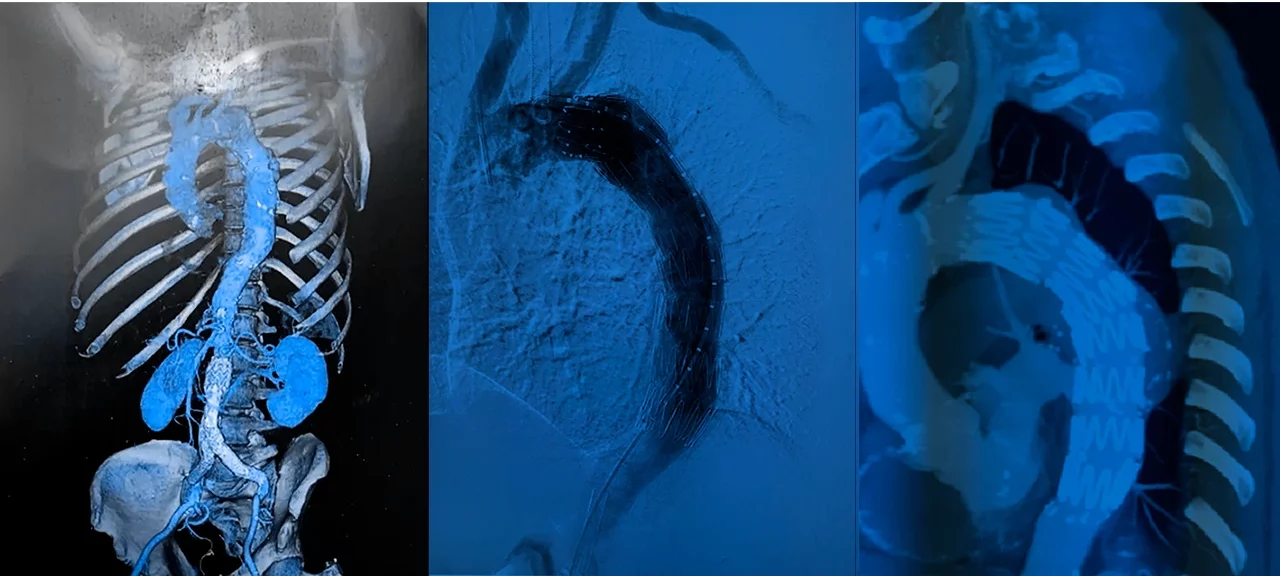
Small aneurysms generally require monitoring with general imaging studies every six to twelve months, depending on their size. Follow-up studies typically include CT scans and magnetic resonance imaging (MRI).
Treatment is necessary when the aneurysm reaches approximately 5 cm, as the risk of rupture increases significantly beyond this diameter.
In most cases, an ascending thoracic aortic aneurysm requires open surgical repair.
A descending thoracic aortic aneurysm can generally be treated using endovascular techniques. It is worth noting that technological advancements now allow many ascending aortic and aortic arch aneurysms to be treated using endovascular approaches as well.
At the Vascular, Arterial, and Venous Disease Center at Centro Médico ABC, we provide specialized care. Contact us today!