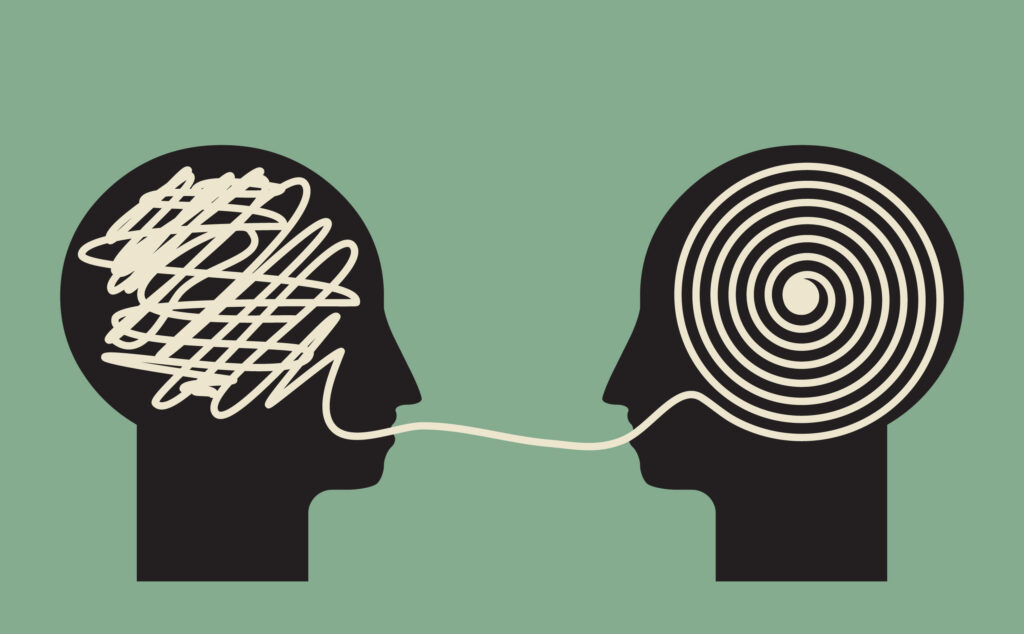
The different types of aphasia are classified based on the area of the brain affected, as well as the specific symptoms the patient presents.
All human beings rely on two primary, interconnected brain regions for language processing: Broca’s area and Wernicke’s area. Together, these regions enable us to understand and produce language.
What Is Aphasia?
Aphasia refers to any language disorder resulting from damage to the cerebral cortex. It primarily presents in two forms:
- Expressive Aphasia: Patients struggle to find the right words when speaking.
- Receptive Aphasia: Patients have difficulty understanding spoken language and, consequently, following instructions.
In general, Broca’s aphasia (also known as motor aphasia) is characterized by difficulty speaking or forming complex sentences, even though language comprehension remains relatively intact. On the other hand, Wernicke’s aphasia is characterized by fluent but incoherent speech, alongside significant difficulty understanding both spoken and written language.
Dr. Paul David Uribe Jaimes, clinical neurologist and head of neuroscience education at Centro Médico ABC, points out that aphasia is not a disease in itself, but rather a symptom of damage to language-producing areas of the brain.
The most common cause of aphasia is a cerebrovascular event (stroke)—either an ischemic stroke or a hemorrhage—occurring in the left hemisphere of the brain, where language processing typically resides. Head trauma can also cause aphasia, and in rarer cases, neurodegenerative diseases may be the underlying cause.
Difficulty Speaking or Understanding
In expressive aphasia, patients often struggle to name objects, as if their internal mental dictionary were misplaced. This can lead to substituting the name of one object for another or using entirely wrong words. Grammatical incoherence and scrambling word order are also common symptoms.
In receptive aphasia, patients may appear confused because their answers do not align with the questions asked. While their speech may sound fluid and grammatically correct, their inability to comprehend input can easily be mistaken for general confusion.
The speed at which these symptoms develop depends on the underlying cause. A sudden onset of speech difficulty often signals a stroke (ictus), which requires emergency medical attention.
Brain damage can also result in a subtype known as conduction aphasia, where an individual experiences significant difficulty repeating words or phrases despite understanding what is said.
Dysphasia vs. Aphasia
"Dysphasia" and "aphasia" are related terms referring to language disorders caused by brain damage, though their usage varies.
While aphasia refers to the loss or impairment of language function following brain injury, dysphasia is a term more frequently used in European medical contexts to describe a milder form of language impairment.
Aphasia as a Medical Emergency
Most cases of aphasia occur suddenly as a result of a stroke. A person may abruptly lose the ability to express themselves or understand others.
Dr. Uribe emphasizes that if someone shows signs of language impairment, they should be taken to an emergency department immediately. Prompt medical intervention is essential to minimize potential long-term or permanent brain damage.
Strictly speaking, aphasia cannot be "cured," but it can be rehabilitated—a crucial distinction for patients to understand. Early, targeted speech and language therapy helps individuals regain lost skills under the guidance of a specialist.
While recovery timelines vary depending on the individual, the underlying cause, and the extent of brain injury, patients who participate in speech therapy consistently see improvements in their communication abilities. Untreated aphasia offers the poorest prognosis, making early intervention critical for recovery.
At the Physical Medicine and Rehabilitation Department at Centro Médico ABC, we provide specialized care. Contact us today!