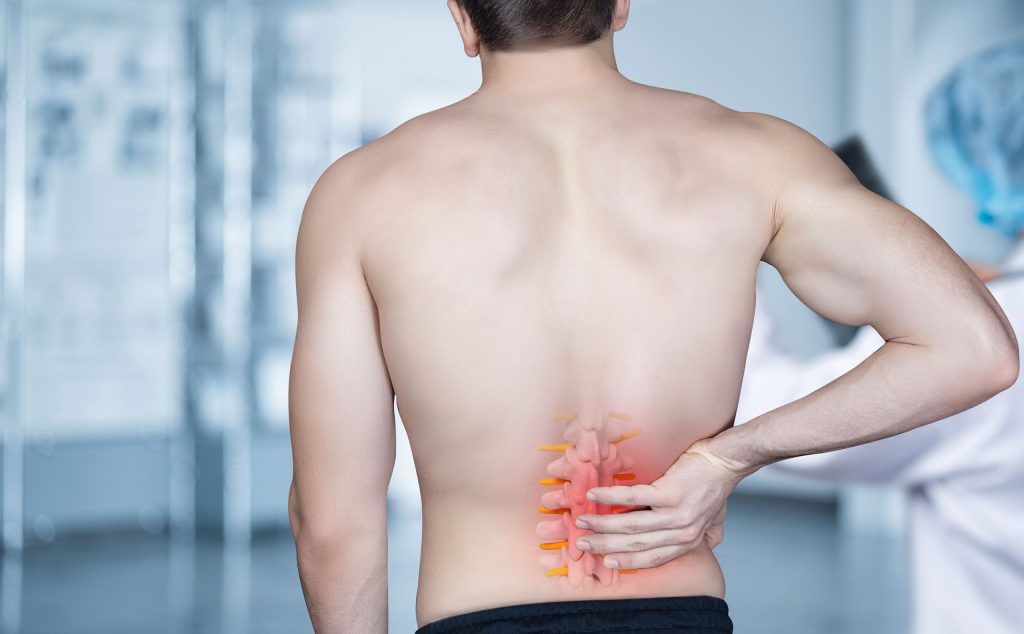
Multiple spine conditions can affect both the function and health of the spine. Consequently, various medical procedures have been developed to treat these ailments.
Spine Conditions and Diseases
The spinal column is composed of three main segments comprising 33 total vertebrae: seven cervical, 12 thoracic (dorsal), five lumbar, five sacral, and four coccygeal. It also includes intervertebral discs, muscles, and ligaments that work together to facilitate movement.
Among its many demands, the spine must support the head, shoulders, and upper body. It provides the support needed to stand upright, the flexibility to bend and twist, and protection for the spinal cord.
Because it is such a complex structure, various issues can alter its framework or injure the vertebrae and surrounding tissue. These injuries frequently cause pain or limit mobility.
Scoliosis
Scoliosis is one of the most complex spine conditions, characterized by a progressive deformity of the spine. There are different types of scoliosis, which are often accompanied by other associated conditions such as herniated discs, facet arthropathy, or lumbar spinal stenosis. Treatment requires advanced spine surgery techniques.
- Juvenile Scoliosis: Occurs when spinal deformity develops early in life. Due to marked and excessive curvature, it can progress rapidly enough to compromise the abdominal or thoracic structures. Like adult scoliosis, advanced surgical techniques are required to prevent complications.
Herniated Disc
Intervertebral discs—composed of a gel-like nucleus and a fibrous collagen ring—act as shock absorbers for the weight supported by the spine. Together with joints, ligaments, and spinal muscles, they allow movement in various directions.
Disc wear occurs naturally with aging and stems from the stress of upright walking. This process can be accelerated by excess body weight, high-impact sports (such as running or heavy lifting), smoking, and genetics.
Herniated discs can be asymptomatic or cause pain in the lumbar, cervical, or thoracic regions. Other symptoms include numbness, tingling, weakness, or radiating pain in the limbs. If symptomatic herniated discs do not improve with pain management, invasive procedures or surgery may be required to relieve symptoms and restore quality of life.
Low Back Pain (Lumbalgia)
Lumbalgia refers to pain localized in the lumbar region (lower back and waist), often radiating to the buttocks and thighs. It typically occurs after significant physical effort combined with poor posture. It usually presents as sudden lower back pain that worsens when bending or standing up and eases with rest.
Spondylolisthesis
This condition occurs when one vertebra slips forward over another—an abnormal movement that disrupts spinal alignment. It can lead to neurological compression, affecting nerve roots or, in severe cases, the spinal cord itself. Treatment requires a deep understanding of spinal biomechanics, neurological structures, and the involved joints.
Radiculopathy
Radiculopathy produces pain or weakness along the path of a nerve in the cervical, lumbar, or thoracic regions. Most commonly, it is caused by a herniated disc compressing a nerve root where it exits the spine. Less frequently, it may result from tumors, viral infections, or other causes. It is classified as cervical, lumbar, or thoracic radiculopathy depending on the location.
Neck Pain (Cervicalgia)
Any pain located in the cervical region is known as cervicalgia. This symptom can stem from a wide variety of conditions, including cervical facet arthropathy, herniated discs, whiplash, post-traumatic neck pain, cervical sprains, or cervical spondylotic myelopathy. Any form of cervicalgia should be evaluated by a neurosurgeon or orthopedic specialist in spine surgery.
Cervicobrachialgia
Cervicobrachialgia refers to neck pain that radiates into the shoulders, arms, or upper back as a result of irritation or compression of the cervical nerve roots that form the brachial plexus. It is usually caused by a herniated disc compressing a nerve root where it exits the spine toward the upper limb. This common condition can significantly reduce quality of life and cause disability.
Lumbar Stenosis
Lumbar stenosis (narrowed lumbar spinal canal) occurs when the canal through which the spinal cord and nerve roots pass becomes constricted due to degenerated discs, facet joint enlargement, or thickening of the ligamentum flavum. The resulting pressure on nerve roots causes pain, numbness, or weakness when walking. While symptoms often improve after sitting for a few minutes, severe cases can lead to urinary incontinence.
Cervical Stenosis
Cervical stenosis (narrowed cervical spinal canal) occurs when the passage for the spinal cord and nerve roots is narrowed by disc degeneration, facet joint arthropathy, thickening of the ligamentum flavum, or ossification of the posterior longitudinal ligament.
This compression can affect the nerve roots and may even damage the spinal cord itself. Symptoms may include upper limb weakness, progressive weakness in the limbs that can lead to quadriplegia, or breathing difficulty due to phrenic nerve involvement.
Lumbar Sciatica (Lumbosciatica)
Lumbosciatica is lower back pain that radiates down the leg due to compression or irritation of the sciatic nerve or its root fibers—most commonly caused by a herniated disc. It is a very common issue that diminishes quality of life and can lead to mobility impairment.
Tethered Cord Syndrome and Congenital Malformations
These represent a diverse group of malformations, including tethered spinal cord, neuronal migration defects (such as myelomeningocele or meningocele), and structural deformities caused by missing or malformed vertebrae (such as spina bifida occulta, diastematomyelia, or spinal curvature defects). When these conditions manifest very early in life, they severely impact patient quality of life.
Spinal Cord and Vertebral Tumors
Although spinal tumors are an infrequent reason for consultation, medical evaluation and follow-up are critical due to their prognosis. Most spinal tumors are metastases from cancers in other organs (such as prostate, breast, or lung). However, primary bone tumors (like chordomas) also occur.
Additionally, tumors can originate within the central nervous system (astrocytomas or ependymomas) or the peripheral nervous system (schwannomas or nerve sheath tumors).
Cervical Spondylotic Myelopathy
This condition is characterized by compression of the spinal cord and cervical nerve roots caused by surrounding degenerated structures. These may include calcified intervertebral discs (bone spurs), thickened facet joints, ossification of the posterior longitudinal ligament, or buckling of the ligamentum flavum.
Symptoms can include weakness in the upper or lower extremities, speech difficulties, breathing issues, and in severe cases, paralysis of the limbs.
Spinal Fractures
Spinal fractures are a common reason for spine surgery consultations:
- Traumatic Fractures: Generally result from high-impact accidents, such as motor vehicle collisions or severe falls, carrying a high risk of permanent complications.
- Osteoporotic Fractures: Result from minor trauma or minimal strain—such as coughing, sneezing, or lifting an object—due to bone density loss in the vertebral bodies.
Because of the wide variety of fracture types, treatment plans vary, with an emphasis on minimally invasive options for faster recovery.
Facet Arthropathy
While the vertebrae form the front of the spine, the back consists of joints, muscles, and ligaments. The facet joints function to allow controlled movement of the spine. Inappropriate or excessive use leads to joint wear and tear, resulting in pain during movement or position changes. It can also cause spinal instability and abnormal motion.
Craniovertebral Instability
The junction between the skull and the first two cervical vertebrae is known as the craniovertebral junction. Unlike the rest of the spine, it possesses a unique, highly wide range of motion. For this reason, it is a critical area of concern when conditions impair safe movement limits.
Instability in this region exposes patients to severe, potentially life-threatening complications, making immediate medical attention essential.
For most of these conditions, treatment requires timely surgical intervention or advanced techniques to restore spinal alignment and maintain stability. Consultation with a neurosurgeon or an orthopedic spine specialist is recommended for an accurate diagnosis and treatment plan.
At the Spine Clinic at Centro Médico ABC, we provide specialized care. Contact us today!