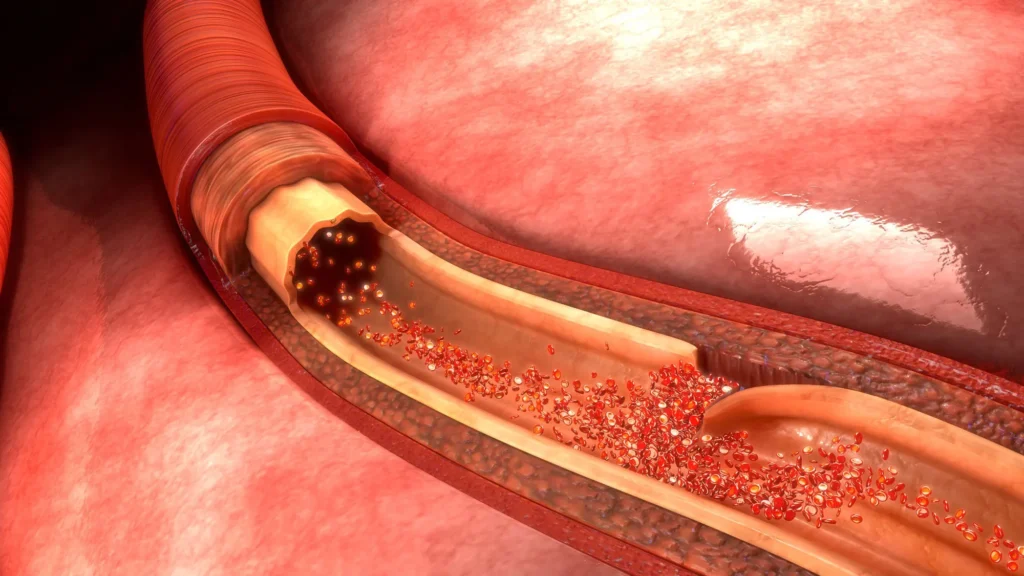
Aortic dissection is a tear that occurs between the inner and middle layers of the aorta; it affects approximately three out of every 100,000 people per year, impacting men and women equally.
What Is an Aortic Dissection?
The aorta is the primary vessel that carries blood from your heart to the rest of your body, and it is made up of three layers.
When an aortic dissection occurs, it can compromise blood flow to vital organs such as the kidneys, liver, intestines, and lower extremities. This lack of blood supply to organs can cause kidney failure, paralysis, and loss of circulation in the legs.
Additionally, an aortic dissection can lead to a rupture of the vessel, resulting in life-threatening bleeding.

Aortic Dissection Symptoms
The primary symptoms are chest pain and back pain. If you experience these symptoms, you must go to a hospital immediately.
While most chest and back pain is not caused by a dissection, this condition can be extremely serious and lead to critical illness or death.
Risk Factors for Aortic Dissection
The main causes include high blood pressure (hypertension), smoking, certain connective tissue disorders, and drug use (such as cocaine).
To reduce the risk of an aortic dissection, it is important to check your blood pressure regularly. If you have hypertension, follow your doctor’s instructions to keep your blood pressure within a normal range, avoid smoking, and refrain from using recreational drugs.
Diagnosis is performed using various imaging techniques, such as a heart ultrasound (echocardiogram), an MRI, or a CT angiography—the latter being the gold standard.
Aortic Dissection Treatments
- Type A Dissection: The tear occurs in the ascending aorta and is considered a medical emergency. Treatment is generally surgical and involves a sternotomy to repair or replace the affected section of the aorta.
- Type B Dissection: Occurs in the descending thoracic aorta, typically distal to the origin of the left subclavian artery. This type of dissection may or may not cause symptoms and does not always require immediate intervention, aside from managing risk factors.
In some cases, a Type B dissection can lead to abnormal expansion of the aorta, resulting in an aneurysm that requires surgical treatment.
At the Vascular, Arterial, and Venous Disease Area at Centro Médico ABC, we provide specialized care. Contact us today!