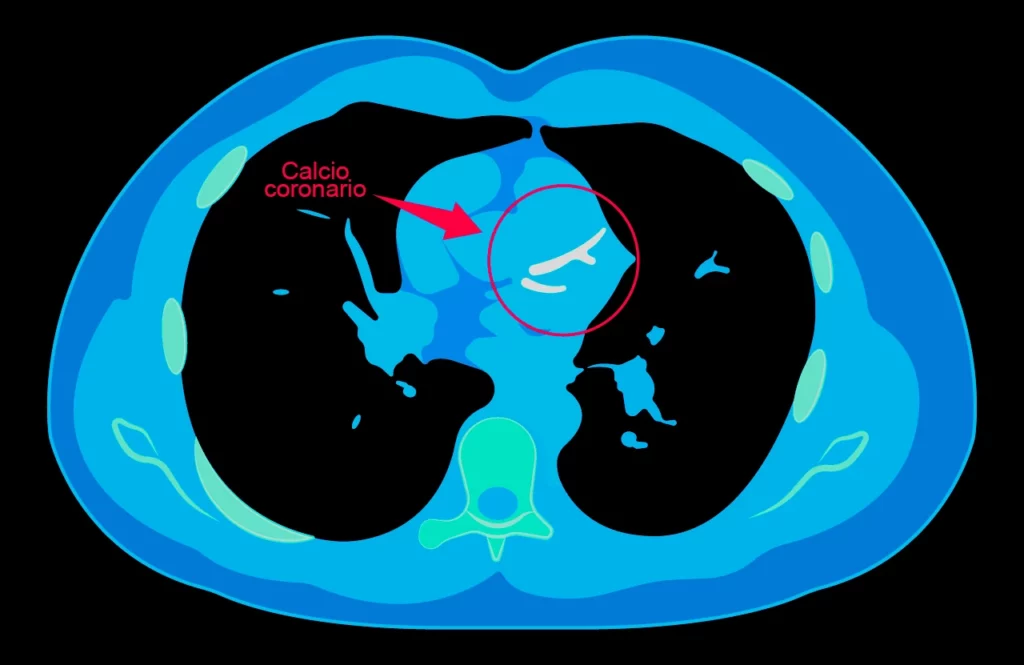
The coronary calcium score is a simple imaging study performed using a CT scan that determines the coronary calcium index.
Coronary Calcium Index
Both in Mexico and worldwide, myocardial infarction (heart attack) is the leading cause of death. Approximately 18 million people die from this cause globally each year, while in Mexico, the figure is around 200,000.
Dr. Enrique Vallejo Venegas, a cardiologist and specialist at the Cardiovascular Center at Centro Médico ABC, points out that knowing the amount of calcium in the coronary arteries allows doctors to detect the presence of atherosclerosis—a buildup of fats, cholesterol, and other substances in and on the artery walls. This condition progresses over time; a higher coronary calcium score indicates greater coronary atherosclerosis, which carries a higher risk of suffering a heart attack.
Coronary Risk Normal Values
Through the CT scan for coronary calcium scoring, doctors can detect whether calcium is depositing in the walls of the arteries. Performing this test in a timely manner makes it possible to identify this buildup and take immediate action to stop it.
After the CT scan, the amount of calcium in the coronary arteries is quantified and categorized into three main tiers:
- Score between 1 and 100: Indicates up to a 5% risk of having a heart attack within the next three years.
- Score between 100 and 300: The probability of suffering a heart attack in the next three years ranges from 5% to 20%.
- Score above 300: Represents a 20% or higher likelihood of having a heart attack in the short term.
This situation is preventable, notes Dr. Vallejo, by seeing a doctor to establish an effective care plan and make lifestyle modifications—halting the disease’s progression and preventing a future heart attack.
Dr. Vallejo highlights four key scenarios where getting a CT scan for coronary calcium scoring is recommended:
- Men over the age of 40.
- Women over the age of 50.
- Individuals who smoke, are overweight, lead a sedentary lifestyle, or live with hypertension, diabetes, or high cholesterol.
- Individuals with a family history of heart attacks at an early age.
At the Cardiovascular Diagnostics Department at Centro Médico ABC, we provide specialized care. Contact us today!
Fuentes:
Dr. Enrique Pablo Vallejo Venegas – Médico especialista en cardiología clínica del Centro Médico ABC
Canal de YouTube CM ABC
Fuentes:
Dr. Enrique Pablo Vallejo Venegas – Physician specializing in clinical cardiology at Centro Médico ABC
CM ABC YouTube Channel