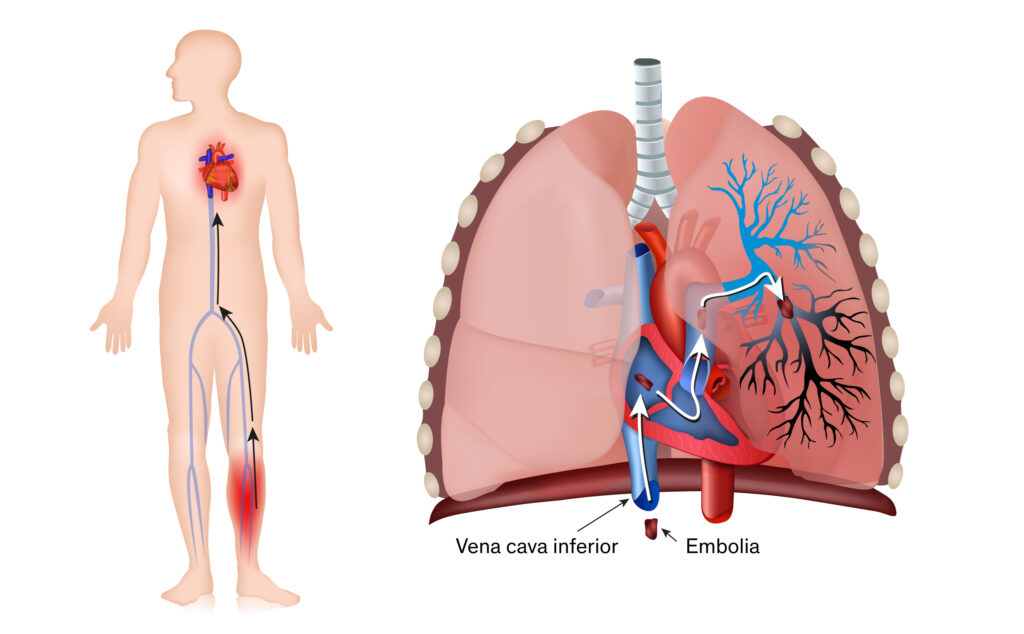
Pulmonary thromboembolism, also known as PTE or pulmonary embolism, is a condition that can be fatal and may present asymptomatically despite its severity.
What Is a Pulmonary Embolism?
Pulmonary thromboembolism is defined as the obstruction of the pulmonary arteries or their branches by a thrombus or blood clot (in the vast majority of cases), fat, air, tumors, or foreign materials originating from another part of the body or from outside it.
Symptoms of Pulmonary Thromboembolism
Pulmonary thromboembolism can be symptomatic or asymptomatic. Chronologically, it can be acute, subacute, or chronic; based on severity, it can be hemodynamically stable or unstable (low blood pressure).
The majority of pulmonary embolisms are caused by thrombi that originate in the lower extremities.
The presentation varies widely, ranging from no symptoms at all to sudden death. The most common symptoms include:
- Shortness of breath
- Chest pain
- Cough
- Symptoms associated with deep vein thrombosis (DVT) in the lower limbs
Diagnosing PTE
Diagnosis is established using clinical probability scores (such as the Wells score), laboratory tests (D-dimer), and imaging studies. Among imaging techniques, the most widely used is CT angiography with a protocol for deep vein thrombosis and pulmonary thromboembolism.
Once pulmonary thromboembolism is diagnosed, necessary measures must be taken to improve signs and symptoms, focusing primarily on hemodynamic stabilization and blood oxygen saturation.
Treatment for Pulmonary Thromboembolism
The cornerstone of treatment for pulmonary thromboembolism is anticoagulation, which must be initiated immediately.
The need for thrombolysis (clot breakdown) using mechanical, pharmacological, or combined techniques should be evaluated. Placing an inferior vena cava filter should also be considered in carefully selected cases.
Pulmonary thromboembolism can lead to complications such as recurrent pulmonary embolisms or cor pulmonale—a condition in which the heart is affected by hypertension within the pulmonary arterial system.
If left untreated, PTE carries a mortality rate of 30%.
Anticoagulation therapy must be maintained for extended periods, ranging from 8 to 18 months.
At the Vascular, Arterial, and Venous Disease Area at Centro Médico ABC, we provide specialized care. Contact us today!