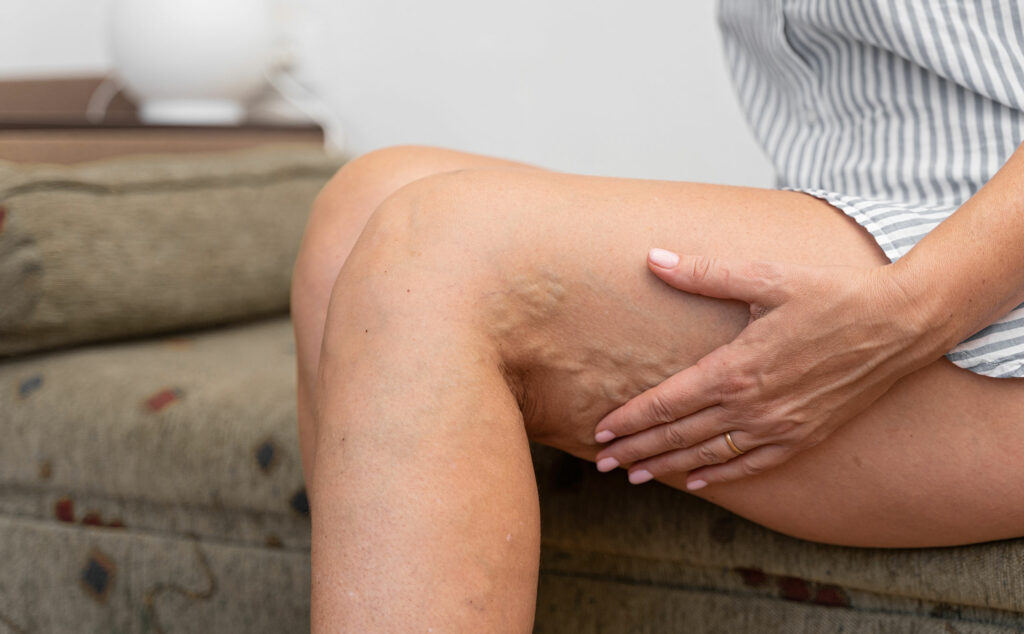
Varicose veins are one of the most common vein diseases, characterized by dilated, twisted veins that usually appear in the legs. Far from being just a cosmetic issue, this is a medical condition that can significantly impact a person’s quality of life.
What Are Varicose Veins?
Varicose veins are abnormal enlargements of the veins, occurring primarily in the legs due to increased venous pressure when standing upright (bipedalism).
Risk Factors for Varicose Veins
Varicose veins are a very common problem that can affect individuals at any age. They occur primarily in people over the age of 50, multiparous women (women who have had multiple pregnancies), smokers, patients with obesity, and individuals with a sedentary lifestyle. More than half of people over 60 have some degree of venous disease in their legs, with telangiectasias (spider veins) and varicose veins being the most common.
In the general population, varicose veins affect between one to three out of every 10 people.
Varicose veins are the most frequent venous disorder for which patients seek medical consultation. While the cosmetic appearance is the primary complaint for most patients, varicose veins are just one stage within a broad spectrum of venous disease—ranging from small visible veins to severe skin ulcers that profoundly affect quality of life.
Symptoms of Varicose Veins
Varicose veins usually appear on the medial (inner) or posterior (back) aspect of the legs (calves).
Many patients do not experience symptoms, or are unaware that their discomfort is related. Notably, the severity of symptoms does not correlate with the size or number of varicose veins present.
Common symptoms include:
- Heaviness
- Warmth or burning sensations
- Itching
- Stabbing pain
- Fatigue
- Other less common discomforts
Unfortunately, most of these symptoms are non-specific, meaning they could be caused by other conditions such as musculoskeletal disorders, nerve compression (such as sciatica), rheumatic diseases, or arterial problems.
Diagnosing Varicose Veins
Diagnosing varicose veins is straightforward and begins with a physical examination in the office. However, the key to a thorough diagnosis is determining the root cause, identifying which specific vein is affected, and ruling out dangerous underlying conditions—such as deep vein thrombosis, venous compression syndromes, or chronic venous reflux.
To confirm the diagnosis and rule out these underlying conditions, a venous Doppler ultrasound is essential. In some cases, more advanced imaging such as CT angiography or MR angiography may be required. Occasionally, an intravascular ultrasound (IVUS) and venography are necessary, both of which allow for simultaneous diagnosis and treatment.
The primary cause of varicose veins in the legs is chronic superficial venous insufficiency with significant venous reflux.
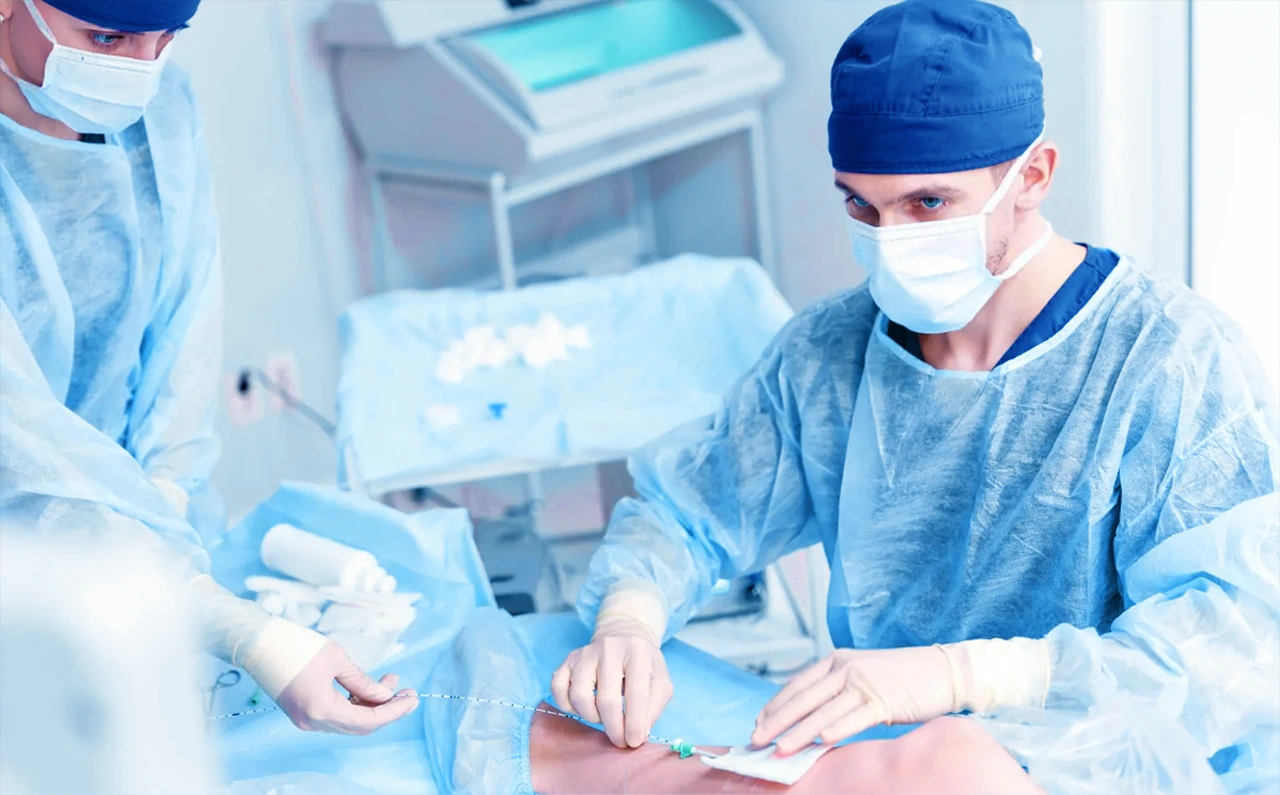
Varicose Vein Treatment
The treatment of varicose veins involves their excision or injection, as well as addressing the primary underlying cause (reflux). This is mainly achieved through two methods: conventional surgery and minimally invasive endovascular procedures.

Sclerotherapy is one of the most widely used methods for eliminating varicose veins. It involves injecting a solution directly into the vein to seal it shut from the inside.
Conventional surgery, or saphenous vein stripping (safenectomy), involves the complete removal of the vein affected by reflux through incisions made at the groin and ankle. This method is used less frequently today.
Minimally invasive surgery can be performed using laser or radiofrequency ablation. Accessing the vein through a single puncture, heat is applied to seal the vein closed from within. This outpatient procedure allows patients to return home the same day. Recovery is remarkably fast—patients can walk right away and return to their daily activities within 24 hours.
At the Vascular, Arterial, and Venous Disease Area at Centro Médico ABC, we provide specialized care. Contact us today!