
Peripheral artery disease is a common circulatory condition in which blood flow to the limbs is reduced.
What Is Peripheral Artery Disease?
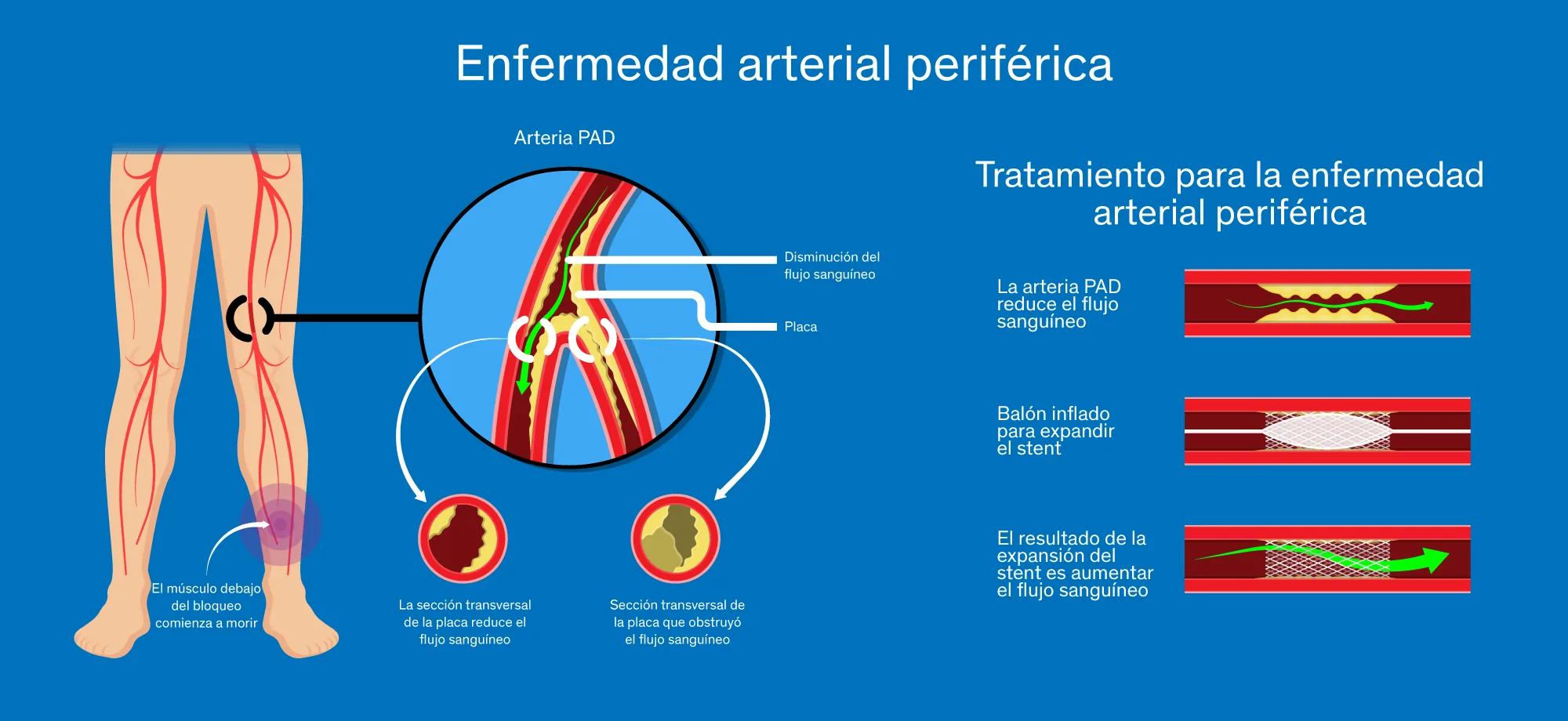
Peripheral artery disease is a chronic condition in which atheromatous plaques and cholesterol build up in the arteries of the limbs, restricting blood flow.
The growth of these plaques is typically gradual.
Peripheral artery disease is common and affects a large number of people. It is most frequent in patients over the age of 65, but it can occur at any age.
Risk Factors for Peripheral Artery Disease
There are multiple risk factors that increase the likelihood of developing peripheral artery disease, including:
- Tobacco use
- High blood pressure (hypertension)
- High cholesterol and triglyceride levels
- Diabetes
- Kidney failure
- Obesity
All of these factors can increase the risk of developing this condition.
Symptoms of Blocked Arteries in the Legs
- Intermittent Claudication: One of the main symptoms of peripheral artery disease, referring to fatigue, tiredness, pain, and cramping in the calf or hip muscles. It typically occurs during physical activity, and as the blockage worsens, symptoms appear at shorter walking distances.
- Rest Pain: Pain in the toes while at rest indicating that the disease is in its advanced stages.
- Non-Healing Wounds: Non-healing ulcers on the toes, heel, or ankle skin are manifestations of this disease.
An ulcer can progress to gangrene; symptoms like these require immediate medical attention.
Diagnosis of Peripheral Artery Disease
Diagnosis initially involves a comprehensive medical history and a thorough physical examination.
Simple tests such as the Ankle-Brachial Index (ABI) involve measuring blood pressure at the arm and ankle and comparing the two values:
- An index of 1.0 is normal, meaning the blood pressure in the arm and leg is equal.
- As the index drops below 1.0, it indicates a greater degree of severe arterial disease.
Other diagnostic tools include:
- Arterial duplex ultrasound of the lower extremities
- CT angiography
- Magnetic resonance angiography (MRA)
- Angiography, a procedure in which contrast dye is injected through a puncture in the leg artery to visualize the site of the blockage.
Treatments for Peripheral Artery Disease
In some cases, treatment can be performed endovascularly by using guidewires and balloons to dilate these lesions, as well as placing a stent when indicated.
How to Prevent Peripheral Artery Disease
Not smoking, exercising regularly, and managing risk factors for conditions such as high blood pressure, elevated cholesterol and triglycerides, and diabetes, as well as losing weight and maintaining a balanced diet low in fat and sodium, are fundamental measures to prevent peripheral artery disease.
At the Vascular, Arterial, and Venous Disease Area at Centro Médico ABC, we provide specialized care. Contact us today!