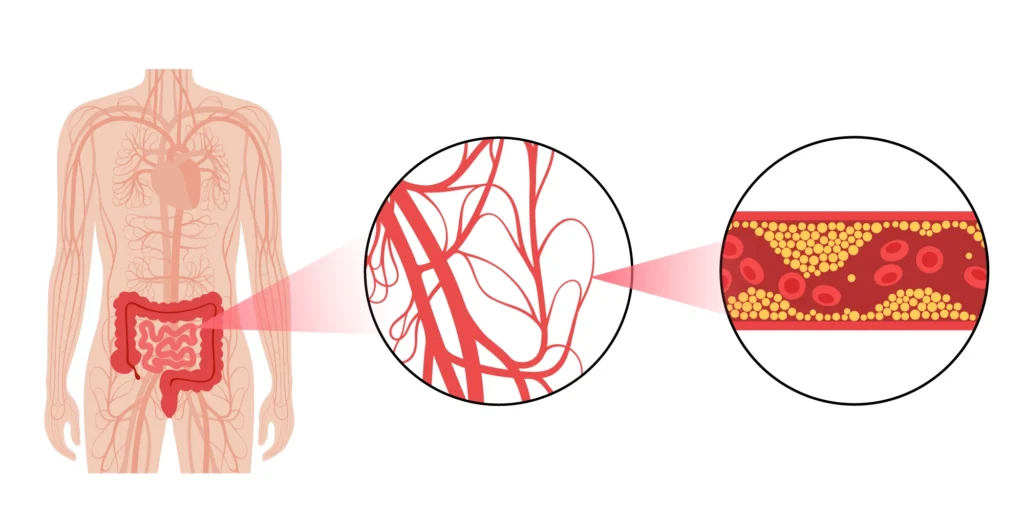
Mesenteric ischemia is a serious medical condition that occurs when blood flow to the intestines is reduced, compromising oxygen supply to the intestinal tissue and potentially causing tissue damage or necrosis if not treated in time.
What Is Mesenteric Ischemia?
It occurs when there is poor circulation in the arteries that carry blood to the mesenteric organs, such as the stomach, liver, colon, and intestines. Any lack of circulation to these organs can severely compromise their function.
Mesenteric Ischemia Symptoms
- Severe Abdominal Pain: This can present as sudden, intense pain, sometimes accompanied by nausea and vomiting.
- Postprandial Pain: The most common symptom is abdominal pain that develops after eating. It typically lasts from 15 minutes to an hour, but can persist for up to two hours. This pain usually occurs after every meal and may be associated with nausea, vomiting, or diarrhea.
- Progressive Weight Loss: Patients often experience weight loss because fear of the pain leads them to stop eating.
Causes of Mesenteric Ischemia
- Acute Mesenteric Ischemia: Most commonly caused by a blood clot that travels and blocks the mesenteric arteries. These clots often originate in the heart and are more prevalent in patients with arrhythmias.
- Chronic Mesenteric Ischemia: Frequently secondary to atherosclerosis—the hardening of the arterial walls. This progressive condition leads to the accumulation of atheromatous plaques, cholesterol, and calcium inside the arteries, ultimately reducing blood flow and blocking circulation to these vital organs.
Mesenteric Ischemia Diagnosis
Diagnosing mesenteric ischemia requires a high index of clinical suspicion. Diagnostic tests include:
- Doppler ultrasound
- CT angiography
- Selective angiography of the mesenteric arteries
Mesenteric Ischemia Treatment
Treatment aims to restore blood flow to the affected organs, particularly the intestines, before irreversible damage occurs:
- Thrombolytic Therapy: Medication is injected directly into the affected arteries to dissolve blood clots.
- Minimally Invasive Procedures: For chronic mesenteric ischemia, options include angiography, balloon angioplasty, and stent placement.
- Open Surgery: If a patient is not a candidate for endovascular procedures, open surgical intervention—such as a bypass graft—is required to restore proper blood flow.
At the Vascular, Arterial, and Venous Disease Area at Centro Médico ABC, we provide specialized care. Contact us today!