
Digital PET/CT: Accurate with Lower Radiation Exposure
At Centro Médico ABC, we are committed to providing the best in healthcare, diagnostics, and technology. We offer the most advanced, next-generation digital PET/CT scanner, allowing for faster, more accurate, and safer disease detection—with lower radiation exposure and greater comfort for you.
Contact us today and schedule your scan with the confidence of being in expert hands and using the best technology.
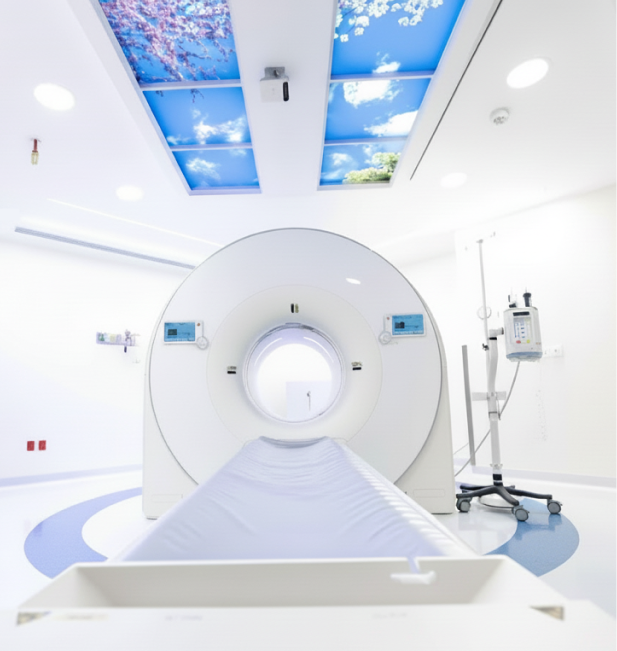
What is a PET/CT scan?
A PET/CT scan combines two technologies into a single image:
- PET (Positron Emission Tomography): Shows how your body functions at the cellular and metabolic level.
- CT (Computed Tomography): Provides detailed images of your organs and internal structures.
Together, these techniques offer a comprehensive view that enables early, accurate, and personalized diagnosis.
Especially useful in cases of cancer, neurological, cardiac, infectious, and inflammatory diseases.
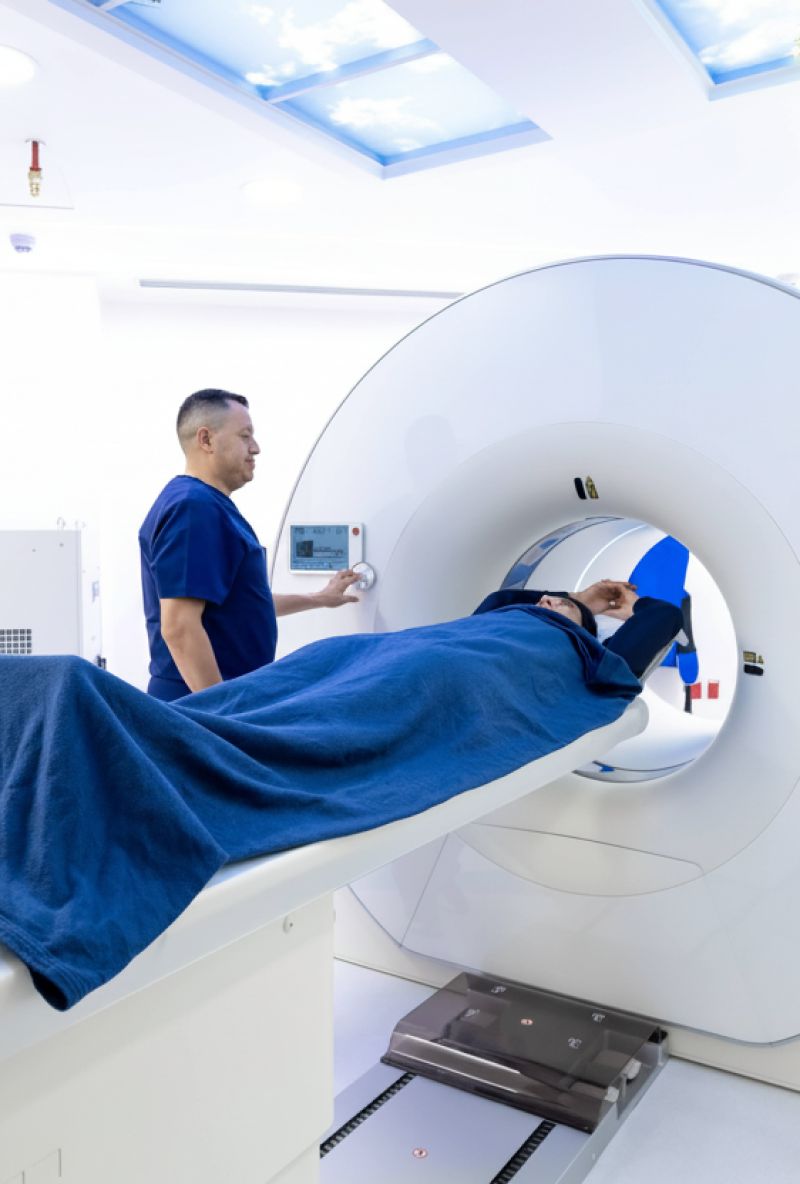
Why choose our digital PET/CT at Centro Médico ABC?
- High image quality: Thanks to the high resolution of our equipment, we can detect very small or subtle lesions that might go unnoticed with traditional systems.
- Greater diagnostic certainty: Our molecular imaging specialists use artificial intelligence as a support tool, improving the accuracy and safety of the diagnosis.
- Lower radiation dose: Digital technology significantly reduces radiation exposure without compromising image quality—especially important for pediatric patients or those requiring frequent scans.
- Faster, more comfortable studies: Shorter scan times improve patient experience and often eliminate the need for sedation.
What types of PET/CT scans do we perform?
At Centro Médico ABC, we use different radiotracers depending on the medical need or disease. Some of the most common include:
PET/CT with 18F-FDG
Positron emission tomography (PET) is a functional molecular imaging tool that, through a radiotracer called 18F-fluorodeoxyglucose, evaluates glucose metabolism in tissues. This allows the detection of abnormal metabolic activity in tumor cells. This is the most commonly used radiotracer in clinical practice.
Some uses by specialty include:
Oncology:
- Tumor staging at diagnosis.
- Detection of hidden or metastatic lesions not visible on CT or MRI.
- Accurate clinical staging to guide treatment decisions.
- Evaluation of treatment response.
- Detection of recurrence.
- Common tumors: lymphoma, lung, breast, colon, head and neck, melanoma, and more.
Neurology:
- Dementias such as Alzheimer’s disease.
- Refractory epilepsy: localization of epileptic foci.
- Diagnostic support for neurodegenerative disorders and certain brain tumors.
Cardiology:
- Myocardial viability in advanced coronary artery disease.
- Diagnosis of myocarditis or cardiac sarcoidosis.
- Infections of valves or implanted devices.
PET/CT with 18F-PSMA-1007
Specifically designed for prostate cancer. Detects lesions with high precision, even at low PSA levels.
- Early detection of biochemical recurrence (elevated PSA).
- Initial staging in newly diagnosed patients.
- Restaging in suspected progression.
- Personalized treatment planning (surgery, radiotherapy).
- Evaluation of PSMA receptors for selecting candidates for Lutetium-177 radionuclide therapy.
PET/CT with 18F-AIF-NOTA-OCTREÓTIDO
Used for neuroendocrine tumors such as carcinoids, insulinomas, pheochromocytomas, and others.
- Initial diagnosis of neuroendocrine tumors.
- Staging and restaging of the disease.
- Evaluation of somatostatin receptors for PRRT therapy selection.
- Treatment response evaluation.
- Long-term monitoring.
PET/CT with [18F]FES (Fluoroestradiol)
An innovative tool that allows real-time evaluation of estrogen receptor expression in patients with breast cancer and other hormone-dependent tumors. It is a radiotracer analogous to estradiol that binds specifically to estrogen receptors (ER) in tumor tissues. Therefore, it enables in vivo visualization and quantification of receptor expression in both primary and metastatic lesions.
- Non-invasive assessment of estrogen receptors in metastatic breast cancer.
- Functional characterization of lesions with ambiguous histopathology.
- Selection of candidates for hormonal therapy (ER blockers or aromatase inhibitors).
- Detection of tumor heterogeneity by comparing ER expression in metastatic sites.
- Monitoring response to hormonal treatment.
PET/CT with 18F-FET
Es un radiofármaco análogo de aminoácidos utilizado principalmente para la evaluación de tumores del sistema nervioso central, particularmente gliomas. A diferencia del FDG, el FET tiene una captación más específica en células tumorales activas del SNC (sistema nervioso central), con menor captación en tejido cerebral normal, lo que lo convierte en una herramienta altamente valiosa para la neurooncología.
An amino acid analog radiotracer mainly used to evaluate central nervous system tumors, especially gliomas. Unlike FDG, FET is more specifically absorbed by active tumor cells and less by normal brain tissue—making it highly valuable for neuro-oncology.
Differential diagnosis
- Differentiating brain tumors from non-neoplastic lesions (e.g., abscesses, inflammation).
- Detection of low- and high-grade gliomas.
Treatment planning
- More precise delineation of active tumor volume for surgery or radiotherapy.
- Image-guided biopsy site selection (areas with higher uptake suggest greater tumor aggressiveness).
Treatment monitoring and evaluation
- Differentiation between tumor recurrence and post-radiation necrosis (a common FDG limitation).
- Response monitoring to chemotherapy, radiotherapy, or targeted therapies.
Prognosis
- The uptake pattern of FET may correlate with histological grade and clinical outcome.
PET/CT with 18F-DOPA
Es un radiofármaco innovador utilizado en estudios de PET que permite evaluar con precisión el metabolismo de aminoácidos y la síntesis de dopamina, brindando información única para el diagnóstico de trastornos neurológicos y oncológicos.
An innovative radiotracer that evaluates amino acid metabolism and dopamine synthesis—providing unique diagnostic information for neurological and oncological disorders.
Neuro-oncology
- Low- and high-grade gliomas: Tumor activity assessment and differentiation between residual tumor and post-treatment necrosis.
- Monitoring tumor progression: High sensitivity for early recurrence detection.
Movement Disorders & Pediatrics
- Differential diagnosis of parkinsonism: Distinguishing Parkinson’s disease from atypical parkinsonisms.
- Congenital hyperinsulinism: Precise localization of pancreatic lesions in newborns and infants.
Neuroendocrinology & Neural Crest Tumors
- Pheochromocytomas and paragangliomas: Especially useful in patients with genetic mutations or recurrent forms.
- Neuroblastoma: Functional staging and treatment response assessment.
