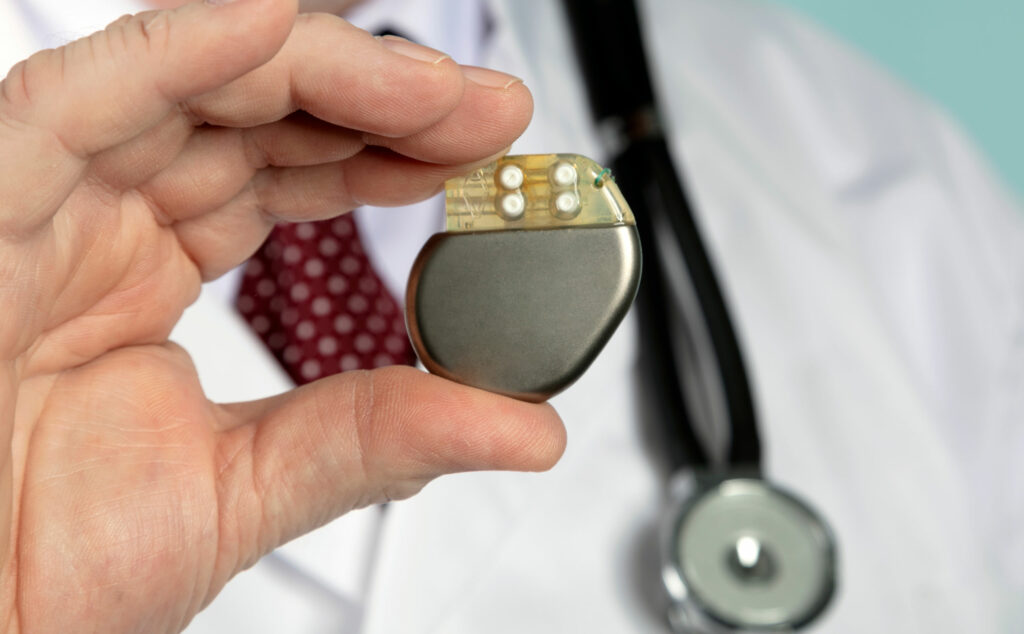
When discussing heart health, questions often arise regarding what a pacemaker is used for and when it becomes necessary.
Heart Pacemakers
A cardiac pacemaker, also known as a cardiac stimulation device, helps regulate the heartbeat and is implanted in the chest. Its primary function is to prevent the heart from beating too slowly.
The heart consists of four chambers: two atria and two ventricles. Working alongside the electrical system, both the right and left ventricles ensure the heart maintains a normal heart rate, which ranges between 60 and 100 beats per minute in an adult. If the heart cannot maintain this rhythm on its own, a physician may recommend a cardiac pacemaker.
A pacemaker may also be indicated if the heart’s electrical system is damaged—whether due to aging, a heart attack, certain medications, or genetic conditions—causing the heart rhythm to become irregular.
In this way, implanting a pacemaker helps regulate heartbeats in patients suffering from pathological cardiac arrhythmias, primarily in cases of bradycardia (when the heart beats too slowly), though it can also be prescribed for patients with irregular heartbeats or tachycardia.
How a Pacemaker Works
Pathological bradycardia is the main reason for implanting a pacemaker. The device helps restore a normal heart rate by increasing it when necessary, thereby preventing future complications.
A traditional pacemaker consists of three main components, each with a specialized function:
- Leads (Cables): Implanted through the veins, these carry electrical impulses to the heart.
- Electrodes: These detect the heart’s natural rhythm and deliver electrical impulses based on the intensity of the beats.
- Pulse Generator: A small metal container housing the battery and electrical circuitry that controls the timing and rate of the electrical impulses sent to the heart.
Types of Pacemakers
Depending on the patient’s specific needs and the expected duration of treatment, various types of devices are available to help regulate heart rate:
- Biventricular Pacemaker: Electrodes are placed in both the right and left ventricles. This device is part of cardiac resynchronization therapy for patients developing heart failure due to severe bradycardia.
- Single-Chamber Pacemaker: Delivers impulses via an electrode placed in a single chamber of the heart, usually the right ventricle.
- Dual-Chamber Pacemaker: Electrodes are placed in two chambers of the heart, typically the right atrium and the right ventricle.
- Endocardial (Intravenous) Pacemaker: Electrodes are inserted through a central vein into the endocardium, while the generator is implanted subcutaneously.
- Leadless Pacemaker: Contains no leads and is implanted directly into the heart muscle to deliver electrical pulses without passing through veins.
- Permanent Pacemaker: Implanted when long-term support is needed due to a chronic cardiac condition with no expectation that the heart will regain its normal rhythm independently.
- Temporary Pacemaker: Implanted short-term for patients experiencing potentially severe but non-chronic rhythm irregularities, providing support during specific periods, such as during surgery or following a heart attack.
- Transcutaneous Pacemaker: A temporary pacemaker where electrodes are placed directly on the skin, requiring no surgical implantation.
At the Arrhythmia Clinic at Centro Médico ABC, we offer specialized care. Contact us today!