Contact us
Precision Medicine
Filtra por especialidad o fecha para encontrar los episodios que más te interesan y accede fácilmente al contenido que necesitas.
¿Sabías que tu piel revela TODO sobre tu salud y tus emociones? En este episodio las especialistas en dermatología, Gabriela Sánchez Cárdenas y María Barrera Pérez, desmienten los mitos más grandes del cuidado de la piel y te dan la guía definitiva para lucir un rostro radiante. Hablan sin filtros sobre qué productos sí funcionan, el peligro real de los remedios caseros, y respondemos a las preguntas que siempre te has hecho: ¿Las pantallas de celular manchan la piel? ¿La piel grasa necesita crema hidratante? ¿Las pieles morenas realmente necesitan protector solar?
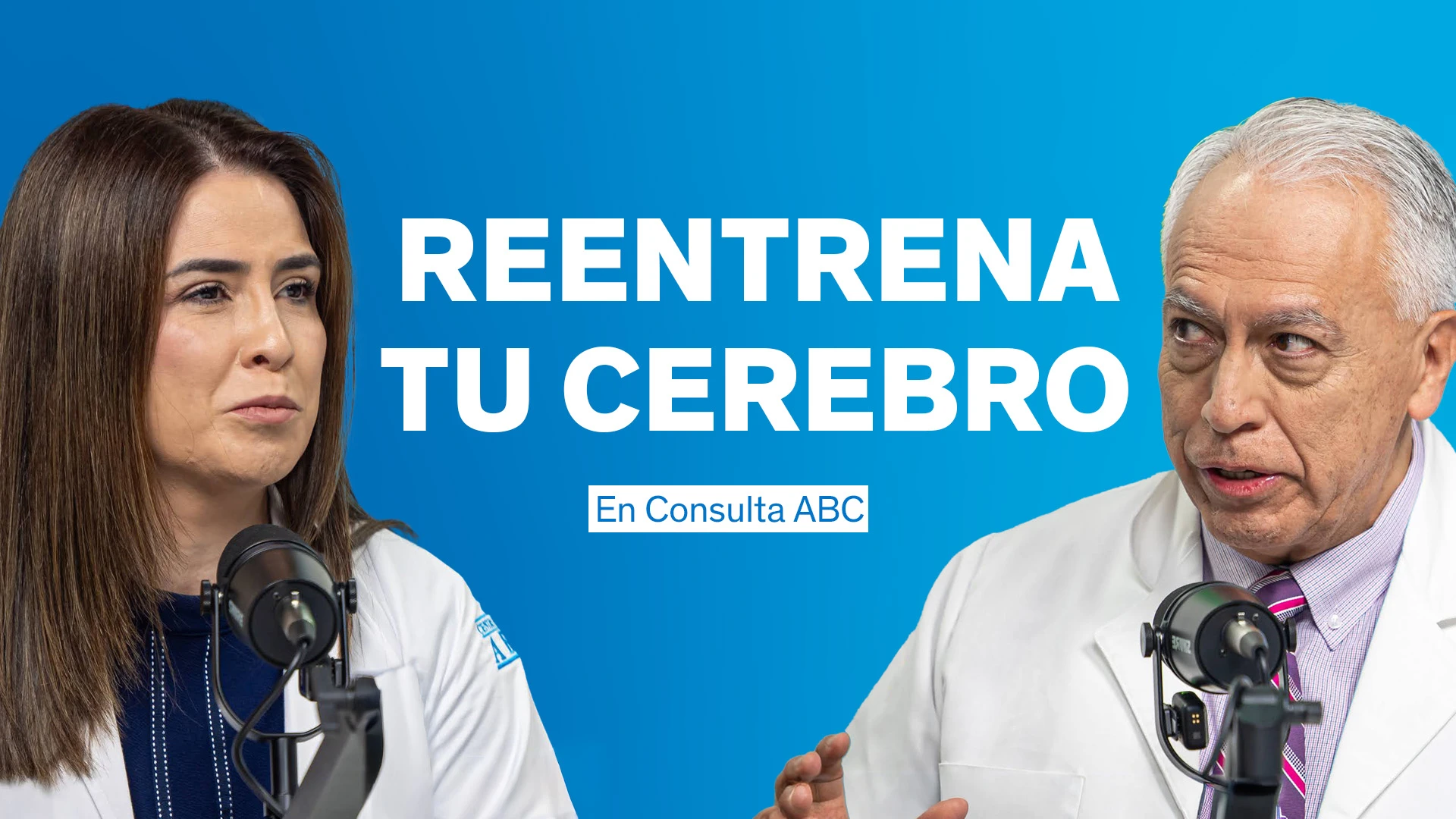
En este episodio la Dra. Mayra Martínez Mallen, especialista en psiquiatría y psicoterapeuta cognitivo-conductual y maestra certificada en mindfulness y el Dr. Alonso Morales Rivero, especialista en psiquiatría de adultos, abordan cómo impacta en el cerebro, el sistema nervioso, la concentración, el sueño, la ansiedad, el TDA y la regulación emocional, además de derribar mitos comunes.
Una conversación completa sobre alergias alimentarias y ambientales Los doctores Juan Manuel Montiel Herrera y Guadalupe Pineda Bahena, especialistas en alergología e inmunología nos hablan de síntomas, anafilaxia, alergias cruzadas, tratamientos, mitos y verdades, impacto emocional y la importancia de una red de apoyo.
¿Sabías que el cáncer de próstata es el más común entre los hombres y cada año se diagnostican millones de nuevos casos en el mundo? A pesar de eso, sigue siendo un tema del que muchos prefieren no hablar, por vergüenza, por miedo o simplemente por desinformación.
En este episodio los doctores Juan Manuel Montiel Herrera, especialista en alergología e inmunología y el Dr. Rodolfo Muriel Vizcaíno, especialista en pediatría y alergología e inmunología, resuelven las dudas más comunes: desde qué es realmente una a
Los doctores Miguel Ángel Sánchez Pérez y Jaime Alberto Valdés Flores, especialistas en Angiología, Cirugía Vascular y Endovascular, te dicen qué hacer en una emergencia, cómo influye el estrés en tus venas y todas las soluciones disponibles.
En este episodio las doctoras Nicole Íñiguez Ariza, especialista en Endocrinología y Coralys Abreu Rosario, especialista en Endocrinología con alta Especialidad en Enfermedades tiroideas, exploran todo sobre esta pequeña pero poderosa glándula: qué es, cómo regula tu cuerpo y qué pasa cuando no funciona bien
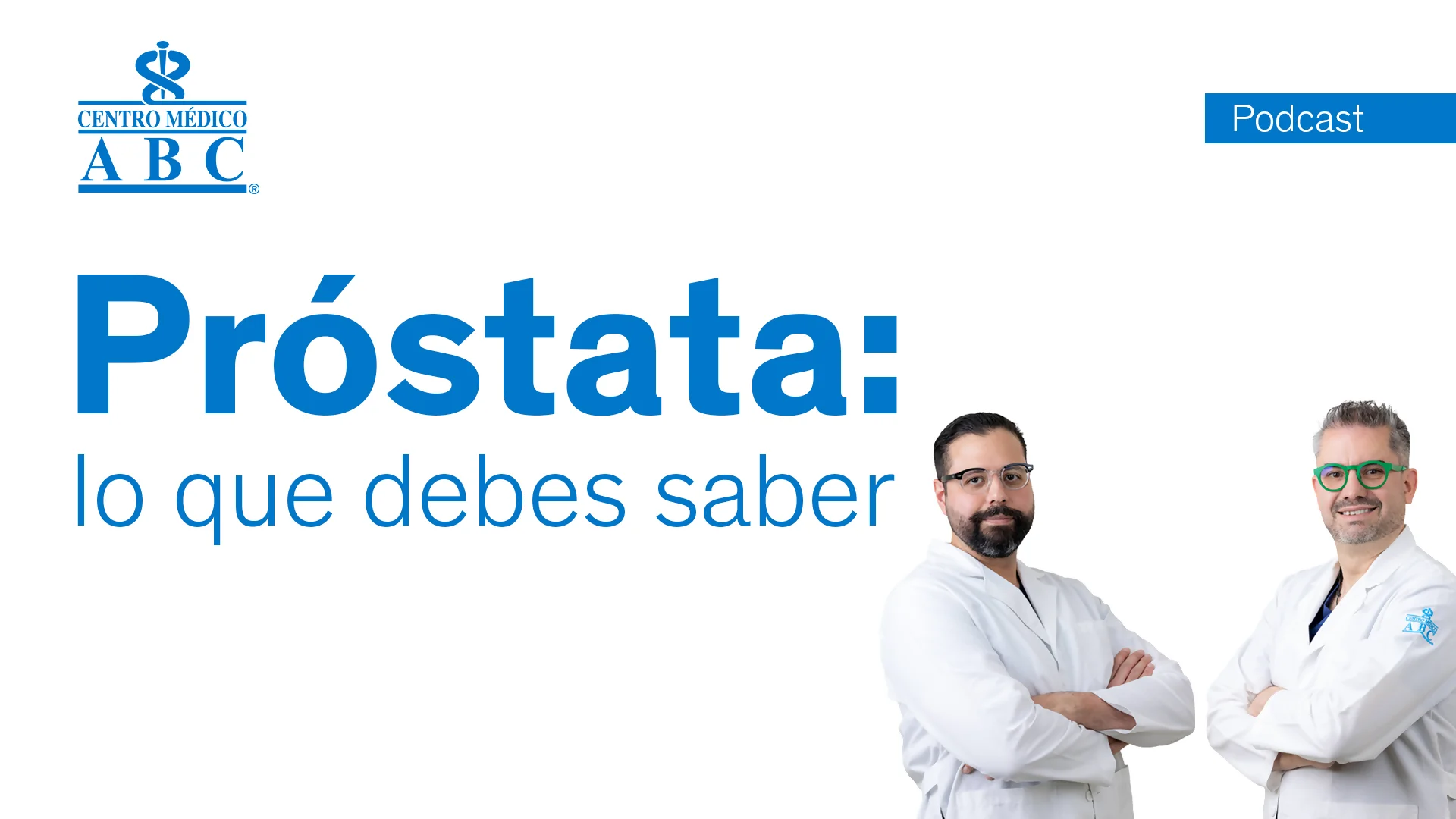
En este episodio los especialistas en urología, el Dr. Johnatan Vitar Sandoval y el Dr. Gustavo Sánchez Turati, te cuentan, ¿qué es la próstata?, ¿cuáles son los síntomas de alerta? y ¿qué estudios debes realizarte para detectar a tiempo problemas como la hiperplasia prostática benigna, la prostatitis o el cáncer de próstata?.
En este episodio los doctores Nicole Íñiguez Ariza y Oded Stempa Blumenfeld, especialistas en Endocrinología, te hablan de la tiroides, una glándula pequeña con un papel enorme en tu salud. Nuestros especialistas explican cómo detectar cuando algo no anda bien, las diferencias entre hipotiroidismo, hipertiroidismo, nódulos y cáncer, y qué hacer si te diagnostican alguno de estos problemas.
El hígado graso es hoy la principal causa de enfermedad hepática crónica y la mayoría lo padece sin saberlo. No es un problema lejano ni exclusivo de adultos mayores, también puede afectar jóvenes.
Pay in interest-free monthly installments in Specialty Centers, Check Ups, Diagnostic Tests, and Hospitalization
Get from 3 to 9 interest-free installments* with American Express or 6 installments* when paying with Banamex, BBVA, HSBC, Santander or 12 installments*
when paying with Banamex.
Contact us
Precision Medicine
Error: Contact form not found.
We help you
Send us your request and we will forward it to our specialists. We will get in touch with you very soon.
If you have preferred times to receive our call, please indicate them in your message.
Thank you for contacting us!
Interest-free
months in:
Interest-free
months in:
Specialty Centers
Diagnostic Studies
Check-ups
Hospitalization1
Choose from3 to 9 months when paying with American Express cards 2. Or
6 months when paying with your credit card3 Banamex, BBVA Bancomer, HSBC, Santander.
Or 12 months exclusively when paying with Banamex3
Valid until December 31, 2025. Promotions not cumulative. Subject to restrictions 1. In hospitalization, medical fees are not included. 2. Minimum amount: $1,500 for 3 to 6 months and $3,000 for 7 to 9 months 3. Minimum amount $1,500. (Cards issued abroad are not eligible).
Comparison of COVID-19 vaccines
Pfizer-
BioNTech
Pfizer-BioNTech
What is its effectiveness and what does it refer to?
Vaccine type: mRNA
Effectiveness: 95% after the second dose in the prevention of symptomatic COVID-19.
No Does not contain egg, latex, or preservatives.
How many doses are needed?
Two doses are needed, at least 21 days apart (or up to six weeks apart, if necessary).
Who should or shouldn’t get the vaccine?
People who should receive the vaccine are those over 16 years old.
People who should not receive the vaccine are those who have a history of anaphylactic shock (severe allergy) or who are allergic to any component of this vaccine such as polyethylene glycol (PEG) or polysorbate.
What are the possible side effects of the vaccine?
Pain where the injection was given, fatigue, headache, muscle pain, chills, joint pain, fever, nausea, malaise, and swollen lymph nodes.
How long will it take for me to be protected and what does it protect me from?
After 14 days of having the complete scheme (after the administration of the 2nd dose), the protection period is still under study. It protects us from serious COVID-19 or requiring hospitalization.
Moderna
What is its effectiveness and what does it refer to?
Vaccine type: mRNA
Effectiveness: 94.5% after the second dose in the prevention of symptomatic COVID-19.
Does not contain egg, latex, or preservatives.
How many doses are needed?
Two doses are needed, at least 28 days apart (or up to six weeks apart, if necessary).
Who should or shouldn’t get the vaccine?
People who should receive the vaccine are those over 18 years old.
People who should not receive the vaccine are those who have a history of anaphylactic shock (severe allergy) or who are allergic to any component of this vaccine.
What are the possible side effects of the vaccine?
Pain where the injection was given, fatigue, headache, muscle pain, chills, joint pain, fever, nausea, and swollen lymph nodes in the arm in which you received the injection.
How long will it take for me to be protected and what does it protect me from?
After 14 days of having the complete scheme (after the administration of the 2nd dose), the protection period is still under study. It protects us from serious COVID-19 or requiring hospitalization.
Janssen/
Johnson
& Johnson
Janssen/ Johnson & Johnson
What is its effectiveness and what does it refer to?
Vector-based vaccine.
Effectiveness: 72.0% in the prevention of symptomatic COVID-19.
85% in the prevention of severe COVID-19.
Does not contain egg, latex, or preservatives./strong>
How many doses are needed?
Only one dose in needed.
Who should or shouldn’t get the vaccine?
People who should receive the vaccine are those over 18 years old.
People who should not receive the vaccine are those who have a history of anaphylactic shock (severe allergy) or who are allergic to any component of this vaccine.
What are the possible side effects of the vaccine?
Pain where the injection was given, headache, fatigue, muscle pain, chills, fever, and nausea.
How long will it take for me to be protected and what does it protect me from?
After 28 days of having the complete scheme (the last dose applied), the protection period is still under study. It protects us from 85% serious COVID-19 or requiring hospitalization.
AstraZeneca
and
Oxford
University
AstraZeneca and Oxford University
What is its effectiveness and what does it refer to?
Adenovirus vector-based vaccine.
Effectiveness: 82% after the second dose in the prevention of symptomatic COVID-19.
How many doses are needed?
Two doses are needed, at least 56 days apart (or up to 84 days apart, if necessary).
Who should or shouldn’t get the vaccine?
People who should receive the vaccine are those over 18 years old.
People who should not receive the vaccine are those who have a history of anaphylactic shock (severe allergy) or who are allergic to any component of this vaccine.
What are the possible side effects of the vaccine?
Pain where the injection was given, fatigue, headache, myalgia, arthralgia, and fever, which were mild to moderate in intensity and disappeared within 48 hours of vaccination.
How long will it take for me to be protected and what does it protect me from?
After 14 days of having the complete scheme (after the administration of the 2nd dose), the protection period is still under study. It protects us from serious COVID-19 or requiring hospitalization.
Sputnik V
What is its effectiveness and what does it refer to?
Adenovirus vector-based vaccine.
Effectiveness: 92% after the second dose in the prevention of symptomatic COVID-19.
How many doses are needed?
Two doses are needed, at least 21 days apart (or up to six weeks apart, if necessary).
Who should or shouldn’t get the vaccine?
People who should receive the vaccine are those over 18 years old.
People who should not receive the vaccine are those who have a history of anaphylactic shock (severe allergy) or who are allergic to any component of this vaccine.
What are the possible side effects of the vaccine?
Pain where the injection was given, fatigue, headache, myalgia, arthralgia, and fever, which were mild to moderate in intensity and disappeared within 48 hours of vaccination.
How long will it take for me to be protected and what does it protect me from?
After 14 days of having the complete scheme (after the administration of the 2nd dose), the protection period is still under study. It protects us from serious COVID-19 or requiring hospitalization.
Anti-Herpes Zoster
Herpes zoster is a painful, burning rash. It usually appears on one part of the body and can last for several weeks. It can cause long-lasting severe pain and scarring. Bacterial skin infections, weakness, muscle paralysis, hearing or vision loss may occur less frequently. Herpes zoster is caused by the same virus that causes chickenpox. After you have had chickenpox, the virus that caused it remains in the body of nerve cells. Sometimes after many years, the virus becomes active again and causes herpes zoster.
Vaccination is indicated in the following cases:
Scheme type:
Rabies
Human rabies is a viral disease transmitted by the bite of an infected animal. It is characterized by acute encephalomyelitis (an aggressive response of the immune system that destroys the myelin layer of the nerves and alters its function at the level of the brain or spinal cord).
Vaccination is indicated in the following cases:
Scheme type:
There are two types.
1. Pre-exposure scheme, consists of three doses of rabies vaccine:
2. Post-exposure scheme, people not vaccinated against rabies, consists of five doses of rabies vaccine.
* If the individual continues to be at risk of exposure to the disease, revaccination should be considered.
Pneumococcal vaccines
Pneumococcal disease can cause serious infections in the lungs (pneumonia), the bloodstream (bacteremia), and the lining of the brain and spinal cord (meningitis).
Two vaccines help prevent pneumococcal disease:
Vaccination is indicated in the following cases:
Scheme type:
*One dose of Pneumococcal 13 vaccine should be given first, followed by one dose of Pneumococcal 23 vaccine, depending on your age and health.