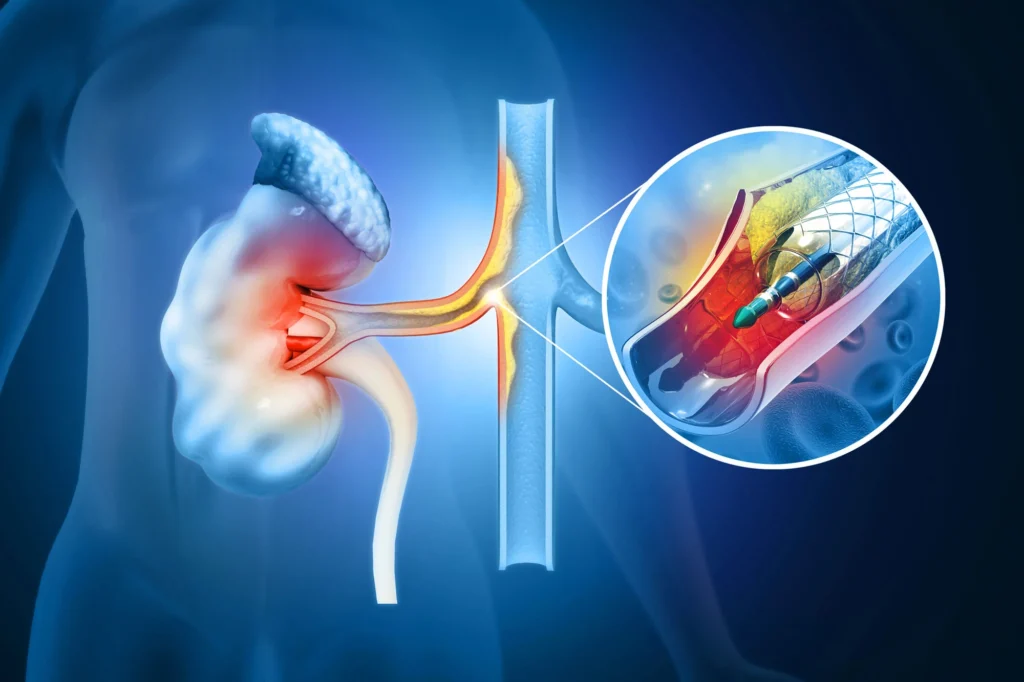
Renovascular disease is a condition that compromises blood flow to the kidneys due to the narrowing or blockage of the renal arteries, which can significantly impact kidney function and blood pressure control.
What Is Renovascular Disease?
The renal arteries originate from the aorta and are responsible for delivering blood flow and nutrients to the kidneys.
When these arteries become blocked, a condition known as stenosis occurs. When this happens, the kidneys do not receive enough blood or oxygen.
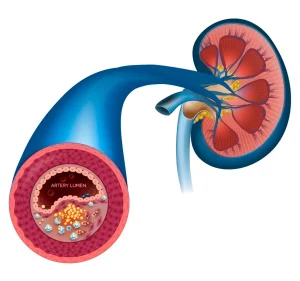
These arteries can also be affected by numerous conditions, primarily atherosclerosis and, less commonly, renal artery aneurysms, fibromuscular dysplasia, and vasculitis.
Renal Artery
The renal artery is the main blood vessel responsible for carrying oxygen-rich blood from the aorta to the kidneys, allowing these organs to filter waste, regulate fluid balance, and control blood pressure.
When this artery narrows—a condition known as stenosis—or becomes partially or completely blocked, as in renovascular disease, renal blood flow is reduced. This can trigger compensatory mechanisms such as the renin-angiotensin-aldosterone system.
Renovascular Disease Symptoms
Symptoms may be absent, but in most cases, it can cause high blood pressure (hypertension) and progressive kidney damage, which may even lead to the need for hemodialysis.
Flank pain and blood in the urine should raise suspicion of this condition.
Renovascular Disease Risk Factors
In the majority of cases, atherosclerosis is the primary cause of renal artery disease.
Risk factors include smoking, diabetes, high blood pressure, and elevated cholesterol and triglycerides.
Diagnosis is performed through a comprehensive medical history and a physical examination.
It is important to place a stethoscope on the abdomen to check for signs of abnormal arterial blood flow (bruits).
Other diagnostic studies include a renal duplex ultrasound, an MRI, or a CT angiography of the aorta and renal arteries.
Renovascular Disease Treatment
Treatment is generally endovascular and involves performing a selective angiography, intravascular ultrasound, angioplasty, and stent placement when necessary.
In fewer cases, open surgery will be required to perform a bypass.
At the Vascular, Arterial, and Venous Disease Area at Centro Médico ABC, we provide specialized care. Contact us today!