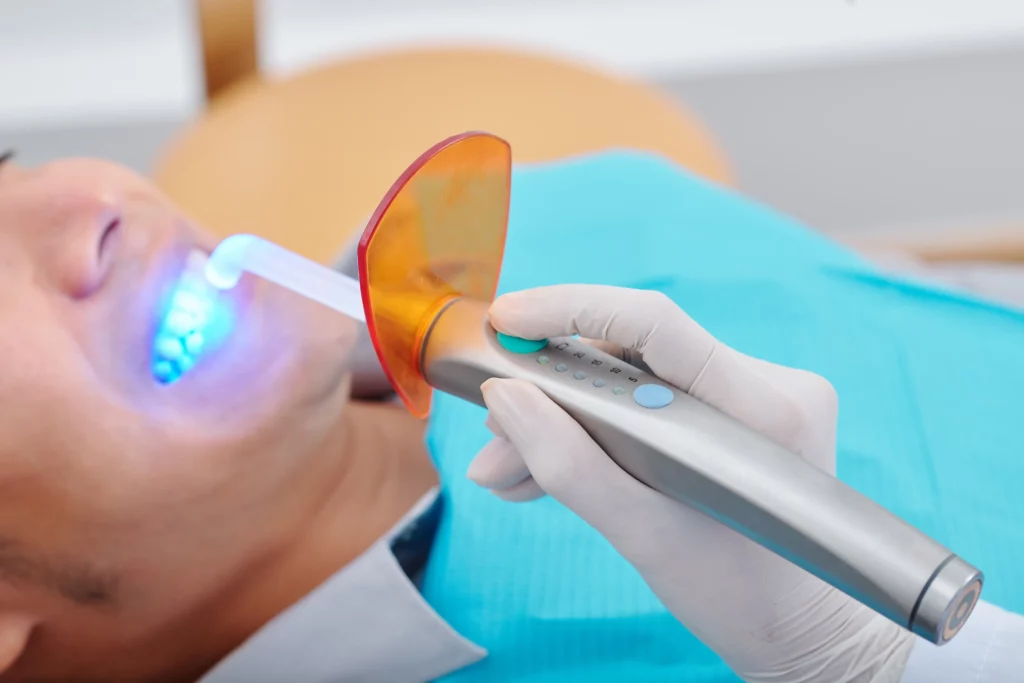
Dental resin is a highly versatile tool for restoring teeth. Also known as composite or composite resin, it’s a synthetic material used in dentistry to improve a person’s teeth both functionally and aesthetically.
What Is Dental Resin Used For?
Dentists use different types of dental resin for a wide variety of purposes, including:
- Cavities: restoring cavities caused by tooth decay, filling them in and performing a conservative restoration that preserves healthy tooth structure.
- Fractures and wear: repairing teeth that have fractured, worn down, or chipped.
- Direct veneers: dental resin is used to make direct veneers, thin layers applied to the front surface of teeth to improve their appearance, offering a more affordable and less invasive alternative to porcelain veneers.
- Tooth reconstruction: following a procedure such as a root canal or endodontic treatment, resin can be used to rebuild the tooth and restore its original shape and function.
- Pits and fissures: used as a preventive measure applied to the chewing surfaces of premolars and molars to protect them from cavities, sealing areas where plaque and food particles can accumulate.
- Aesthetics: an ideal tool for cosmetic restorations, since it can be pigmented to offer a more natural appearance, resulting in a noticeable difference before and after its use.
- Incisal edges: for patients whose front tooth edges have worn down, resin can be used to rebuild or lengthen them.
- Inlays and onlays: when a patient requires inlays or onlays, dental resin is a material that bonds well to the existing tooth structure.
What Is Dental Resin Made Of?
Dental resin is a mixture of an organic matrix and inorganic filler particles. Ultraviolet or blue light is used to harden it.
Tooth resin has been developed with aesthetic properties, meaning it can be pigmented to match the natural color of the teeth. Its adhesive properties allow it to bond to both the enamel and dentin of the tooth, making conservative restorations possible, requiring less removal of natural tooth structure.
Compared to amalgam or ceramic restorations, composite dental resin isn’t quite as strong, but it still offers good wear resistance.
How Is Dental Resin Polished?
Polishing is one of the most important steps in a resin restoration. It helps reduce plaque buildup, which in turn slows the early formation of stains.
Polishing creates a smooth, shiny surface on the restored tooth, making it more resistant to pigmentation. It also removes excess restorative material and eliminates surface roughness.
While polishing serves several purposes, they all ultimately focus on restoring the naturalness, function, and aesthetics that were lost in the affected tooth.
Resin polishing must be done by a dentist using specialized tools. It’s also important to brush your teeth after every meal and to visit your dentist every six months for more thorough maintenance.
At ABC Medical Center’s Dental Health area, we can provide you with specialized care. Contact us!