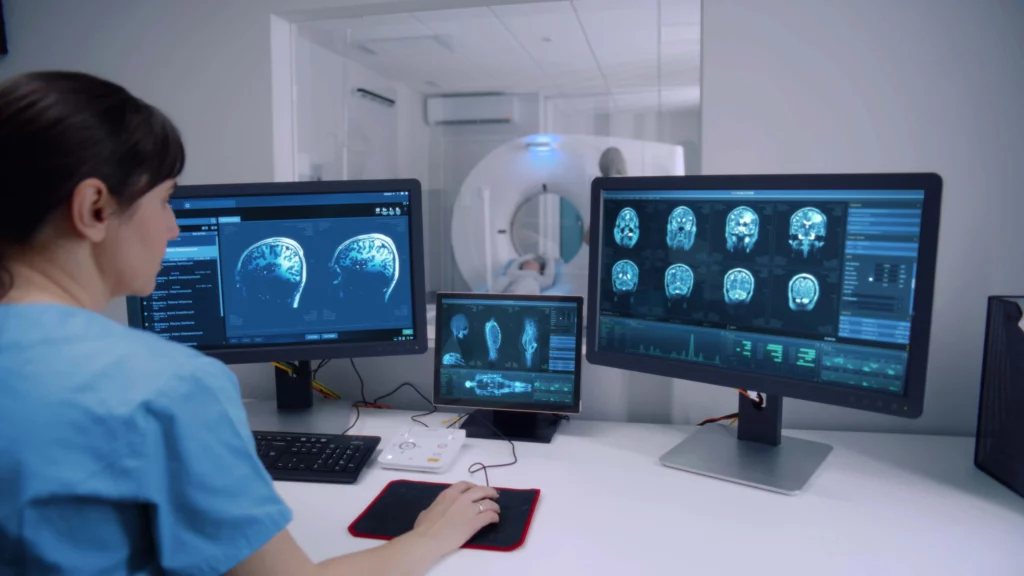
Medical imaging and radiology, also called diagnostic imaging, are fundamental medical tools that use various techniques and equipment to create images of the human body’s interior. These images help detect, diagnose, and monitor a wide range of medical conditions.
Diagnostic Imaging
This field is commonly known as radiology and imaging, and encompasses a wide variety of methods, including:
X-Rays
Using X-ray technology, radiographs produce diagnostic images of bones, as well as some tissues and organs. They’re frequently used to detect bone problems such as fractures, infections, and tumors, and can also reveal lung diseases.
Computed Tomography (CT)
CT scans also use X-rays to create images of the body, but the equipment provides a much more detailed view than standard X-rays, making it essential for evaluating tumors, internal injuries, and vascular diseases.
Magnetic Resonance Imaging (MRI)
MRI uses magnetic fields and radio waves to generate detailed images of internal organs and tissues. Since it doesn’t use radiation, it’s a safer option for certain patients. It’s especially useful for examining delicate organs such as the brain and spinal cord, as well as muscles and joints.
Ultrasound
Ultrasound uses high-frequency sound waves to create images of the body’s interior. It’s a safe, non-invasive technique widely used in obstetrics, cardiology, and abdominal studies. One key benefit is its ability to observe organs and structures in real time, making it valuable for monitoring pregnancies and abdominal conditions.
Comprehensive Radiological Imaging
You may sometimes hear the term “comprehensive radiological imaging,” which refers to a radiology center’s ability to offer a full range of diagnostic imaging services.
Centers with this capability typically have advanced technology and specialized equipment to support a range of imaging techniques.
These centers also have radiologists, physicians who specialize in interpreting medical images and making diagnoses or treatment recommendations, as well as imaging technologists, trained specialists who obtain the images.
Today, a comprehensive radiological imaging center typically features state-of-the-art technology such as digital X-ray, high-resolution CT, and advanced MRI, all aimed at providing the best possible diagnostic imaging.
Dental Radiology Center
One subspecialty is the dental radiology center. This specialty focuses on obtaining images of the oral cavity, jaw, and surrounding structures, images that are essential for evaluating and planning orthodontic and dental treatments.
Dental radiology includes intraoral X-rays, which provide a detailed view of individual teeth; extraoral X-rays, which offer a broader view of the jaw and skull; and Cone Beam Computed Tomography (CBCT), which produces detailed three-dimensional images of the anatomical structures of the head.
Together, a radiology and imaging center is an essential component for obtaining a clear, detailed view of the inside of the human body, supporting accurate diagnoses, optimizing treatment, and monitoring various medical conditions for the patient’s benefit.
Radiology Near Me
At ABC Medical Center’s Radiology and Imaging area, our team of highly trained radiologists and imaging technologists provides comprehensive, personalized care for all your imaging needs.
Our imaging specialists and radiologists in Mexico City are committed to your wellbeing and use the latest technology and most advanced equipment for radiology, CT scans, ultrasounds, and more.