Carotid artery disease is a vascular condition that can go unnoticed for years, yet poses a significant risk to brain health.
What Is Carotid Artery Disease?
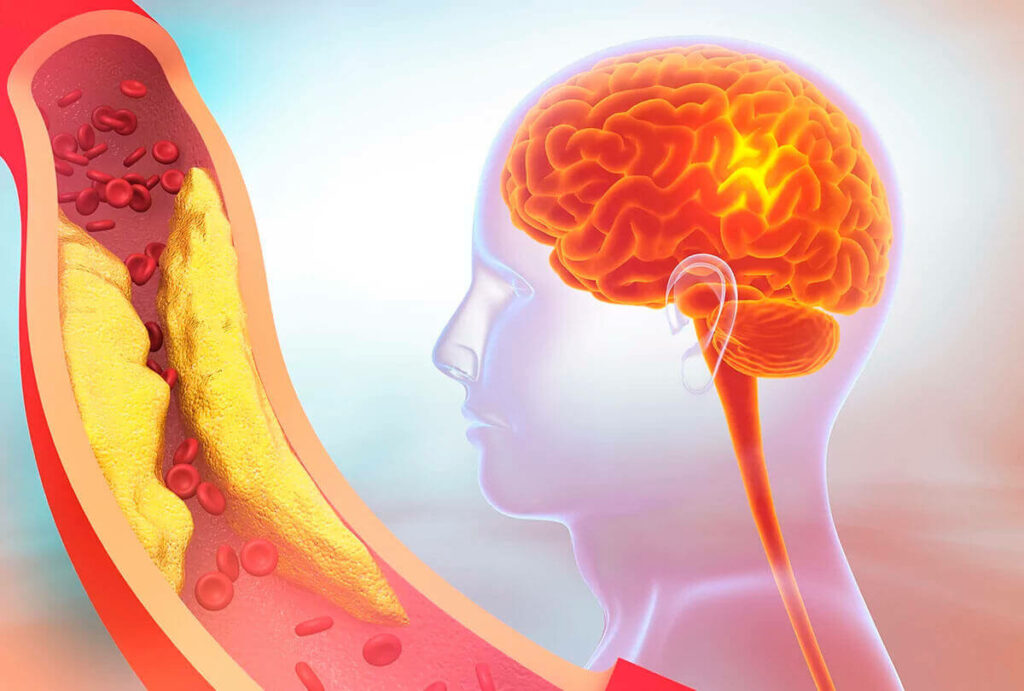
The carotid arteries are the main blood vessels in the neck that supply oxygenated blood and circulation to the brain.
With advancing age, plaque composed of cholesterol, calcium, and other substances can build up inside these arteries.
If these plaques cause a blockage in the carotid arteries, small blood clots or plaque fragments can break off and travel to the brain, causing a minor or major stroke.
Approximately 3% of individuals over the age of 65 have carotid artery disease.
The risk of developing this condition increases with age and is heightened by a history of tobacco use, high blood pressure, elevated cholesterol, diabetes, or heart disease.
Carotid stenosis or obstruction is responsible for up to one-third of all strokes. In the United States, approximately 650,000 to 700,000 strokes occur each year, predominantly in men.
Causes of Carotid Artery Disease
The most common cause of this condition is the progression of atheromatous plaque in the carotid arteries, typically driven by multiple risk factors such as smoking, high cholesterol, high blood pressure, and diabetes.
Diagnosis begins with a physical examination, during which a physician may listen for a bruit (a swooshing sound) in the neck arteries or observe changes in the retinal blood vessels.
It is essential to see a vascular surgeon specializing in these conditions, who will order diagnostic tests such as a carotid duplex ultrasound, a neck CT angiography (CTA), or a magnetic resonance angiography (MRA).
Symptoms of Carotid Artery Disease
Symptoms of this disease may be entirely absent, even in cases of severe obstruction. The condition is often discovered during an eye exam or following a stroke.
In one-third of patients with carotid artery disease, symptoms present as a Transient Ischemic Attack (TIA) or "mini-stroke." This can manifest as weakness in a limb, vision problems, or slurred, inappropriate speech.
In some cases, facial muscle weakness may occur, such as a drooping mouth.
Treatment for Carotid Artery Disease

Treatment for carotid artery disease is focused on reducing the risk of a stroke. Specifically, it depends on the degree of arterial blockage.
Generally, a combination of medications can help slow the progression of carotid artery disease. Aspirin, cholesterol-lowering drugs, and blood pressure medications are commonly recommended when the obstruction is less than 50%.
Quitting smoking is vital for managing carotid disease and for overall health.
Surgery is recommended if the degree of blockage is greater than 60%. In some cases, open surgery—such as a carotid endarterectomy—is required, while in other specific, highly precise cases, an angioplasty with stent placement is performed.
At the Vascular, Arterial, and Venous Disease Department at Centro Médico ABC, we provide specialized care. Contact us today!
Fuente:
Dr. Salomón Cohen Mussali – Médico especialista en Cirugía Vascular y Endovascular del Centro Médico ABC.
Mayo Clinic, MedlinePlus, Stanford Medicine
Fuente:
Dr. Salomón Cohen Mussali – Physician specializing in Vascular and Endovascular Surgery at Centro Médico ABC.
Mayo Clinic, MedlinePlus, Stanford Medicine