Jock Itch: Effective Treatment to Eliminate Skin Fungus
Finding the right treatment for jock itch is essential. Although it is a condition that does not pose a serious health risk, it is an uncomfortable issue that can significantly affect a person’s quality of life. While common, this fungal infection often causes physical discomfort and uncertainty about how to eradicate it completely.
When this infection develops in the groin area, timely diagnosis and proper treatment make the difference between a swift recovery and a persistent infection. Below is a comprehensive guide on how to identify, prevent, and properly treat it under specialist supervision.
What Is Ringworm of the Skin and How Does It Affect the Groin?
Ringworm is a fungal infection that thrives in warm, moist areas of the skin. When it specifically targets the groin, thighs, and buttocks, it is medically referred to as jock itch (tinea cruris).
This condition is a fungal skin infection caused by organisms known as dermatophytes. These microorganisms flourish in warm, damp environments and feed on keratin, a protein found in the skin, hair, and nails. Because of this, fungal skin infections can appear on different parts of the body and take on different names depending on their location:
- Tinea capitis: affects the scalp and hair.
- Tinea corporis: affects the trunk and limbs.
- Tinea pedis: affects the feet and is commonly known as athlete’s foot.
- Tinea cruris: refers to a fungal infection in the groin affecting the inner thighs, commonly known as jock itch.
Specifically, when discussing jock itch (tinea cruris), the infection develops in the groin region, from which it derives its name. It occurs most frequently due to constant friction between the thighs and moisture buildup in this area, creating the ideal environment for the fungus to thrive. It is a condition that can affect both men and women of any age, compromising the skin barrier if left unmanaged.
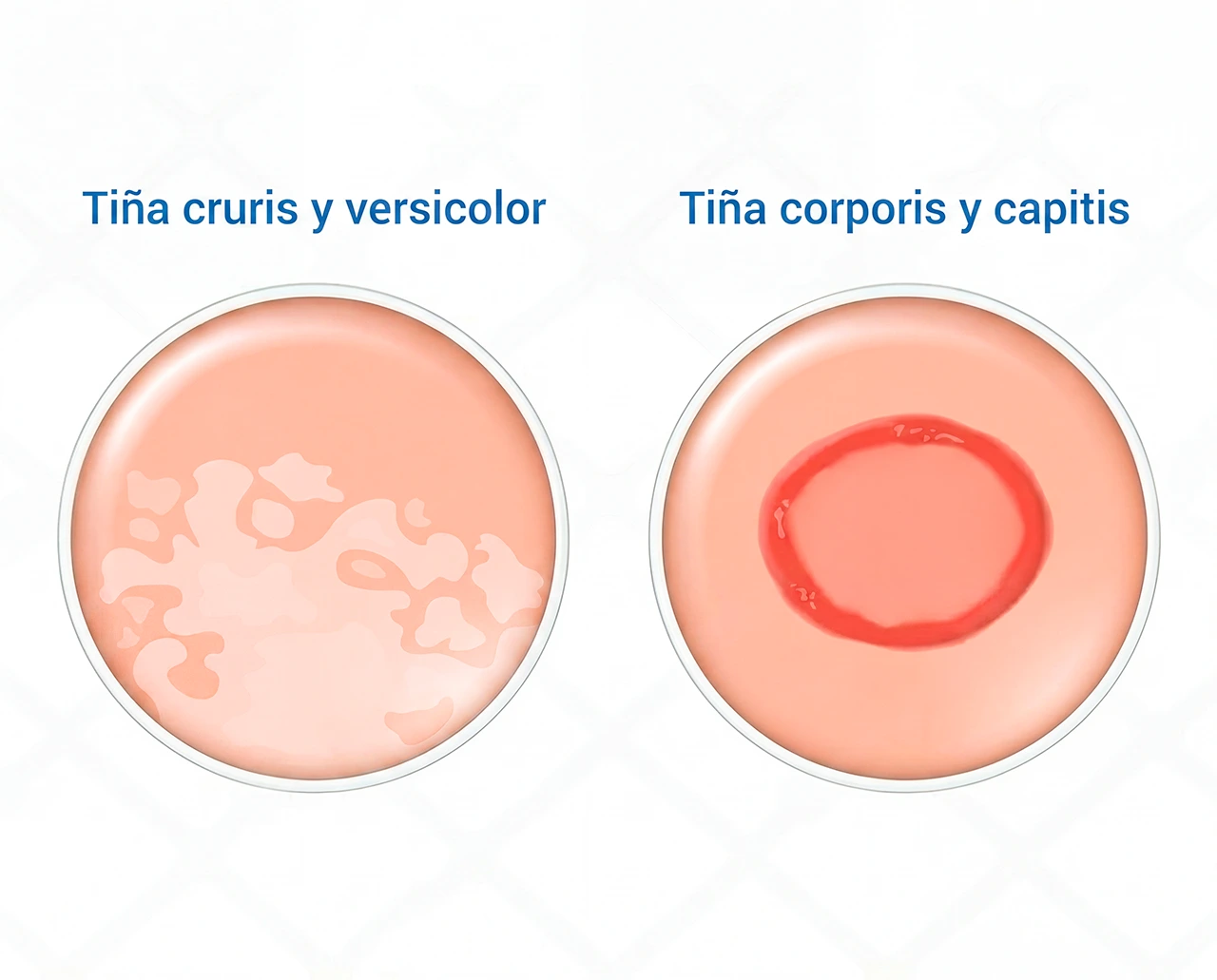
Síntomas comunes: hongos y granos en la entrepierna
Symptoms of jock itch include ring-shaped redness, intense itching that worsens with sweat, peeling skin, a burning sensation when touched, and the appearance of lesions or pimple-like breakouts in the groin area.
Recognizing the symptoms of this infection is crucial to prevent it from spreading to other areas, such as the abdomen or buttocks. The fungus typically manifests gradually, starting with mild discomfort that intensifies with physical activity or heat.
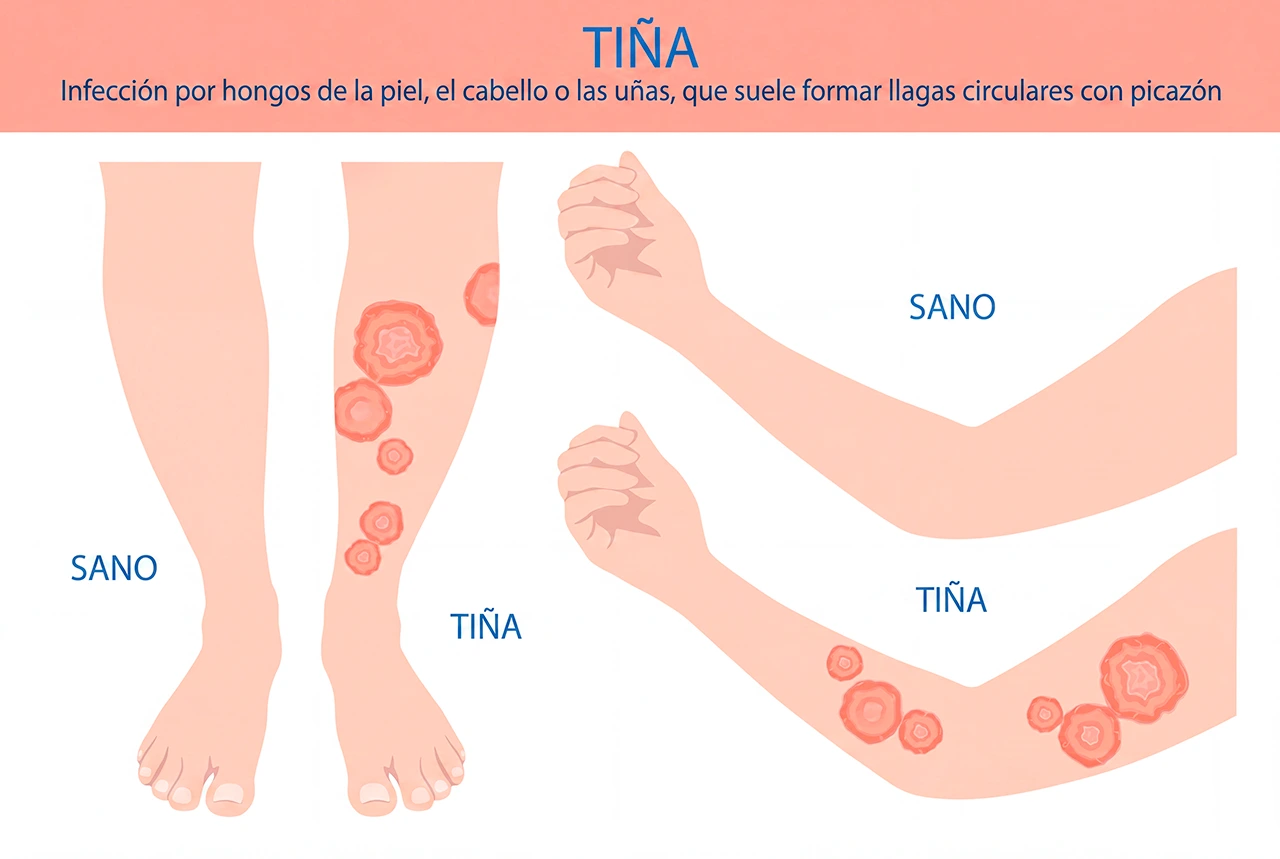
Symptoms of jock itch include the following:
- Redness: The skin in the groin area turns reddish or brown, and a lesion with an elevated, ring-shaped border may appear.
- Itching: This is one of the most bothersome symptoms and tends to intensify noticeably due to sweating or friction from clothing.
- Peeling/Flaking: Skin affected by this fungus becomes dry and scaly, and in more severe cases, it can crack or peel.
- Circular Lesions: Lesions become well-defined and can develop raised edges that expand outward toward the thighs.
- Burning or Pain: In advanced cases, the affected area may cause discomfort when touched, during sexual intercourse, or while performing everyday physical activities.
Occasionally, people mistake this infection for allergies or common rashes due to the appearance of small pustules or pimple-like bumps in the groin. The risk of developing jock itch increases due to factors such as wearing tight clothing, poor ventilation, and persistent moisture from exercise or hot weather. If you notice one or more of these symptoms, consulting a dermatologist is recommended to identify the exact cause and obtain proper treatment.
Jock Itch: Definitive Medical Treatment
Definitive treatment for jock itch relies on the use of topical or oral antifungal medications prescribed by a physician, paired with strict hygiene practices to eliminate the fungus and prevent its recurrence.
Antifungal therapy is the primary medical approach for treating jock itch. The medical objective is to stop the proliferation of the fungus and completely eradicate it from the layers of the skin. Treatment for jock itch must be followed to the letter—even if symptoms disappear early—to prevent relapses.
Beyond medical therapies, adopting specific hygiene habits is crucial for preventing the spread and recurrence of jock itch. Keeping the groin area clean and completely dry after bathing is an essential measure. It is also recommended to wear loose, breathable cotton clothing, change underwear daily, and avoid sharing personal items like towels or athletic wear to prevent contracting or spreading the fungus.
Creams and Topical Medications for Jock Itch
Topical treatment for jock itch involves applying antifungal gels, powders, or creams directly to the affected skin for two to four weeks to eliminate the fungus locally.
For mild or initial infections, topical antifungal creams and solutions serve as the first line of defense. These products include active ingredients such as clotrimazole, miconazole, ketoconazole, or terbinafine. They are applied directly to the affected skin and a few centimeters beyond the border of the lesion, ensuring the area is clean and thoroughly dry prior to application.
Although topical treatment is the most widely used approach, consulting a doctor is advisable if the skin shows no improvement after two weeks of consistent application. Lack of progress may indicate resistance to the applied medication, a more advanced infection, an incorrect diagnosis, or underlying health issues requiring specialized medical attention or a revised pharmacological strategy.
For moderate to severe cases—or when topical treatment proves ineffective or the infection has spread extensively—a specialist may prescribe oral antifungals. These tablet or capsule medications work systemically to combat deeper, more resistant infections, but require medical monitoring to avoid hepatic side effects.
Jock Itch Treatment in Men
In men, jock itch treatment requires the use of antifungals alongside a strict reduction of friction and moisture in the scrotal and thigh areas by wearing loose-fitting underwear.
Treatment often requires a disciplined approach due to male anatomy. In men, this infection occurs more frequently because of constant friction between the scrotum and thighs, combined with the natural accumulation of sweat and moisture in the area, creating an ideal environment for fungi to thrive.
It is essential for men to wear underwear made of natural materials like cotton and avoid synthetic fabrics that trap sweat. Furthermore, if athlete’s foot is present at the same time, treating both areas simultaneously is crucial, as the fungus can easily transfer from the feet to the groin when putting on pants or underwear, causing continuous reinfections.
Jock Itch Treatment in Women
Treatment for jock itch in women focuses on eliminating fungi in the skin folds of the female groin, keeping the area dry, and avoiding irritants or vaginal douching.
Addressing jock itch in women requires consideration for female anatomy, taking care not to disrupt the pH balance of the intimate area. Although less common in women than in men, female athletes engaged in high-intensity sports, those who wear tight leggings or activewear, or those who spend extended periods in damp swimwear are highly susceptible to developing this condition.
When treating a female groin area affected by fungi, medical intervention includes antifungal creams carefully applied to the outer skin folds, avoiding vaginal mucosa. Discontinuing the use of strongly fragranced soaps, cosmetic powders, or vaginal douches during the infection is advised, as these products can aggravate skin irritation and disrupt the skin’s protective bacterial flora.
Are There Home Remedies for Jock Itch?
There is no home remedy that cures a jock itch infection; therefore, natural remedies should only be used as complementary hygiene measures with medical clearance and must never replace an antifungal medication.
Options for home remedies—such as apple cider vinegar, tea tree oil, garlic, or baking soda—are commonly discussed online. While some of these substances possess mild antiseptic properties or help dry out the skin, the medical reality is that they lack the potency needed to completely eliminate dermatophytes within the skin layers.
Relying exclusively on home remedies can delay healing, allowing the fungus to spread or causing contact dermatitis due to skin irritation from natural ingredients. Therefore, any home measure should be limited to complementary hygiene (such as sitz baths with doctor-approved drying solutions) and should never replace formal antifungal treatment.
Internal Medicine Department
At the Internal Medicine Department of ABC Medical Center, we are equipped to provide specialized care. Contact us today!
Disclaimer: The content of this material is for informational purposes only and does not, under any circumstances, replace a consultation with a medical specialist. ABC Medical Center assumes no liability for alternative uses of this information. If you require further medical advice, please consult your trusted specialist directly.
Frequently Asked Questions
Fuentes:
MedlinePlus, Kids Health, MSD Manuals