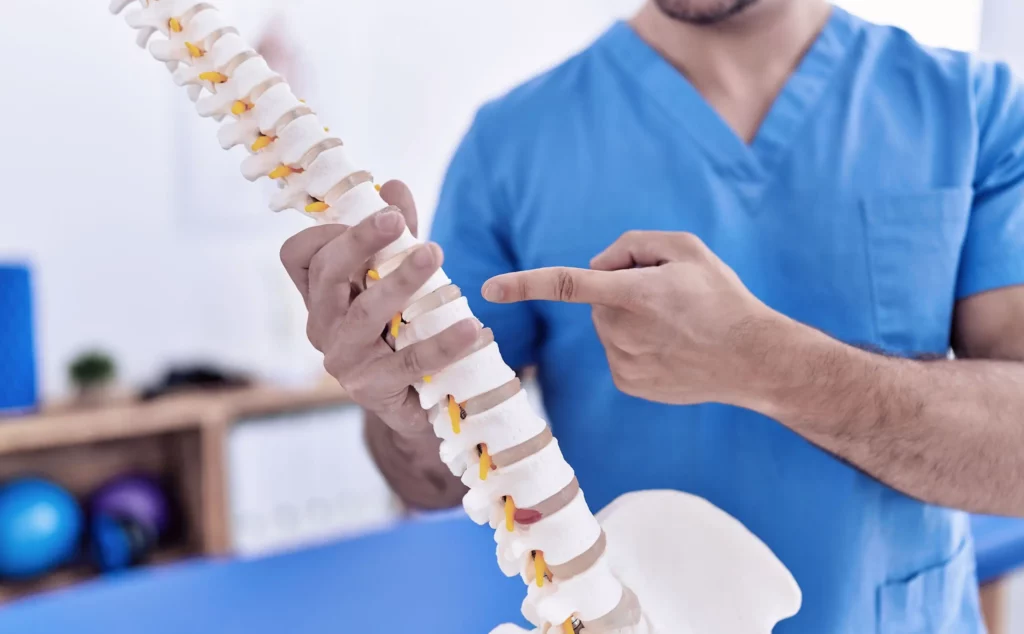
The spine is made up of a series of vertebrae, separated by spongy discs called intervertebral discs. For care purposes, this bony structure is generally divided into four regions:
- Cervical region: made up of seven vertebrae in the neck.
- Thoracic region: made up of 12 vertebrae in the upper back.
- Lumbar region: a total of five vertebrae, located in the lower back.
- Sacral region: includes four sacral vertebrae and three to five coccygeal vertebrae, which gradually fuse together as a person matures.
The spine’s main functions include providing structural support for the body and protecting the spinal cord, which connects the brain to the rest of the body.
How Can You Take Care of Your Spine?It’s safe to say that everyone will experience back pain at some point in their life; some cases are more intense than others, and some are more disabling. It all depends on the individual and what’s causing it.
Care TipsSince back injuries are easy to develop, it’s important to know how to properly care for the spine. While spinal conditions can’t always be prevented, there are steps you can take to reduce wear and tear or injury:
- Do specific exercises to strengthen the back. Strong muscles support the spine’s daily workload.
- Lose weight if you’re overweight, since excess weight puts unnecessary pressure on the spine.
- Nicotine causes the vertebrae to age prematurely, compared to someone who doesn’t smoke.
- Maintaining good posture while walking, sitting, and lying down offers major benefits for spinal health.
- Learn the correct way to lift or carry objects, since improper technique is a common cause of injury.
Types of Spinal ConditionsSpinal conditions are very common, since the spine is the body’s main axis of balance.
Some of the most common spinal conditions include:
- Osteoarthritis: affects the deterioration of the intervertebral discs, cartilage, or vertebrae, leading to pain and a loss of flexibility.
- Cervicalgia: pain in the upper back or neck, often caused by osteoarthritis.
- Spinal stenosis: narrowing of the spinal canal, through which the spinal cord and nerve roots pass.
- Herniated disc: occurs when one of the intervertebral discs develops a bulge or protrusion.
- Lumbalgia: commonly referred to as lower back pain, which can result from scoliosis or trauma.
- Trauma: while not a disease in itself, accidents and falls are a common cause of back problems.
Treatments for Spinal ConditionsJust as there are different spinal conditions, there are also different treatments available to address them.
The choice of treatment depends on factors such as the patient’s age, the cause and severity of the condition, the extent of wear, and other considerations the doctor may take into account.
Non-surgical treatment options include:
- Vertebral axial decompression: uses a computerized table to relieve pressure on spinal discs or nerves.
- Physical therapy: helps prevent, maintain, or restore the body’s functional movement.
For more complex cases, the doctor may recommend surgical treatment, such as:
- Endoscopic surgery: a minimally invasive surgical technique used to explore the spinal canal, also used to treat certain herniated discs.
- Dynamic spinal stabilization: restores neutral spinal alignment, helping reduce secondary injuries related to existing conditions.
- Disc replacement: an artificial disc is placed where an intervertebral disc used to be.
Additionally, the doctor may guide the patient on maintaining good spinal hygiene, which includes managing body weight and its distribution, using proper movement techniques when lifting or carrying objects, and maintaining a healthy diet.
At ABC Medical Center’s Spine Clinic, we can provide you with specialized care. Come see us and keep your spine healthy. Contact us!