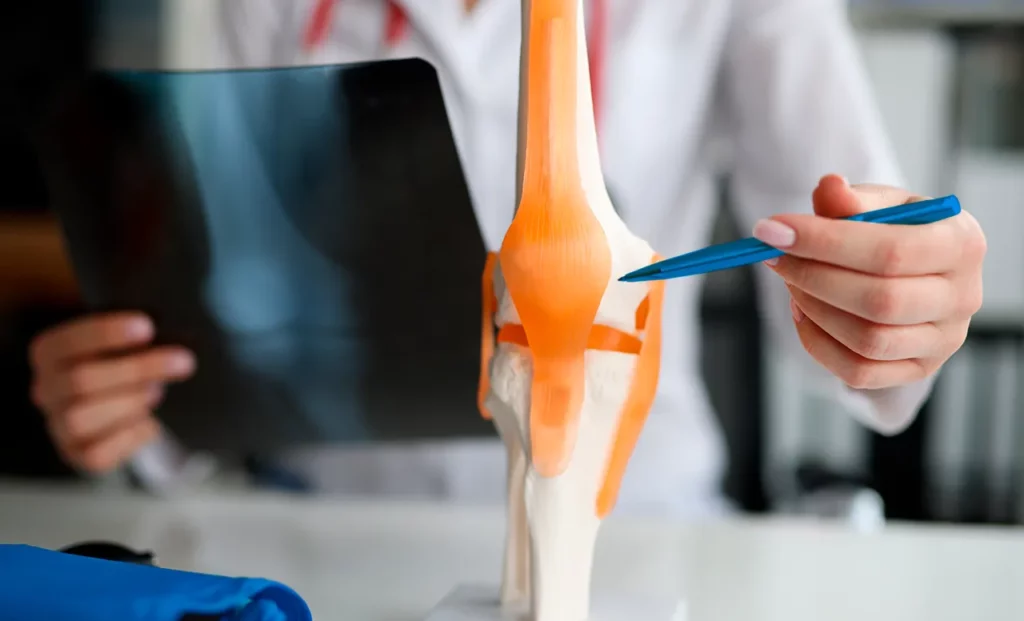
There are different types of fractures depending on the part of the body that is affected, and therefore, their level of complexity can also vary.
What is a fracture
A fracture is defined as an injury in which the continuity of a bone is interrupted, either partially or completely. It can occur due to different causes, such as direct trauma after a fall or a blow, or indirect causes such as excessive tension or twisting.
In some cases, a fracture may result from bone weakness caused by conditions such as osteoporosis, bone tumors, or infections.
The typical symptoms of a fracture include:
- Severe pain: especially when moving the affected area.
- Swelling: due to damage to nearby soft tissues.
- Visible deformity: in some cases, the broken bone may protrude.
- Impairment: depending on the severity of the injury, the person may be unable to move the limb.
Classification of fractures
Fractures can be classified in different ways depending on criteria such as skin integrity, the fracture pattern, anatomical location, underlying cause, and stability of the affected bone. Knowing these categories is essential for medical professionals to determine the most appropriate treatment for each case.
Skin integrity
The criterion of skin integrity, one of the main classifications, divides fractures into closed and open types. Closed or simple fractures occur when the bone breaks but does not pierce the skin, significantly reducing the risk of infection. In contrast, open or compound fractures occur when the broken bone penetrates the skin or when an external wound communicates with the fractured bone, resulting in exposure to contaminants that can complicate the healing process.
Fracture pattern
Another important criterion is the fracture pattern, meaning the way the bone has broken. Transverse fractures have a break line that is perpendicular to the bone’s axis, while oblique fractures are angled. Spiral fractures result from twisting forces, creating a break that curves around the bone.
Comminuted fractures are characterized by the bone fragmenting into multiple pieces, making them particularly complex to treat.
In pediatric cases, there is a variation known as greenstick fractures, where the child’s bone bends and partially breaks, similar to the flexibility of a green branch.
Location
The anatomical location also helps classify fractures. This category includes diaphyseal fractures that affect the middle part of long bones, and metaphyseal fractures located in the transition region between the diaphysis (the shaft of long bones) and the epiphysis (the end of a long bone).
Causes are another classification: traumatic fractures are the most common and result from direct impacts or accidents; pathological fractures occur in bones weakened by preexisting conditions such as osteoporosis or cancer; and stress fractures, which are microcracks caused by repetitive high-impact activities, are common in athletes or people who perform continuous and intense physical movements.
Stability
It is also important to consider fracture stability. A fracture is called stable when the bone fragments remain aligned even after the injury; whereas an unstable fracture presents significant displacement, requiring complex medical interventions to restore the anatomical and functional structure of the affected bone.
Types of Fractures
Encompassing all of the above, different types of fractures can affect any of the bones in the body. Among the most common are:
- Colles’ fracture: a common fracture near the wrist, in the distal radius, generally caused by falling on an outstretched hand; it is very common in older adults with osteoporosis.
- Clavicle fracture: occurs in the clavicle, a long bone that connects the arm to the trunk; usually caused by direct falls onto the shoulder or sports accidents.
- Hip fracture: affects the femoral neck and is also especially common in older adults with bones weakened by osteoporosis.
- Avulsion fracture: commonly occurs in athletes who perform sudden movements; it happens when a tendon or ligament pulls a fragment of bone away from its place.
- Compression fractures: a type of fracture typical of the spine, especially in people with osteoporosis, occurring when the vertebrae are compressed and collapse.
- Skull fractures: occur in the cranial bones and may range from a simple crack to depressed fractures where the bone sinks inward, or compound fractures that pierce the skin.
- Pelvic fractures: a simple fracture usually involves a single fracture line and does not affect the stability of the pelvic ring; whereas complex fractures affect multiple areas of the pelvic ring and are often associated with instability and a high risk of damage to internal organs.
- Epiphyseal fractures in children: involve the growth plate and can cause problems in bone development if not properly treated.
The treatment and management will vary depending on the type of fracture, its location, and severity. In general terms, immobilization using splints, casts, or other orthopedic devices is commonly employed. In some cases, fracture reduction may be required to realign the bone fragments, which can be achieved through external manipulation or surgery.
In some cases, internal or external fixation may be used with pins, plates, or screws.
And in most cases, rehabilitation with the support of exercises and physical therapy will help restore mobility and strength.
At the ABC Medical Center’s Orthopedics and Traumatology Center, we can provide you with specialized care. Contact us!
Fuentes
MedlinePlus, Stanford Children, Secretaría de Salud