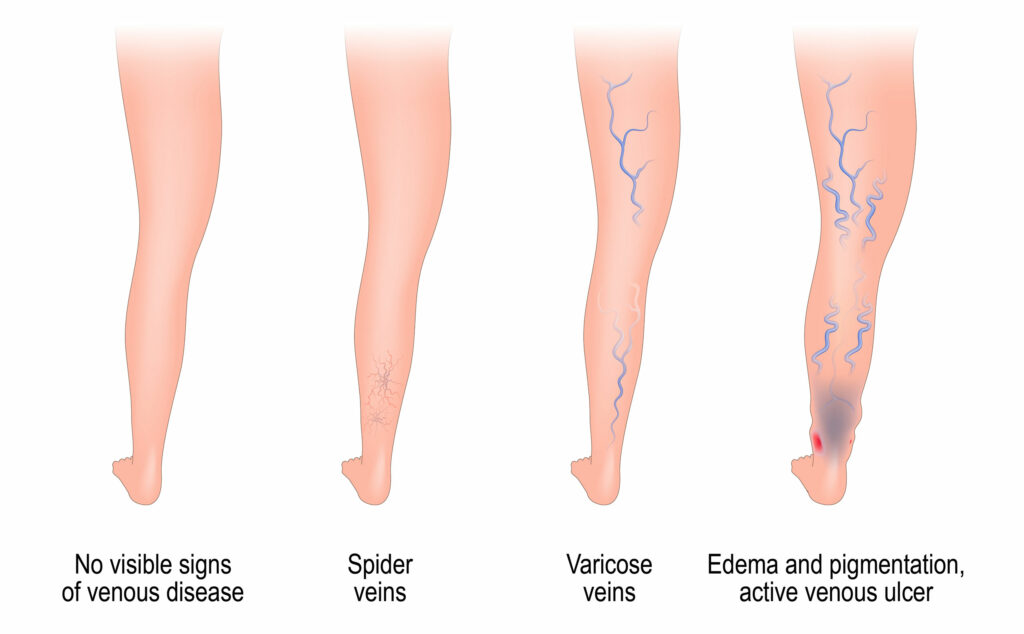
Venous ulcers, also known as venous stasis ulcers, are a type of chronic skin lesion that develops primarily on the lower legs as a result of prolonged venous insufficiency.
Venous Stasis
Chronic venous insufficiency causes blood to pool within the veins, leading to a significant increase in the pressure exerted on the surrounding subcutaneous fat and skin. This constant hypertension damages the tissues, causing thinning, hardening, and hyperpigmentation of the skin. Eventually, this leads to a breakdown of skin integrity, resulting in an open sore known as an ulcer.
Causes of Skin Ulcers
Ulcers are open wounds that can be caused by various medical conditions, with venous stasis (venous insufficiency) being the most common cause.
The risk factors for developing a venous ulcer are the same as those for venous insufficiency: advanced age, a sedentary lifestyle, prolonged standing, family history, female sex, pregnancy, obesity, and a history of deep vein thrombosis.
Symptoms of Venous Insufficiency and Venous Ulcers
Patients with this condition often experience a poor quality of life due to the severe discomfort caused by the ulcers. Self-esteem is frequently affected due to physical limitations and changes in the leg’s appearance.
Venous ulcers appear mainly on the inner aspect of the lower legs and ankles. Characteristics include:
- Appearance: Ulcers are generally shallow with irregular borders, featuring a base of friable tissue and yellowish exudate.
- Infection: Wounds may become infected, presenting with purulent discharge and a foul odor.
- Pain: Discomfort ranges from mild to moderate.
- Pulses: Arterial pulses remain normal unless concomitant arterial disease is present.
Other observable signs include spider veins (telangiectasias), varicose veins, swelling, reddish-brown skin discoloration, scaling, and lipodermatosclerosis (skin that is thin, leather-like, shiny, and lacking underlying fat).
Diagnosis
Venous ulcers are primarily diagnosed through physical examination. When the diagnosis is uncertain or surgical intervention is being planned, a venous Doppler ultrasound is performed. This imaging helps identify reflux or obstruction within the superficial, deep, or perforating venous systems.
Venous Ulcer Treatment
Treating venous ulcers is complex and, in most cases, prolonged. Management includes lifestyle changes for venous hygiene, oral or topical medications applied directly to the wound, compression therapy using bandages or specialized dressings, sclerotherapy, and surgery.
- Venous Hygiene Practices: Elevating the legs, engaging in regular exercise, and maintaining proper skin care.
- Compression Therapy: Using bandages, socks, stockings, or compression devices that improve blood flow back toward the heart. Compression therapy is the cornerstone of ulcer management.
- Topical and Medical Treatments: Local medications—such as topical antibiotics, skin regenerators, and healing agents—are critical for wound care. Debridement is often required to remove dead or infected tissue that prevents proper healing.
- Surgical Interventions: Surgery may be necessary in select cases to eliminate venous stasis or correct venous reflux in the legs.
At the Vascular, Arterial, and Venous Disease Area at Centro Médico ABC, we provide specialized care. Contact us today!