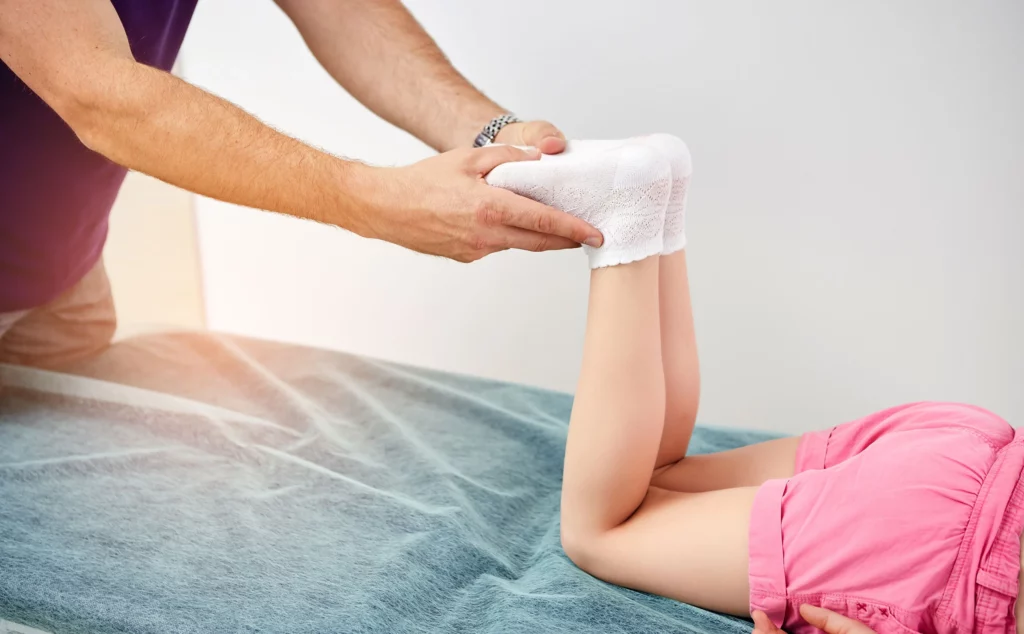
Pediatric orthopedics treats musculoskeletal injuries and disorders in infants, children, and adolescents. During these stages of life, muscles and bones are still developing, which is why injuries need to be treated differently than in adults.
Pediatric orthopedics addresses a wide range of conditions that can be congenital, hereditary, or acquired, such as those resulting from a fall or other accidents.
Hip Dysplasia and Hip DislocationIn newborns, the hip isn’t yet fully ossified (turned to bone) and is made up mostly of cartilage. During the first few months of life, the femur needs to properly fit into the pelvis; when it doesn’t, hip dysplasia occurs, making it the most common condition seen in pediatric orthopedics.
Hip dislocation, or congenital hip dislocation, occurs when the femur separates from the hip, causing it to shift outward. This can happen in one or both hips.
There are several risk factors that can contribute to hip dysplasia, including a family history of the condition, a breech position during pregnancy, being female, or low amniotic fluid levels.
Foot DeformitiesFoot deformities cover all congenital malformations affecting the feet, toes, and ankles. Clubfoot is one of the most common conditions and is marked by a noticeable inward or outward twist in the direction of the foot. While this condition doesn’t cause pain or discomfort for the baby, it should be treated as early as possible.
Other congenital malformations include tarsal coalition, in which an abnormal connection forms between certain bones in the foot; polydactyly, where a baby is born with extra fingers or toes; and ectrodactyly, a malformation characterized by clefts and abnormal development of the fingers or toes.
Prevention and Treatment in Pediatric OrthopedicsSince orthopedic problems in children can stem from two very different causes, congenital conditions or accidents, the type of treatment needed can vary widely from case to case.
In some cases, a baby or child may simply need to use specific devices to correct the problem, while in others, surgery may be necessary.
When it comes to prevention in children, regular checkups are extremely important, as they help:
- Monitor the child’s development at each stage of growth.
- Keep track of spinal development.
- Correct posture or monitor the alignment of the legs and arms.
- Guide parents in supporting their child’s at-home care for these conditions.
At ABC Medical Center’s Pediatric Orthopedics area, we can provide you with specialized care. Contact us!