ABC Medical Center > Síntomas > Parkinson’s Tremor: How to Identify It

Parkinson’s Tremor: How to Identify It

9 July 2026

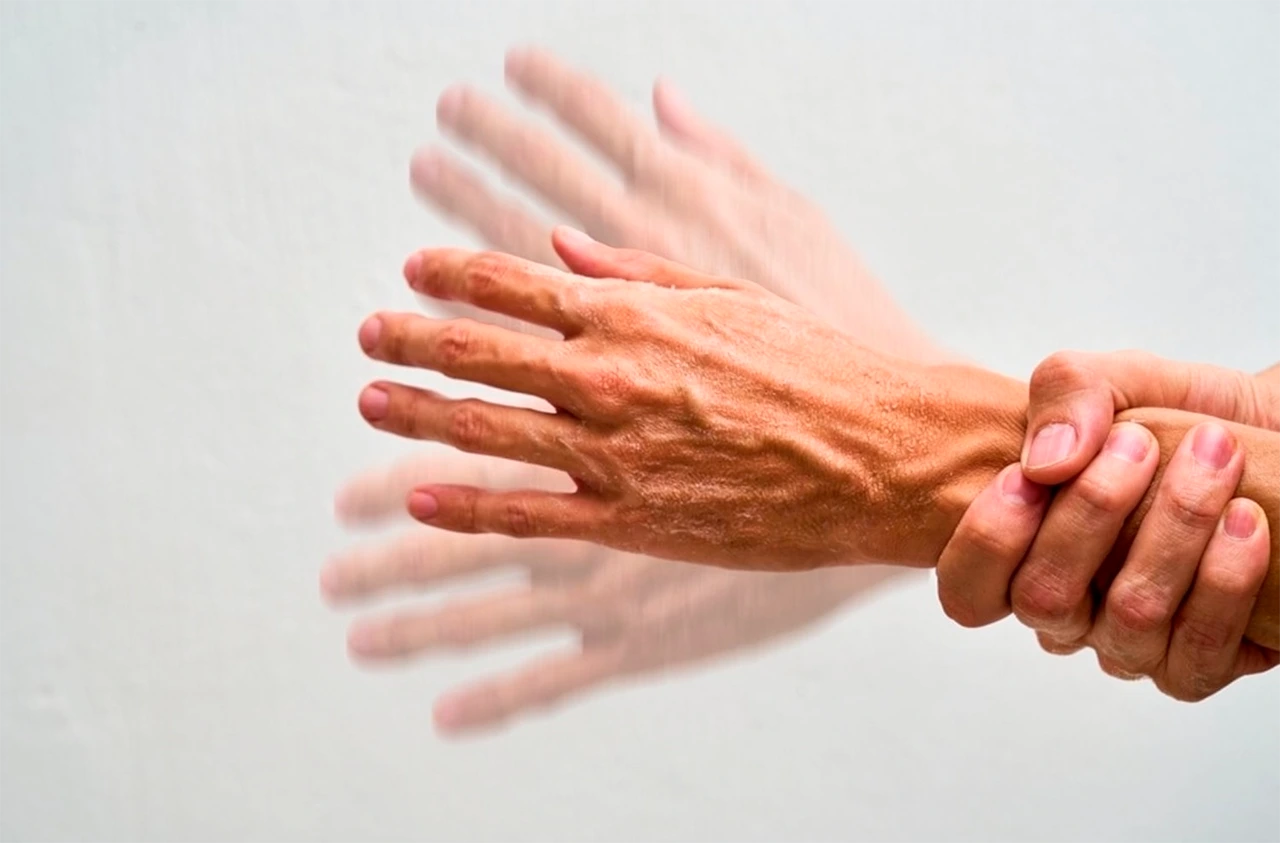
Fotografía de una mano que represente el temblor de Parkinson en una persona

Parkinsonian tremor is a neurological symptom characterized by involuntary movements, most noticeable when the person is at rest rather than performing an action. It most commonly affects the hands, but can also involve the jaw, face, or legs.

If you’ve noticed your hand beginning to shake and are wondering whether this could be the onset of Parkinson’s disease, this article will help you understand how Parkinson’s tremor typically presents, how it differs from other movement disorders, and what management options are available.

Parkinson’s disease is a progressive neurological disorder that affects movement. While its exact cause is unknown, reduced dopamine levels are known to play a central role. It is commonly associated with tremor, rigidity, and slowness of movement. In Mexico, the incidence is 8.74 per 100,000 inhabitants aged 20 or older, rising to 47.45 per 100,000 after age 65, according to the 2024 Morbidity Report from the Secretaría de Salud. However, tremor is not exclusive to Parkinson’s disease, other movement disorders and clinical conditions can also produce involuntary movements.

How Does Parkinson’s Disease First Manifest?

Parkinson’s disease sometimes begins with subtle signs: fine-motor clumsiness, smaller handwriting, stiffness, or a slower walking pace. In other people, what first draws attention is a tremor. The key is to understand the pattern of the symptom and evaluate the full clinical picture with a specialist.

How to Tell If Your Tremor Is Parkinson’s

To determine with certainty whether a tremor is a symptom of Parkinson’s disease, a physician must interpret the tremor alongside other findings from a neurological examination, since the perception and even the type of tremor can change depending on limb position. That said, the following are characteristics of Parkinsonian tremor that typically help orient the evaluation:

Resting Tremor:

It is most noticeable when the arm is relaxed, for example, when the hand is resting on the thigh. If the tremor decreases or changes when picking up an object, this is useful information to share with your doctor, though it is not diagnostic on its own.

Pill-Rolling Motion:

This term describes a rhythmic movement between the thumb and index finger, as if “rolling” a coin or a pill. This description helps the neurologist understand the pattern you are experiencing.

Asymmetric Onset:

It often begins more prominently on one side, one hand, or arm. Over time, it may involve both sides, but an asymmetric onset is typically clinically significant.

Frequency:

For diagnostic purposes, it is helpful to clearly document when the tremor appears, whether it occurs at rest or during action, how intense it is, and whether it is constant or episodic.

Progression:

The tremor can fluctuate throughout the day. Fatigue, stress, and intense emotions can make it more noticeable, which is why there are “better” and “worse” days.

As we know, tremor is not the only symptom associated with Parkinson’s disease. Dr. Nadia Alejandra Gandarilla Martínez, neurosurgeon at ABC Medical Center, discusses how to distinguish the early symptoms of Parkinson’s in a dedicated webinar on this topic.

What Is the Difference Between Essential Tremor and Parkinson’s?

“This is one of the most common questions from patients who come to our clinic. In essential tremor, the tremor is typically most noticeable when maintaining a posture or performing an action, such as writing or pouring water. In Parkinson’s disease, the tremor is more prominent at rest. Additionally, head or voice tremor is more frequently seen in essential tremor than in Parkinson’s,” explains Dr. Rubén Martínez Hernández, neurologist and head of the Parkinson’s and Movement Disorders Clinic at ABC Medical Center.

What Is Essential Tremor?

Essential tremor is a movement disorder that primarily affects the hands and, in some people, the head or voice. It may have a familial component and its intensity can fluctuate.

Progression:

Both conditions can be progressive, but with distinct features. In Parkinson’s, tremor may coexist with rigidity and slowness of movement. In essential tremor, the predominant symptom is action or postural tremor, which impacts fine motor tasks.

Management:

While treatment varies by patient, management of essential tremor focuses primarily on reducing tremor that appears during activity, while treatment for Parkinson’s disease is typically directed at the full spectrum of motor symptoms. The decision depends on the tremor pattern (resting vs. action), accompanying symptoms, and the patient’s clinical history.

How to Manage Parkinson’s Tremor

If no diagnosis has been established yet, the first step is to understand the tremor pattern and reduce factors that intensify it. This also helps guide tremor management in Parkinson’s disease later if the suspicion is confirmed. The goal is to reduce the impact on daily life with a safe plan always guided by the treating physician.

General Measures and Lifestyle Changes

Prioritizing sleep, physical activity, and stress management is important. If you notice a clear relationship, moderating caffeine intake may also help. Keeping a log, noting the time, which side is affected, whether it occurs at rest or during action, and what was happening when it worsened or improved, can be very useful at your consultation.

Rehabilitation and Physical Therapy

Physiotherapy and occupational therapy can improve mobility, posture, and coordination. Even if the tremor does not disappear, many people gain confidence and functional control for activities such as eating, writing, and dressing.

Medication Management Under Medical Supervision

In Parkinson’s disease, certain treatments can improve motor symptoms and, in some patients, the tremor itself. The response varies and requires ongoing adjustments and neurological monitoring due to potential side effects. Even surgery for patients with Parkinson’s disease may be considered as an alternative to improve quality of life in selected patients.

When to See a Neurologist for Tremor

Seek a consultation if the tremor is new and persistent, is progressing, affects your daily life, or is accompanied by rigidity, slowness, changes in gait, or falls. If possible, bring a video of the tremor and a list of your current medications and supplements. If the tremor appears suddenly along with weakness, speech impairment, or facial asymmetry, these are signs that require urgent medical attention.

Seeking medical care is essential for an accurate diagnosis. Other neurological conditions can resemble Parkinson’s disease in its early stages. If you are in Mexico and would like a comprehensive evaluation, ABC Medical Center has a Parkinson’s and Movement Disorders Clinic with a multidisciplinary approach to diagnosis and treatment.

Fuentes:

How can we help you?

    Ricardo Ostos

    Ricardo Ostos

    Content Creator

    Ricardo can convey complex medical information in an accessible and friendly way so that all of our patients can understand and benefit from it. In addition, he has an empathetic approach, offering information and practical advice that really makes a difference in people's lives. #lifebringsustogether.

    Learn more about Ricardo on LinkedIn

    The dissemination of the content of this material is for informational purposes only and does not replace, under any circumstance or condition, a consultation with a specialist doctor, for which the ABC Medical Center is not responsible for the different use that may be given to it. If you require more information related to the subject, we suggest you contact the specialist doctor you trust directly.

    Index

    Content