Aortoiliac occlusive disease occurs when the aorta—the body’s primary blood vessel—becomes blocked.
The iliac arteries are the most distal branches of the aorta, which splits at the level of the belly button to carry blood to the lower extremities and pelvic organs.
This blockage is generally caused by the buildup of atheromatous plaques (composed of cholesterol and calcium) inside the walls of these blood vessels.
Symptoms of Aortoiliac Occlusive Disease
Peripheral artery disease affects approximately 15% to 20% of people over the age of 65.
For symptoms to appear, these arteries typically need to be blocked by more than 60% to 70% of their lumen. Consequently, symptoms may initially be absent. As the disease progresses, symptoms can include fatigue, pain, or cramping in the legs when walking or climbing stairs. In men, another symptom of this condition can be erectile dysfunction.
When aortoiliac occlusive disease becomes severe, it can cause pain in the feet and toes even at rest, as well as coldness, numbness, and non-healing ulcers. The latter can progress to gangrene or tissue death.
Causes of Aortoiliac Occlusive Disease
The most common cause of aortoiliac disease is atherosclerosis—the hardening and narrowing of the arteries.
Diagnosis and Treatment
If you experience one or more of these symptoms, it is essential to consult a vascular surgeon, who will take a complete medical history and perform a physical exam to reach an accurate diagnosis.
Diagnostic evaluations typically include an ultrasound of the abdominal aorta and lower extremity arterial vessels, as well as a CT angiography (CTA). These imaging tests allow specialists to locate the exact sites of obstruction and determine the best treatment plan.
Treatment for Aortoiliac Occlusive Disease
Fuente:
Dr. Salomón Cohen Mussali – Médico especialista en Cirugía Vascular y Endovascular del Centro Médico ABC.
NIH, Scielo, Cleveland Clinic
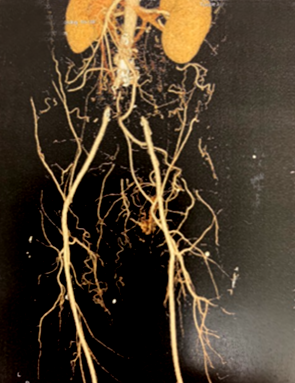
CT scan of aortoiliac occlusive disease
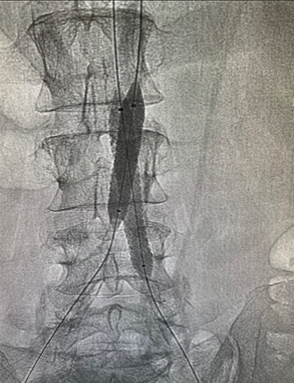
Aortography with stent placement
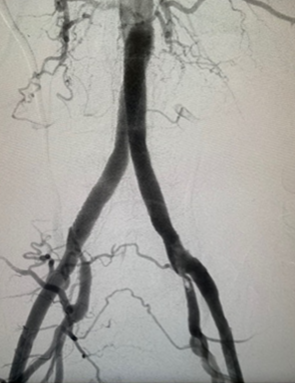
Final result
When aortoiliac occlusive disease is mild to moderate, treatment can be conservative, focusing on managing risk factors. This includes quitting smoking, controlling cholesterol levels, managing blood pressure, and starting a progressive exercise program.
Certain medications are typically prescribed, such as aspirin—a platelet inhibitor—and statins, which help lower cholesterol and slow the progression of plaque buildup in these blood vessels.
In moderate to severe cases, minimally invasive procedures can be performed, such as angioplasty—dilating the narrowed areas with an intravascular balloon—accompanied by stent placement. Stents are mesh-like tubes that press the plaque against the vessel wall, creating a wider opening for blood flow.
In some instances, a surgical bypass is required to route blood around the blocked section.
At the Vascular, Arterial, and Venous Disease Department at Centro Médico ABC, we provide specialized care. Contact us today!