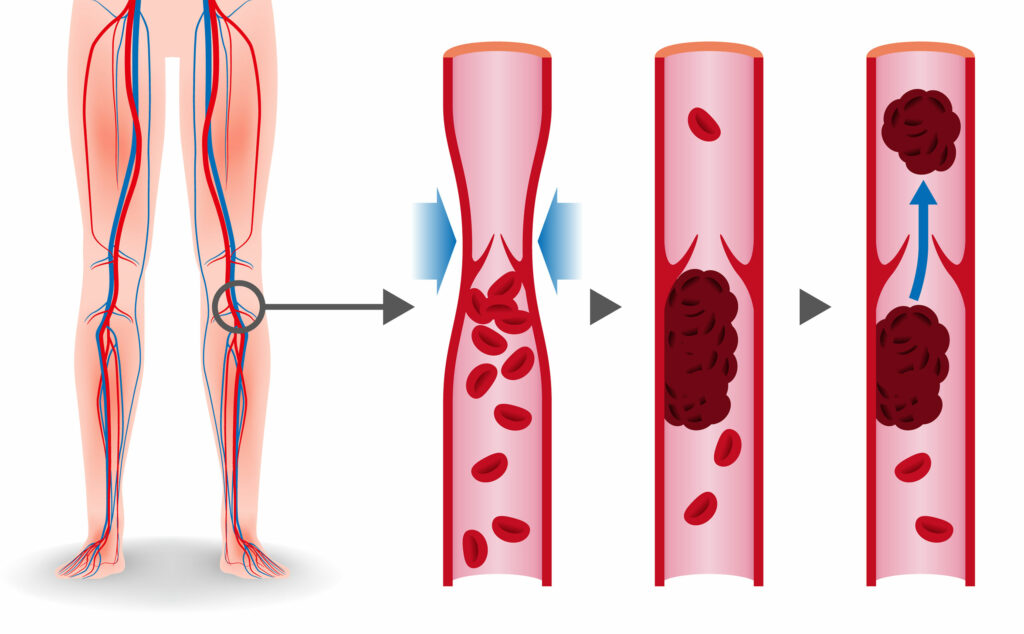
Deep vein thrombosis (DVT) occurs when a blood clot or thrombus forms in the deep veins, usually in the legs. This condition can be extremely dangerous.
The blood clots can break loose, travel to the lungs, and cause death.
Symptoms of Deep Vein Thrombosis
The most common symptoms of deep vein thrombosis are pain and swelling in the thighs, legs, and feet. However, redness, increased warmth, a purplish discoloration, or the sudden appearance of varicose veins may also occur. Additionally, pulmonary symptoms (chest pain, shortness of breath, coughing, and rapid heart rate) can be observed.
Deep vein thrombosis can occur during prolonged periods of sitting or inactivity—such as on long trips—or as a result of other medical conditions, surgeries, or injuries. Some patients develop DVT due to blood disorders that cause abnormal clotting.
The severity of DVT lies in the high likelihood that a clot in the legs will dislodge, travel to the lungs, and block the pulmonary arteries.
Causes and Risk Factors of Deep Vein Thrombosis
The most significant risk factors include age (>60 years), lack of mobility, injury or surgery, pregnancy, oral contraceptives, being overweight, smoking, cancer, a history of DVT, and genetic abnormalities.
Deep Vein Thrombosis Treatment
The goal of DVT treatment is to prevent the clot from growing larger and from breaking loose and traveling to the lungs. The cornerstone of treatment is anticoagulants, which should be initiated as soon as DVT is diagnosed. In patients who cannot take anticoagulants, placing a filter in the inferior vena cava is evaluated to prevent clots from reaching the lungs.
In severe cases or those with a high risk of short- and long-term complications, dissolving the clot with medications called thrombolytics—with or without mechanical assistance to break them up—should be considered.
The two main complications of DVT are massive pulmonary embolism and post-thrombotic syndrome—a condition in which damage to the leg veins leaves lasting complications that significantly impact quality of life.
At the Vascular, Arterial, and Venous Disease Area at Centro Médico ABC, we provide specialized care. Contact us today!