
Contact us
Precision Medicine
What Is Atrial Tachycardia
4 November 2025
Atrial tachycardia is a common heart condition characterized by an arrhythmia of rapid and irregular electrical impulses, exceeding 100 beats per minute; a normal rhythm ranges from 60 to 80 beats. This condition damages the heart’s upper chambers because the heart muscle has to work harder to properly pump blood to the body.
Atrial tachycardia regularly occurs in pregnant women or in people who have had cardiac surgery. However, it can also be triggered by high consumption of caffeine, tobacco, alcohol, and drugs, the presence of bacterial infections, or some medications to treat allergies, asthma, and colds.
The risk increases with the presence of the following conditions:
- Lung cancer
- Coronary heart disease
- Diabetes
- Chronic obstructive pulmonary disease
- Pulmonary embolism
- Hyper- or hypothyroidism
- Congestive heart failure
- Pulmonary insufficiency
- Pneumonia
Symptoms of Atrial Tachycardia
In atrial tachycardia, the symptoms can vary in intensity depending on the heart rate and the general health of the person experiencing it.
In some cases, it can be asymptomatic, although it commonly causes discomfort that affects the patient’s quality of life.
The most common symptoms include:
- Exhaustion or weakness
- Obstructive sleep apnea
- Weakness
- Trouble breathing
- Episodes of rapid or irregular palpitations
- Dizziness, lightheadedness, and confusion
- Chest tightness and pain
- Loss of consciousness
- Sweating
- Vertigo
These symptoms usually appear suddenly and can last from a few seconds to several hours.
If atrial tachycardia is not treated in time, it can weaken the heart and trigger heart failure, especially if other conditions exist.
Diagnosing Atrial Tachycardia
The diagnosis of atrial tachycardia usually begins with a complete clinical evaluation, in which the doctor will collect information related to the patient’s symptoms and medical and family history.
One of the most important procedures to confirm its presence is the electrocardiogram (ECG), which records the heart’s electrical activity and detects an abnormal heart rhythm originating from the atria.
Since atrial tachycardia may not be present at the time of the consultation, ambulatory monitoring devices can be used. These are known as a 24-hour Holter monitor or event recorders, which can capture irregular episodes while the patient performs their normal daily activities.
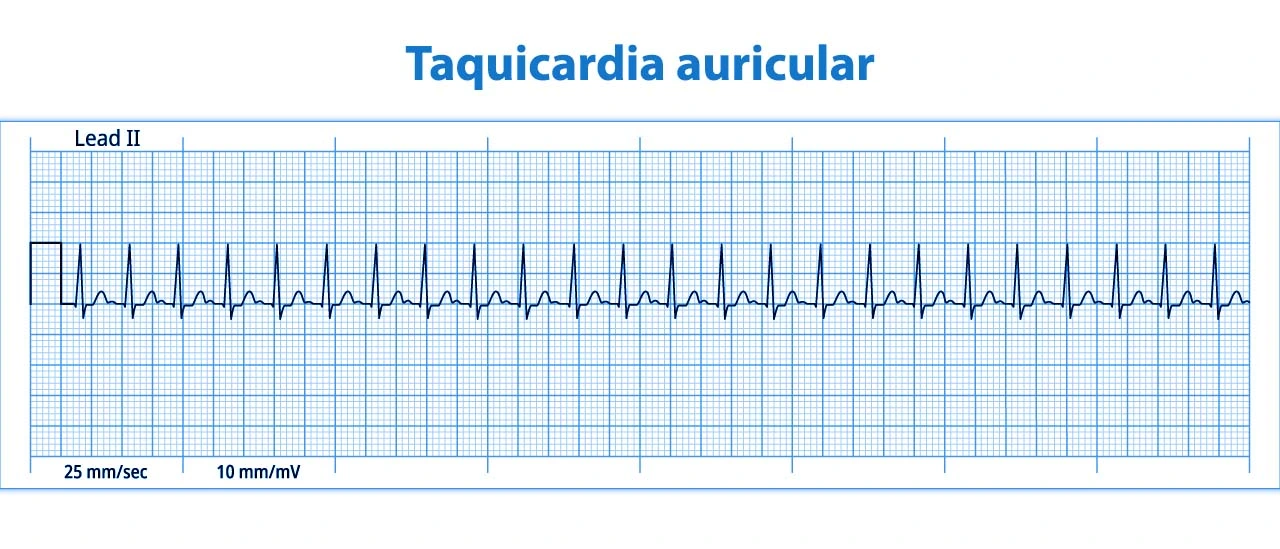
The doctor may also order complementary tests that will help identify underlying causes or associated conditions, including blood tests to evaluate hormone or electrolyte levels, imaging studies such as an echocardiogram to examine the heart’s structure, and, on occasion, an invasive electrophysiology study to locate the exact focus of the tachycardia within the atria.
Reaching an accurate diagnosis is essential to determine the most appropriate treatment.
Treating Atrial Tachycardia
In atrial tachycardia, the treatment will depend on the underlying cause, the frequency and duration of the episodes, as well as the type of symptoms being presented.
Initially, non-pharmacological measures such as rest can be used, although this is more common in asymptomatic patients.
In patients with symptoms or recurrent episodes, beta-blockers or calcium channel blockers can be effective in controlling the heart rate.
For cases where pharmacological treatment fails to adequately control the arrhythmia, catheter ablation may be considered. This technique consists of identifying and destroying the ectopic atrial focus responsible for the tachycardia.
In situations where atrial tachycardia is related to structural heart diseases, the management must be comprehensive, including treating the underlying heart condition.
At the Arrhythmia Clinic at ABC Medical Center, we can provide you with specialized care. Contact us!
Fuentes:
How can we help you?

Ricardo Ostos
Content CreatorLearn more about Ricardo on LinkedIn
The dissemination of the content of this material is for informational purposes only and does not replace, under any circumstance or condition, a consultation with a specialist doctor, for which the ABC Medical Center is not responsible for the different use that may be given to it. If you require more information related to the subject, we suggest you contact the specialist doctor you trust directly.
