
Targeted Therapy: The Era of Personalized Cancer Treatments
A cancer diagnosis represents one of the most complex and life-altering challenges a person can face. Historically, the primary tools available to combat this condition relied on widespread interventions that, while effective at destroying malignant cells, also significantly impacted the rest of the body. However, medical science has evolved toward more precise and promising horizons. Targeted therapy is a revolutionary advancement in oncology that focuses on specifically attacking cancer cells while minimizing damage to healthy cells—offering more effective, highly personalized treatments for patients.
Today, clinical practice no longer views cancer as a single, uniform disease, but rather as a collection of distinct molecular alterations that vary significantly from one individual to another. Thanks to this paradigm shift, personalized cancer therapies have emerged at the forefront of modern medicine. In this article, we explore in detail how this innovative treatment option works, the medications involved, and how specialists determine the optimal strategy to improve each patient’s prognosis and quality of life.
What Is Targeted Therapy and How Is It Transforming Cancer Care?
Targeted therapy is an innovative medical modality that selectively attacks the molecular changes within cancer cells, sparing surrounding healthy tissue and transforming treatment efficacy.
To understand the impact of this medical option, it is essential to define its core concepts. Targeted therapy is an oncological treatment approach that utilizes drugs or substances specifically designed to identify and attack the molecular changes associated with the growth and proliferation of cancer cells. Unlike conventional chemical methods that act broadly on any actively dividing cell, this strategy targets the specific internal defects that cause a cell to become malignant—opening an unprecedented therapeutic window in cancer management for anyone seeking to understand what targeted therapy is and its full potential.
This methodology completely transforms the patient’s clinical journey. By blocking the biological signals that instruct tumors to expand or form new blood vessels, disease progression can be contained in a far more controlled manner. This approach not only increases positive response rates, but also redefines therapeutic success by balancing medical efficacy with the patient’s overall well-being.
The Link Between Precision Medicine and Targeted Therapies
Targeted therapies serve as the operational arm of precision medicine, tailoring each intervention to the unique genetic characteristics of a patient’s tumor.
Precision medicine aims to deliver the right treatment to the right patient at the right time. Targeted cancer therapies represent the most tangible application of this concept, as they are not based solely on the tumor’s anatomical location, but on its unique biological signature and the specific genetic errors driving its uncontrolled replication.
This close relationship allows oncology to transition from a generalized care model to a framework of absolute personalization. By analyzing the DNA or RNA of tumor cells, the medical team can predict with a high degree of certainty which specific drug will successfully disrupt the tumor’s survival pathways—optimizing clinical resources and response times at every stage of diagnosis.
Key Differences Between Traditional Chemotherapy and Targeted Therapy
Unlike traditional chemotherapy that destroys cells indiscriminately, targeted molecular therapy acts selectively on the specific abnormalities of malignant cells.
While traditional chemotherapy affects both cancer cells and healthy cells, targeted therapy acts selectively on malignant cells. Standard chemotherapy focuses primarily on eliminating all rapidly dividing cells in the body, which includes essential healthy tissues such as hair follicles, the digestive lining, and bone marrow—often causing severe adverse effects.
In contrast, targeted molecular therapy recognizes markers located exclusively or predominantly on the surface or inside of tumor cells. By engineering drugs that fit precisely into these abnormal receptors, the treatment spares healthy cellular structures. This dramatically reduces systemic complications and allows for longer administration periods with significantly better patient tolerance.
How Do Targeted Therapy Medications Work?
Targeted cancer drugs block the vital biochemical mechanisms that tumors require to multiply, survive, and spread throughout the body.
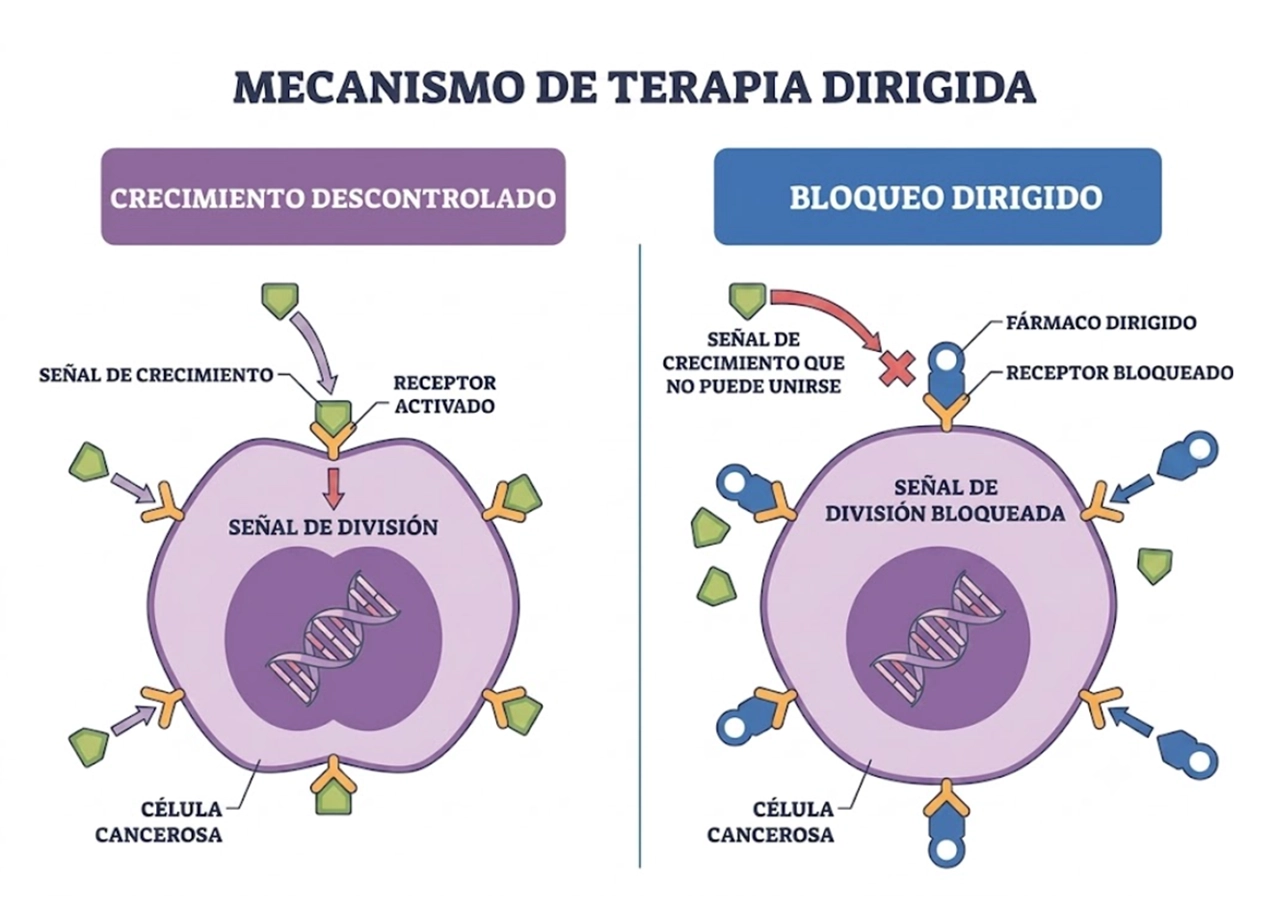
Targeted therapy encompasses a broad range of medications engineered to address different facets of the disease. These drugs fall into several categories based on their mechanism of action, interacting with cellular components in distinct ways. Some act by blocking external receptors that capture growth signals, while others penetrate the cell membrane to disable internal mechanisms responsible for reproduction and survival.
The sophistication of these targeted cancer drugs lies in their ability to disrupt intercellular communication. If a tumor cell fails to receive the chemical signals prompting it to proliferate, it either enters a dormant state or triggers programmed cell death (apoptosis). This strict biochemical control limits the tumor’s capacity to adapt, reducing the likelihood of short-term therapeutic resistance and allowing for a comprehensive approach to managing the disease.
Cell Signaling Inhibitors (Small-Molecule Therapies)
Small molecules readily enter the interior of the cell to deactivate the specific enzymes that coordinate the uncontrolled growth of malignant tumors.
One of the most prominent families in this field is tyrosine kinase inhibitors (TKIs), which block enzymes known as tyrosine kinases—proteins that play a crucial role in cell signaling and promote cancer growth; for example, in chronic myeloid leukemia or non-small cell lung cancer. Due to their small molecular size, these compounds cross the cell membrane with great ease.
Similarly, this category includes cell cycle inhibitors, which block the proteins responsible for regulating cell division; as seen in hormone receptor-positive breast cancer. Also notable are gene expression modulators, which act directly on the DNA or RNA of cancer cells to alter and halt their growth; for example, in ovarian or breast cancer, preventing the tumor from translating the genes necessary to sustain its existence.
Monoclonal Antibodies: The Immune System as an Ally
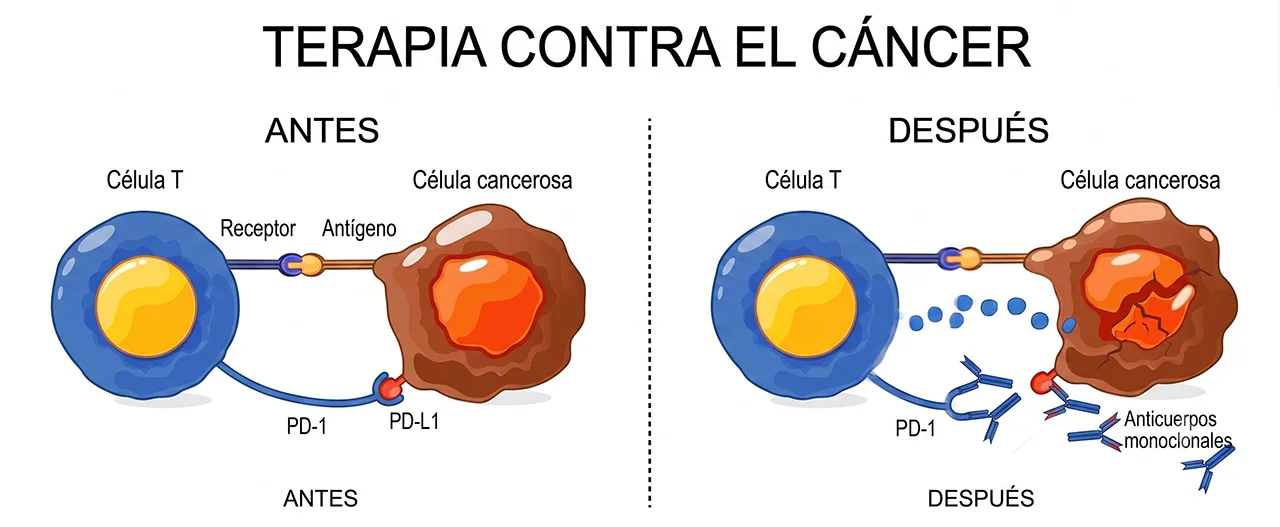
Monoclonal antibodies locate and attach to specific proteins on the tumor surface, marking malignant cells for immediate destruction.
Targeted immunotherapy includes monoclonal antibodies designed to bind to specific molecules on the surface of cancer cells; for example, in HER2-positive breast cancer or non-Hodgkin lymphoma. These laboratory-created proteins mimic the body’s natural defenses, locating tumor antigens with pinpoint accuracy to bind to them irreversibly and halt the biological progression of the disease.
Once attached, monoclonal antibodies can act in several ways: by directly blocking receptors that capture nutrients, by delivering toxic substances directly inside the malignant cell, or by acting as a signal for the immune system’s own cells to recognize and eliminate the invader. Similarly, therapeutic vaccines are designed to stimulate the immune system to attack specific cancer cells, an approach used in certain types of advanced cancer, such as metastatic prostate cancer.
The Role of Biomarkers and Genomic Testing
Genomic testing detects each tumor’s unique biomarkers, providing the biological roadmap required to select the appropriate therapy.
The success of any precision-based cancer treatment relies entirely on the precise identification of biomarkers. A biomarker is a measurable molecule or genetic alteration that reveals a tumor’s specific characteristics and predicts how it will respond to a particular drug. Without prior molecular and genomic testing, administering targeted molecular therapy would lack the necessary clinical foundation.
Using advanced techniques such as Next-Generation Sequencing (NGS), pathologists analyze tissue fragments obtained via biopsy or through a blood sample (liquid biopsy). This in-depth analysis uncovers mutations, amplifications, or gene fusions that act as the tumor’s Achilles’ heel, allowing specialists to craft a therapeutic strategy with a minimal margin of error and ensuring the treatment is truly effective.
Types of Cancer That Benefit from Personalized Therapy
Various solid and hematologic malignancies achieve remarkable remission rates thanks to the clinical use of targeted therapies tailored to each patient.
The therapeutic spectrum of targeted cancer therapies is expanding continuously, encompassing conditions that previously had very limited treatment options. By focusing efforts on the specific biological vulnerabilities of each tumor, medical oncology has transformed highly aggressive diseases into manageable, long-term controllable conditions.
Within this landscape of innovation, personalized cancer treatments have demonstrated overwhelming success in specific types of malignancies. Transitioning to this clinical model has allowed medical teams to replace or complement traditional regimens, redefining overall survival expectations and solidifying the effectiveness of contemporary medical protocols.
Advances in Breast Cancer and Specific Biomarkers
Breast cancer management has been radically transformed by drugs targeting proteins such as HER2 and specific hormone receptors.
Breast cancer management is one of the clearest examples of the success of targeted therapy in breast cancer. Historically, patients with tumors overexpressing the HER2 protein faced very poor prognoses. However, the development of specific monoclonal antibodies capable of binding to the HER2 receptor and blocking its growth signals completely altered the natural history of this medical condition.
Furthermore, cyclin-dependent kinase (CDK4/6) inhibitors have revolutionized the management of hormone receptor-positive breast cancer in advanced stages. These medications effectively halt cell cycle progression in malignant cells, significantly extending progression-free survival while maintaining optimal quality of life for patients.
Targeted Therapy in Non-Small Cell Lung Cancer (NSCLC)
Specific genetic mutations in lung cancer are now effectively combated with state-of-the-art oral inhibitor pills.
Non-small cell lung cancer is no longer treated uniformly with broad chemotherapy. Today, comprehensive molecular profiling is a mandatory clinical requirement to check for specific mutations in genes such as EGFR, ALK, ROS1, RET, or BRAF. The presence of any of these genetic alterations allows for the immediate initiation of highly specific oral inhibitors.
This approach has enabled many patients to avoid intravenous treatments as a first-line option. Clinical results show accelerated tumor shrinkage and a markedly lower toxicity profile, allowing individuals to continue their daily activities while receiving a highly sophisticated treatment designed to neutralize tumor growth.
Applications in Hematologic Oncology and Other Solid Tumors
From leukemias to gastrointestinal tumors, targeted therapies effectively block vascular supply and the pathology’s molecular drivers.
In hematology, chronic myeloid leukemia represents the classic paradigm of molecular success. The introduction of drugs that selectively block the abnormal BCR-ABL protein transformed a fatal disease into a manageable, long-term condition controlled with a single daily tablet. Likewise, angiogenesis inhibitors—medications that block the growth of new blood vessels that tumors need to acquire nutrients—prevent solid tumors (such as colorectal or kidney cancer) from colonizing new tissues by depriving them of essential blood supply.
Key Features of Targeted Therapy
The main characteristics of targeted therapy include the following fundamental properties:
- Molecular Specificity: Treatments target specific genes, proteins, or molecular processes that contribute to cancer growth.
- Fewer Side Effects: By sparing healthy cells, targeted therapy generally causes fewer adverse effects compared to traditional chemotherapy.
- Personalization: Genetic or molecular testing helps identify specific mutations in a patient’s tumor, enabling a highly individualized approach.
The Role of the Oncologist Specializing in Targeted Therapies
The medical specialist comprehensively coordinates molecular diagnosis, optimal drug selection, and precise treatment monitoring.
An oncology specialist is dedicated to the design, application, and follow-up of cancer treatments, including targeted therapy, nuclear medicine, and conventional medical oncology. These professionals possess specialized training to interpret complex molecular studies and safely coordinate the administration of precision therapies.
In light of the rapid evolution of targeted therapy drugs, the specialist serves as an essential guide throughout the patient’s healthcare journey. Their role spans from initial treatment selection to managing drug interactions, ensuring every medical decision is firmly backed by the latest scientific evidence and international clinical guidelines.
How Does an Oncologist Determine the Ideal Treatment?
Through a comprehensive clinical evaluation and biological tumor testing, the specialist identifies the exact medication for each unique case.
Key responsibilities of an oncologist include conducting initial patient evaluations to understand the tumor’s nature and ordering genetic testing or specific molecular panels to identify biomarkers. This determines whether the patient is a candidate for targeted therapy. Once this information is available, the oncologist selects the treatment regimen and determines the appropriate drug or combination of drugs to attack that specific type of cancer.
This rigorous process requires close multidisciplinary collaboration with pathologists, geneticists, and nuclear radiologists. By correlating the patient’s overall physical status with the tumor’s genomic sequencing, the oncologist can predict drug tolerability and structure a treatment plan with precise dosages to maximize clinical benefit and mitigate associated risks.
What to Expect During the Process and Potential Side Effects
Continuous monitoring allows care teams to evaluate tumor response and effectively manage side effects, which are typically mild and controllable.
Following the start of a treatment regimen, the specialist conducts ongoing monitoring to evaluate the patient’s response, adjusting dosages or combining medications as necessary. Although targeted cancer therapies are significantly gentler on the body than conventional chemotherapy, they are not entirely free of adverse reactions.
The most common side effects associated with molecular drugs include:
- Moderate fatigue
- Skin rashes or dry skin
- Elevated blood pressure (hypertension)
- Diarrhea
- Minor blood clotting alterations
The vast majority of these symptoms are predictable and manageable through supportive medical care, allowing patients to complete their treatment cycles without major disruptions to their daily routines.
At the Cancer Center of ABC Medical Center, we have a team of highly trained specialists in targeted therapy dedicated to offering comprehensive, personalized care for all your oncological needs. Our oncology team in Mexico City is committed to your well-being, utilizing advanced technology and cutting-edge treatments to manage conditions such as breast cancer, prostate cancer, chronic myeloid leukemia, and more—providing a safe and professional environment for anyone seeking an oncologist near me.
Frequently Asked Questions
Fuentes: Cancer.org, MedlinePlus, Cigna