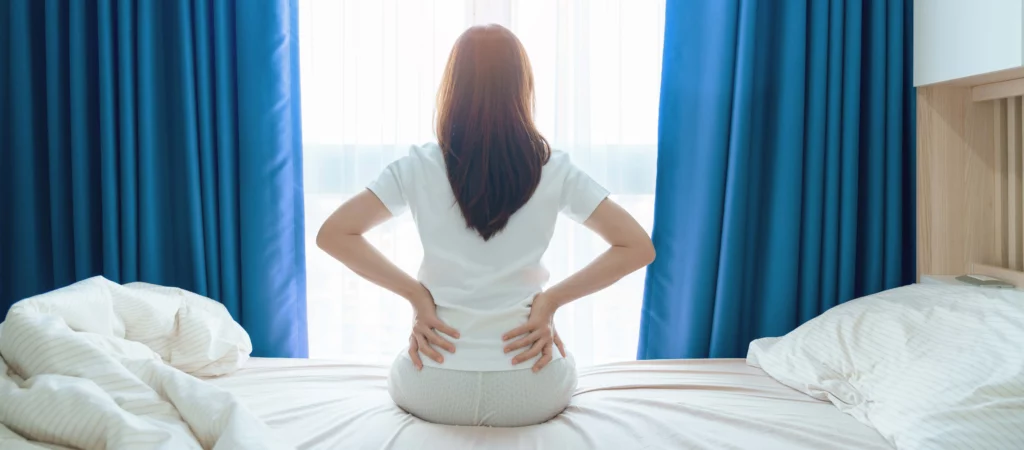
Low back pain is pain or discomfort that occurs, as its name indicates, in the lower part of the back or lumbar region.
The lower back refers to the area below the rib cage and above the buttocks. When discussing the spine, it is important to mention that it consists of five vertebrae, as well as soft tissues, muscles, ligaments, tendons, and nerves.
Because of these components, there are several possible causes of lower back pain.
Why does the lower back hurt?
The causes of low back pain can be very diverse, but among the most common are:
- Muscle injuries
- Ligament injuries
- Problems in the lumbar vertebrae
- Other diseases such as arthritis or osteoporosis
- Poor posture while walking or resting
- Certain repetitive movements
- Overweight
- Low physical activity
- Emotional factors such as anxiety or stress
How to know if low back pain is serious?
Determining whether low back pain is serious or not depends on different factors. First, it is necessary to know why the lower back hurts. Regardless of its intensity, it is advisable to undergo an evaluation with a specialist to rule out more serious problems.
Among the most frequent signs or symptoms that help determine the severity of the condition are:
- Pain: the pain may be intense, sudden, radiate to the legs, be persistent, and last more than a few days or weeks.
- History of injuries: if there is a history of lower back injuries due to an accident such as a fall or collision, it is important to pay attention if new pain appears.
- History of diseases: in people who have been diagnosed with conditions such as arthritis, spondylolisthesis, or osteoporosis, it is important to seek medical attention if low back pain develops.
- Other symptoms: if back pain is accompanied by other symptoms such as fever, loss of bladder or bowel control, progressive muscle weakness, or changes in body sensation, any of these are signs that the back pain may be more serious than expected.
If you experience one or more of these symptoms together with lower back pain, or if you are simply worried about how severe your pain is, it is important to see a specialist. This could be a spine specialist in orthopedics or a neurologist; each treats different underlying causes, but both are trained to help guide you toward recovery.
Types of treatment for low back pain
Before knowing how to quickly relieve low back pain, the cause and origin must be identified. Once this is determined, treatment may vary. In some cases, a single treatment may be required, while in others, multiple treatments will be necessary.
Among the most common treatments is the use of medications such as pain relievers, anti-inflammatory drugs, or muscle relaxants. Physical therapy, including stretching and strengthening exercises, massages, manual therapy, the use of heat or cold, and electrotherapy, are other tools that frequently help treat this condition.
Good spinal hygiene is another tool that helps both relieve low back pain and prevent it from occurring due to poor posture. Good spinal hygiene includes adopting proper posture while standing, sitting, and lying down. It also means avoiding activities that can worsen existing pain, such as lifting heavy objects. Maintaining a healthy weight is another key aspect of good spinal hygiene.
If back pain is severe and not a temporary issue, steroid injections to reduce inflammation and pain may be an option if the treating physician recommends them, while surgery is an option to treat structural problems such as herniated discs or spinal stenosis. It is important to understand that while surgery is an option, it is usually the last resort, and less invasive treatments are typically attempted first.
Exercises for low back pain
Since low back pain is often caused by poor posture or improper movement and is not a serious condition, exercises for low back pain are a good option in these cases; these help strengthen, stretch, improve flexibility, and reduce pain.
Before performing back exercises, it is important to seek specialized care to identify which exercises will improve health and avoid counterproductive effects.
At the Orthopedics and Traumatology Center and the Neurology Center of Centro Médico ABC, we can provide you with specialized care to address the various causes of low back pain. Contact us!
Fuente:
MedlinePlus, NIAMS, IMSS