Key points:
- Ortho-geriatrics aims not only to treat osteoporosis-related fractures, but also to address the underlying causes behind them.
- Patients with osteoporosis should be treated with the goal of restoring an optimal quality of life.
- There are several risk factors that can contribute to a fall-related fracture.
Fractures from falls in older adults are a health issue within the scope of orthopedics, orthogeriatrics, and geriatrics. When we talk about falls in older adults that carry a risk of fracture, we’re referring to low-energy falls, that is, falls that occur while standing, sitting, or in bed. These typically wouldn’t cause any problems for most people, but in older adults, they can lead to fractures or other serious injuries, explains Dr. Ramón González Pola, orthopedic surgeon at ABC Medical Center.
Orthogeriatrics is a branch of orthopedics focused on caring for older adults’ bone health, meaning it doesn’t just treat the fracture itself, but also aims to help patients remain fully functional, continue working, and enjoy an optimal quality of life despite their injuries, while also prioritizing prevention of further injury.
Although the UN defines an older adult as someone 60 years of age or older, and the WHO uses the threshold of 65 and older, in medical practice the focus is on the conditions patients begin to face starting at age 60.
Osteoporosis is a decrease in bone mineral density and the most common bone disease that can occur. It affects the bone’s microarchitecture, which comprises cortical bone (the outer walls of the bone) and cancellous or spongy bone (the inner part of the bone).
A person with osteoporosis may be dealing with one of two different situations: either they’re producing too little new bone, or they’re reabsorbing too much bone,both of which are complex conditions.
Osteoporosis is diagnosed using a test called a DXA scan (dual-energy X-ray absorptiometry), which measures how much radiation the bones absorb and, using standardized values, allows for a diagnosis.
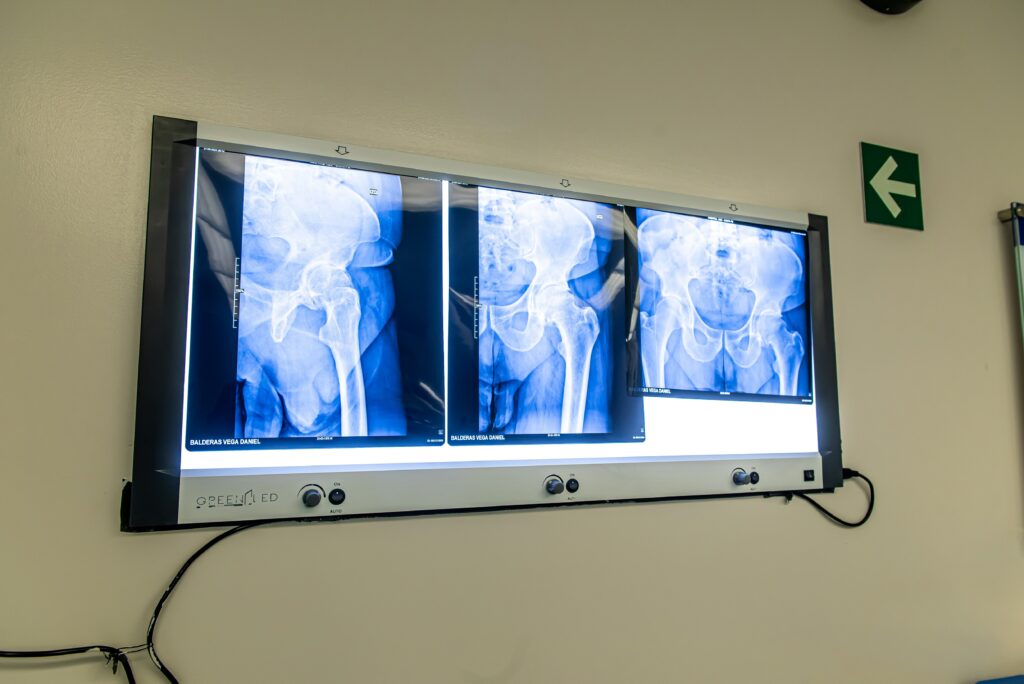
“Osteoporosis weakens bones and makes them brittle, to the point that a fall can cause a fracture. Fractures associated with this condition most often occur in the hip, wrist, or spine. In Mexico, it’s estimated that by 2050, the annual number of hip fractures will reach 110,055, more than five times the figure recorded in 2005, which was 20,725.”1
Everyone reaches their peak bone mineral density around age 30, and from that point on, the goal is to keep that density stable. In the body, there are osteoclasts, which break down bone and release it into circulation, and osteoblasts, which form new bone. Dr. González Pola notes that neither of these cell types is inherently “good” or “bad,” but when one becomes more active than the other, it throws off a person’s metabolic balance.
Frail Patients and OsteoporosisBeyond osteoporosis itself, there are other risk factors that can affect bone health in older adults. One of these is sarcopenia, a condition characterized by age-related loss of muscle mass, strength, and function.
Frailty in older adults can be understood from an evolutionary standpoint. As we’re born and grow, we develop mechanisms that help us adapt to our needs, but as we age, these mechanisms stop improving and start to fail, which triggers the onset of certain age-related conditions.
Frailty syndrome can be understood in two ways. On one hand, a person with multiple other conditions, such as diabetes, high blood pressure, or cancer, or someone with a weakened immune system for any reason, is considered a frail patient, since having other illnesses can lead to complications.
On the other hand, not all frail patients are necessarily sick, although it is common for a sick patient to become frail over time. There are also several important risk factors to keep in mind, such as smoking, having had a previous fracture, low physical activity, a low body mass index, or poor nutrition.
Dr. González Pola notes that it’s important for older adults to be aware of all these risk factors, since 50% of them are at risk of suffering an osteoporosis-related fracture. Of those with osteoporosis, one in two will be women and one in four will be men. In general terms, osteoporosis is more common than heart attacks, strokes, and breast cancer combined.
At ABC Medical Center’s Orthopedics and Trauma Center, we can provide you with specialized care. Contact us!