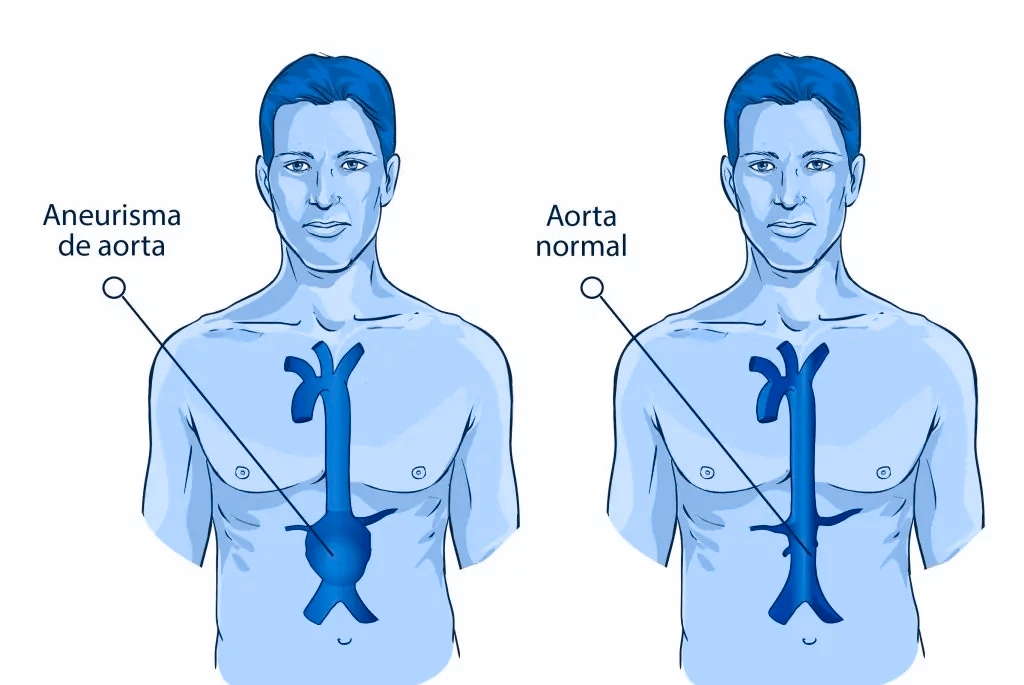
An abdominal aortic aneurysm is an abnormal dilation of the aorta that can be life-threatening if not detected in time.
What Is an Abdominal Aortic Aortic Aneurysm?
Aneurysms are abnormal dilations of a blood vessel caused by the weakening or degeneration of one of its structural layers.
Aneurysms occur most commonly in the abdominal aorta—the primary artery that carries blood to the pelvic limbs—though they can essentially form in any other blood vessel.
While official statistics are not available for our country, nearly 200,000 people are diagnosed with abdominal aortic aneurysms each year in the United States.
Diagnosing and recognizing this condition is critical because its complications can be fatal. In the United States, a ruptured abdominal aortic aneurysm is the 10th leading cause of death in men over the age of 55.
Furthermore, direct relatives of patients with aneurysms have up to a 25% chance of developing this condition themselves.
Symptoms of an Abdominal Aortic Aneurysm
Most aneurysms are asymptomatic and are typically discovered incidentally when patients undergo medical evaluations for other conditions, such as a routine abdominal ultrasound.
However, a patient experiencing sudden, severe abdominal pain accompanied by back pain must seek immediate medical attention, as these symptoms can indicate a ruptured aortic aneurysm.
Risk Factors for Abdominal Aortic Aneurysm
Inflammatory processes can weaken the aortic wall.
The following factors are strongly associated with the formation of an abdominal aortic aneurysm:
- Being over 60 years of age
- A family history of atherosclerosis
- Systemic arterial hypertension (high blood pressure)
- Elevated cholesterol levels
- Peripheral vascular disease
- Tobacco use
Diagnosis and Treatment
Diagnosis is typically performed through an abdominal ultrasound or a CT angiography (CTA).
It is essential to consult a vascular surgeon if you are affected by this condition.
Treatments for Abdominal Aortic Aneurysm
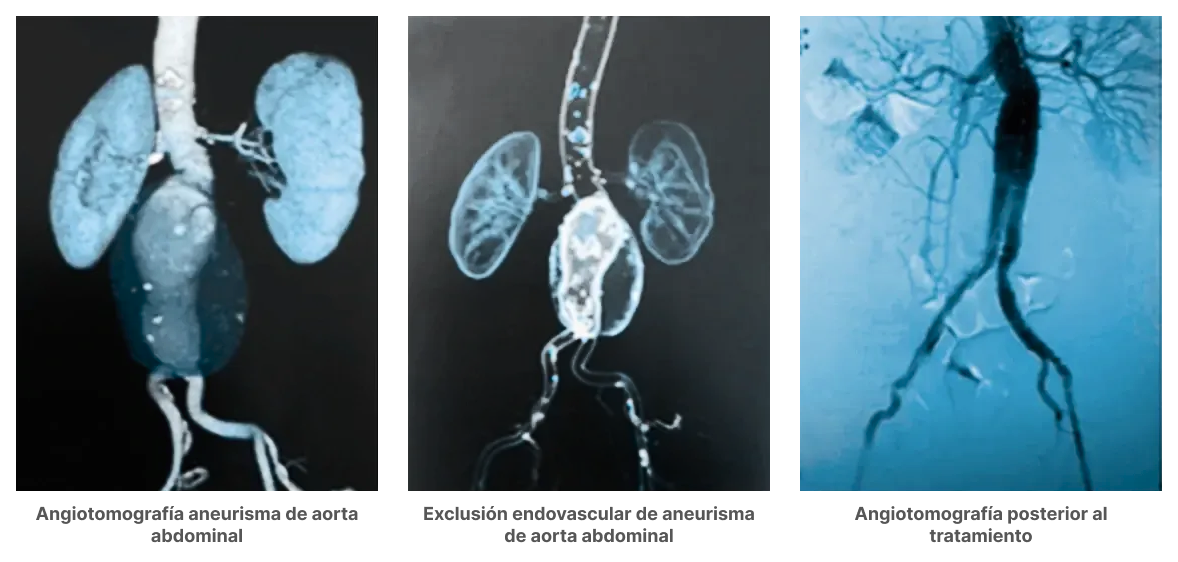
Treatment depends on the size of the aneurysm. Small aneurysms are generally monitored because the risk of rupture is very low. However, aneurysms that measure over 5 or 5.5 centimeters in diameter must be treated.
Currently, there are two treatment options available:
- Open Surgery: The diseased segment is replaced with a synthetic graft.
- Endovascular Surgery: Currently much more common, this minimally invasive procedure excludes the aneurysm through small incisions in the groin area.
These procedures allow patients to achieve a faster and more efficient recovery.
At the Vascular, Arterial, and Venous Disease Department at Centro Médico ABC, we offer specialized care. Contact us today!
Fuentes:
Dr. Salomón Cohen Mussali – Médico especialista en Cirugía Vascular y Endovascular del Centro Médico ABC.
MedilinePlus, Stanford Medicine