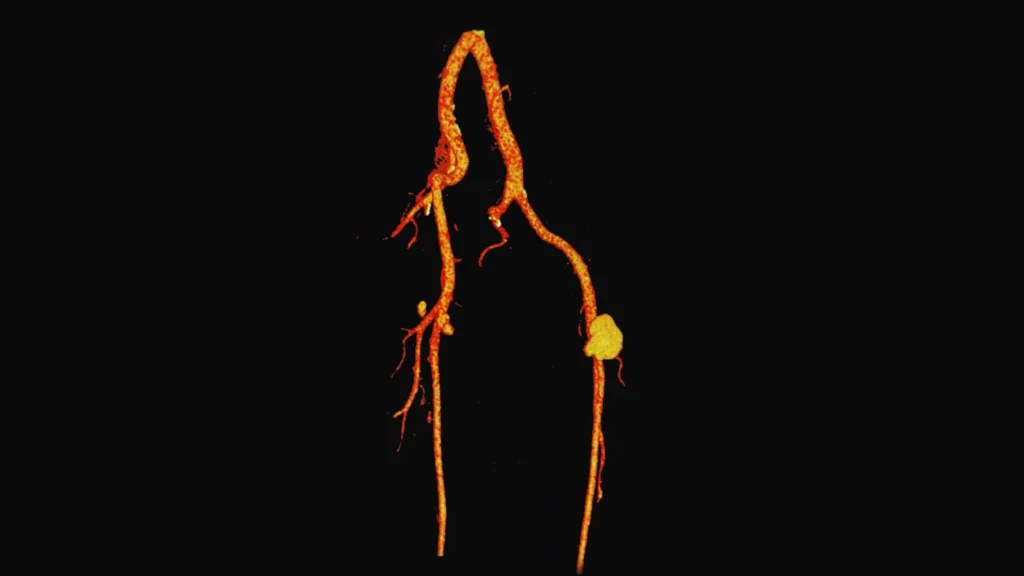
A peripheral aneurysm (or peripheral artery aneurysm) is an abnormal dilation of an artery located outside of the aorta, brain (cerebral aneurysm), or heart. Although it is less common than other types of aneurysms, it still poses a significant risk to a person’s health.
What Is a Peripheral Aneurysm?
An aneurysm is an abnormal dilation of an artery caused by a weakness in the arterial wall.
This weakness can lead to blood clot formation (thrombus) and circulation blockage, a rupture causing severe bleeding, or the compression of adjacent structures and tissues.
Risk Factors for Peripheral Aneurysms
This type of aneurysm is generally genetic. They occur primarily in the arteries of the legs, such as the femoral and popliteal arteries. They are extremely rare and occur more frequently in men than in women.
Symptoms of Peripheral Artery Aneurysms
They are usually asymptomatic, but they can cause pain, weakness, swelling (edema), and numbness in the legs. Additionally, they can cause embolisms and block circulation in an artery, which may lead to discoloration in the toes.
Smoking is the main cause of growth in these types of aneurysms.
Peripheral artery aneurysms are generally diagnosed through a thorough physical examination. Imaging tests such as a duplex ultrasound and a CT angiography can confirm their presence.
Treatments for Peripheral Artery Aneurysms

Treatment for a peripheral aneurysm depends on the size, location, and presence of symptoms in each case. For small, asymptomatic aneurysms, active surveillance is considered the best option, which involves regular monitoring to detect any potential changes.
However, for large aneurysms—typically those measuring over two centimeters—as well as those that are rapidly growing or causing symptoms, intervention is necessary. Open surgery is the primary treatment, allowing the surgeon to remove the damaged section of the artery and replace it with a graft.
Another option is endovascular repair, a less invasive approach that involves inserting a catheter through the artery to place a stent. This reinforces the arterial wall and diverts blood flow away from the aneurysm.
The choice of treatment for a peripheral aneurysm is determined after a careful cardiovascular evaluation, alongside an analysis of the aneurysm’s anatomy and the patient’s overall health.
At the Vascular, Arterial, and Venous Disease Area at Centro Médico ABC, we provide specialized care. Contact us today!