
Endocrine System: Definition, Functions, and Primary Glands
The endocrine system is the complex network of glands and organs that produce hormones and release them directly into the bloodstream. These hormones act as chemical messengers, helping to regulate vital bodily functions such as metabolism, growth, reproduction, sleep cycles, mood, and the response to stress.
Unlike the nervous system, which relies on electrical signals to communicate rapidly and locally, the endocrine system operates more slowly but delivers sustained effects over time. Together, both systems work in close coordination to maintain homeostasis—the internal balance and optimal functioning of the human body.
What Are Endocrine Glands?
To understand the anatomy and structure of the endocrine system, it is first necessary to define what a gland is. In clinical medicine, a gland is a specialized organ responsible for synthesizing and releasing substances essential for bodily function.
Within the glandular system, there are two main types of structures:
- Exocrine glands: Release their secretions (such as enzymes, saliva, or sweat) through ducts onto external body surfaces or into internal body cavities. Examples include sweat and salivary glands.
- Endocrine glands: Lack ducts and secrete hormones directly into the bloodstream. From there, these chemical messengers are carried to specific target organs or tissues to trigger tailored biological responses.
The fundamental importance of endocrine glands lies in their ability to act in a coordinated network. Each gland is biologically programmed to produce specific hormones that regulate key physiological processes according to the body’s dynamic needs.
What the Endocrine System Does
The functions of the endocrine system are exceptionally broad, as its chemical messengers influence virtually every cell and organ in the body. Primary functions of the endocrine system include:
- Metabolic Regulation: Controls the speed at which cells convert food into energy, directly influencing body weight and physical energy levels.
- Growth and Development: Stimulates and coordinates physical, skeletal, and tissue development from childhood into adulthood.
- Reproduction and Sexual Function: Regulates sexual maturation, menstrual cycles, gamete production (eggs and sperm), pregnancy, and lactation.
- Sleep and Biological Rhythms: Coordinates circadian rhythms, signaling when the body should remain alert or prepare for nighttime rest.
- Stress and Emergency Response: Prepares the organism to react to physical threats, emotional stress, or extreme physical exertion.
- Blood Glucose Control: Maintains blood sugar within stable physiological ranges to prevent tissue damage and ensure cellular fuel delivery.
- Fluid and Mineral Balance: Regulates the concentration of water, sodium, calcium, and phosphorus in the bloodstream to maintain bone and neuromuscular health.
Parts of the Endocrine System: Primary Glands and Organs
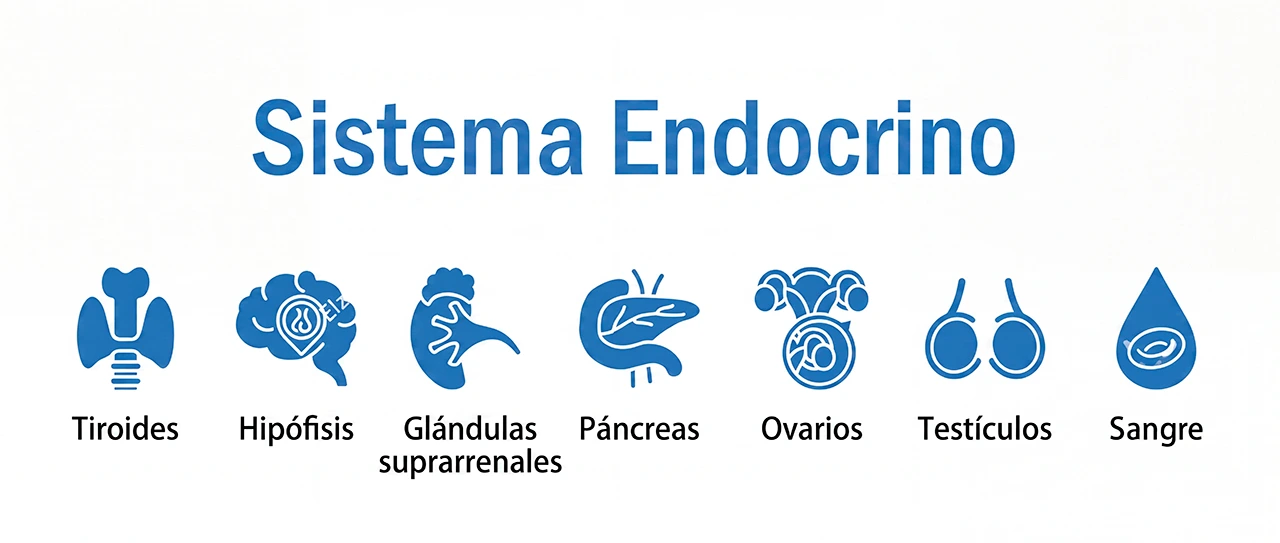
The endocrine system of the human body consists of a network of organs distributed from the brain down to the pelvic region. The following table details its main components, the primary hormones they secrete, and their specific biological functions:
Gland or Organ |
Main Hormones |
Primary Function |
Hypothalamus |
Releasing and inhibiting hormones | Connects the nervous system to the endocrine system and helps regulate functions such as temperature, hunger, thirst, sleep, blood pressure, and hormonal signaling. |
Pituitary Gland |
Growth hormone (GH), TSH, ACTH, LH, FSH, prolactin, among others | Regulates the activity of other endocrine glands and plays a role in growth, reproduction, lactation, and the stress response. |
Thyroid Gland |
T3 (triiodothyronine) and T4 (thyroxine) | Controls metabolic rate, energy utilization, body temperature, and aspects of growth and development. |
Parathyroid Glands |
Parathyroid hormone (PTH) | Regulates blood calcium and phosphorus levels, which are critical for bone density, muscle contraction, and nervous system function. |
Adrenal Glands |
Cortisol, aldosterone, epinephrine, and norepinephrine | Participate in the stress response, blood pressure regulation, fluid/electrolyte balance, and the "fight-or-flight" reaction. |
Pancreas |
Insulin and glucagon | Regulates blood glucose levels and maintains systemic energy balance. |
Ovaries |
Estrogens and progesterone | Regulate the menstrual cycle, fertility, pregnancy, and the development of female secondary sexual characteristics. |
Testes |
Testosterone | Involved in sperm production, fertility, and the development of male secondary sexual characteristics. |
Pineal Gland |
Melatonin | Helps regulate sleep-wake cycles (circadian rhythms). |
Thymus |
Thymosin and immunocompetent factors | Participates in immune system development, particularly during childhood. |
Endocrine System vs. Nervous System: Main Differences
Although the nervous and endocrine systems share responsibility for coordinating physiological functions, they do so through distinctly different mechanisms:
- Mechanism of Transmission: The nervous system uses electrical impulses and neurotransmitters across neural networks, whereas the endocrine system uses chemical messengers (hormones) that travel exclusively through the bloodstream.
- Speed of Response: Nervous signals transmit within milliseconds, allowing for immediate reactions. In contrast, an endocrine response may take minutes, hours, or even days to manifest.
- Duration of Effect: Nervous system activity is brief and ceases rapidly once the stimulus stops. Hormonal action is far more durable and sustained, persisting in the organism to execute long-term physiological changes.
Both systems connect physically through the hypothalamus, which translates electrical inputs from the nervous system into hormonal instructions for the pituitary gland.
Hormones of the Endocrine System: Types and Examples
The characteristics of the endocrine system are also reflected in the structural diversity of its chemical messengers. Based on their molecular structure and cellular interaction mechanisms, hormones are classified into four major chemical groups:
- Peptide hormones: Composed of amino acid chains, these interact with specific receptors located on the surface of target cells. A key example is insulin; a impairment in its production or action triggers chronic pathologies such as type 1 and type 2 diabetes mellitus. Other examples include growth hormone—excess of which in adulthood causes gigantism or acromegaly—and glucagon, which is essential for energy metabolism.
- Steroid hormones: Synthesized from cholesterol, these are lipid-soluble (lipophilic), allowing them to cross the cell membrane and bind to receptors inside the cell. They include cortisol (deficiency of which causes Addison’s disease), aldosterone (excess of which leads to hyperaldosteronism), estrogens, and testosterone. Disruptions in these sex hormones can cause infertility or complex disorders such as polycystic ovary syndrome (PCOS).
- Amine hormones: Derived from a single amino acid (such as tyrosine), these possess biological properties of both peptides and steroids. Key examples in this group are thyroid hormones—thyroxine (T4) and triiodothyronine (T3)—where a deficiency results in hypothyroidism and an excess produces hyperthyroidism. Catecholamines, such as epinephrine (adrenaline) and norepinephrine (noradrenaline), also belong to this class.
- Eicosanoids: Derived from essential fatty acids, these act primarily locally within the tissues where they are synthesized. An example is prostaglandins, which are involved in regulating blood flow and inflammatory processes in chronic conditions such as asthma or rheumatoid arthritis.

Endocrine System Disorders: Warning Signs to Consult a Doctor
Because the glandular system must operate with extreme precision, any variation in hormone levels—whether due to overproduction or deficiency—can disrupt overall health. It is essential to pay attention to the following bodily warning signs:
- Significant, sudden weight loss or gain without changes in diet or exercise habits.
- Chronic fatigue, muscle weakness, or persistent extreme exhaustion that does not improve with rest.
- Ongoing sleep disruptions or severe insomnia.
- Extreme or unusual temperature sensitivity (intolerance to cold or heat).
- Marked mood swings, irritability, anxiety, or sadness with no apparent cause.
- Excessive thirst (polydipsia) accompanied by a noticeable increase in urinary frequency and volume (polyuria).
- Irregular or absent menstrual cycles in women.
- Evident delays or issues in physical growth and development in children.
If you experience one or more of these symptoms, consulting an Internal Medicine specialist or an Endocrinologist is recommended. Early diagnosis through blood hormone panels allows for timely correction of endocrine imbalances and helps restore quality of life.
Internal Medicine Department
At the Internal Medicine Department of ABC Medical Center, we offer specialized care. Contact us today!
Disclaimer: The content of this material is for informational purposes only and does not, under any circumstances, replace a consultation with a medical specialist. ABC Medical Center assumes no liability for alternative uses of this information. If you require further medical advice, please consult your trusted specialist directly.
Frequently Asked Questions
Fuentes: Stanford Medicine, MedlinePlus, MSD Manuals