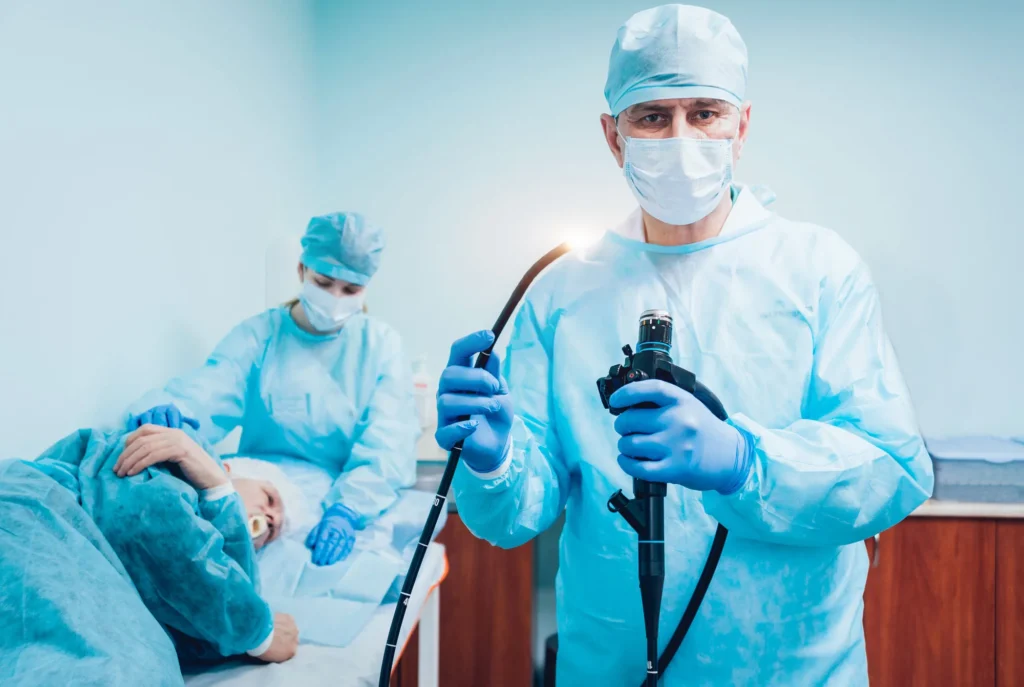
During an endoscopy, the physician inserts an endoscope—an instrument used for the visual examination of the body’s channels or cavities. Medically speaking, an upper endoscopy refers to the evaluation of the esophagus, stomach, or duodenum, while a colonoscopy uses an endoscope to examine the colon, also known as the large intestine. Because of this, following a specific set of steps for proper prep is essential.
Preparing for an Endoscopy and Colonoscopy
Common instructions prior to these procedures include fasting, which requires you to stop eating and drinking about eight hours beforehand to ensure your stomach is completely empty.
In some cases, your doctor may also ask you to stop taking certain medications, such as blood thinners, several days before the procedure.
Additionally, if you have a chronic condition—such as diabetes or high blood pressure—your physician will provide specific instructions tailored to each of your regular medications.
In other instances, you may be asked to take a laxative or use an enema to clear stool from your intestines.
By properly preparing for an upper or lower endoscopy, you help your doctor clearly and safely view real-time images captured by the endoscope. This allows them to detect gastrointestinal diseases and disorders—and, in some cases, treat them on the spot.
At the Internal Medicine Department at Centro Médico ABC, we offer specialized Endoscopy services. Contact us today!