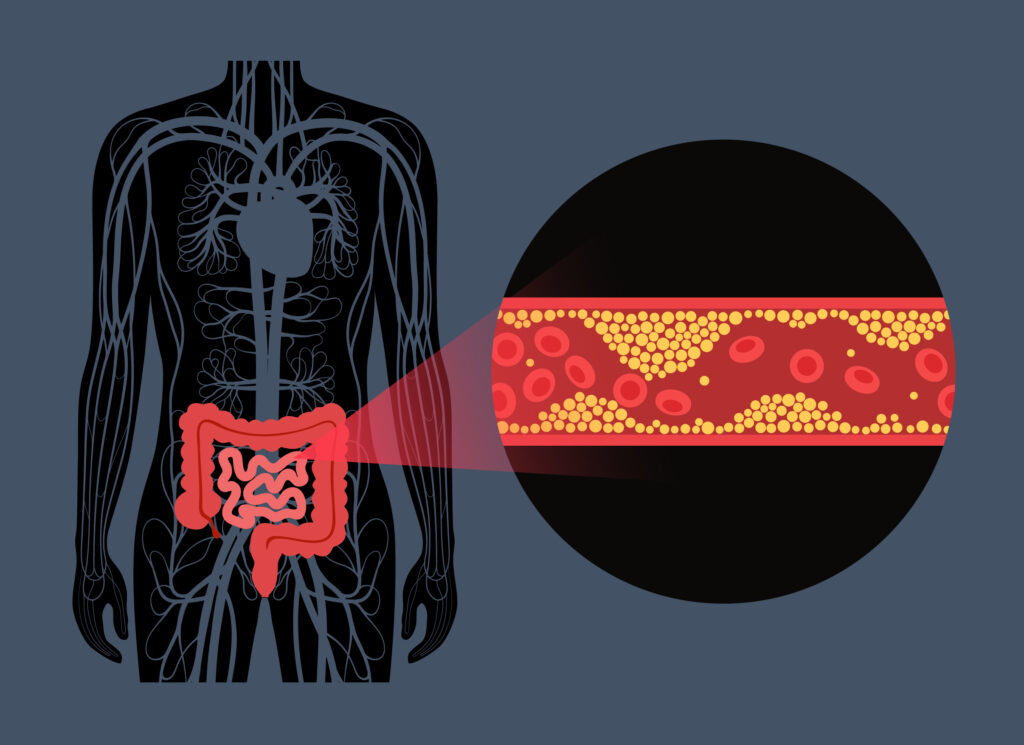
Mesenteric venous thrombosis refers to the occlusion of the veins that drain blood from the intestines. This obstruction leads to increased pressure within the intestinal wall, resulting in ischemia (lack of blood supply). Ischemia occurs because the arteries supplying the intestine cannot overcome the elevated pressure within the tissues, blocking the arterial circulation that delivers oxygen and essential nutrients.
What Is Mesenteric Thrombosis?
It is common for the terms "mesenteric venous thrombosis" and "mesenteric thrombosis" to be used interchangeably; however, while closely related, they represent distinct conditions. The overarching term mesenteric thrombosis encompasses both mesenteric venous thrombosis and mesenteric arterial thrombosis, which directly affects the mesenteric arteries.
Mesenteric venous thrombosis can present in acute, subacute, or chronic forms. It primarily affects the distal small intestine and rarely involves the colon.
The accumulation of fluid within the intestinal wall and lumen leads to hypovolemia, reducing overall blood supply and worsening intestinal ischemia. This condition is further aggravated by vasospasms caused by venous thrombosis and intestinal edema.
Causes of Mesenteric Venous Thrombosis
Mesenteric venous thrombosis is considered a multifactorial disorder categorized into acquired or hereditary risk factors:
- Intra-abdominal Inflammatory Processes: Pancreatitis, inflammatory bowel diseases, physical trauma (such as splenectomy), or bariatric laparoscopic surgeries.
- Thrombophilias: Acquired or hereditary conditions such as prothrombin gene mutations (G20210A), nephrotic syndrome, and cancer.
- Viral Infections: Acute respiratory syndrome caused by SARS-CoV-2 infection has also been linked to mesenteric venous thrombosis.
- Other Causes: Abdominal masses causing venous compression, myeloproliferative disorders, portal hypertension, cirrhosis, and a personal history of deep vein thrombosis.
Symptoms of Mesenteric Venous Thrombosis
This condition occurs most frequently between the ages of 45 and 60, with a slight male predominance.
- Acute Presentation: Typically begins with colicky pain around the belly button (periumbilical) lasting for hours, often out of proportion to physical examination findings, which may appear nearly normal. Occasionally, the pain onset is less abrupt, presenting as a dull, insidious ache. Symptom duration before seeking medical evaluation ranges from 5 to 14 days. Nausea and vomiting may also occur, along with abdominal distension. Alarm signs usually manifest when the thrombosis is advanced. X-rays are generally unhelpful at this stage.
- Subacute Presentation: Symptoms develop over days or weeks before diagnosis. The most common—and often only—sign is non-specific abdominal pain. This presentation is typical in patients with partial or distal thromboses who develop collateral circulation.
- Chronic Presentation: Patients are usually asymptomatic, with diagnosis occurring incidentally during imaging for other reasons. When symptoms do occur, they are generally related to portal hypertension (such as esophageal varices and bleeding). A small percentage of patients experience postprandial abdominal pain (pain after eating).
Diagnosis of Mesenteric Venous Thrombosis
There are no single clinical features or laboratory tests that definitively confirm the diagnosis.
Up to half of affected patients have a personal or family history of deep vein thrombosis or pulmonary embolism.
A definitive diagnosis relies on imaging studies to confirm occlusion within the mesenteric veins. This is achieved using magnetic resonance venography (MRV) or contrast-enhanced computed tomography (CT) with a delayed venous phase. When these non-invasive studies are inconclusive, invasive catheter venography is performed.
Once diagnosed, testing for underlying thrombophilic states (genetic or acquired) is essential.
Treatment of Mesenteric Venous Thrombosis
Treatment is primarily conservative and includes:
- Anticoagulation Therapy: To prevent clot propagation.
- Bowel Rest and Rehydration: Intravenous fluids and temporary fasting to rest the bowel.
- Close Monitoring: Vigilant observation for complications.
In select patients, thrombolytic agents (clot-dissolving medications) may be used. Surgery is strictly reserved for patients with confirmed or strongly suspected intestinal infarction.
Anticoagulation therapy is typically maintained for a minimum of three months, depending on the individual patient’s underlying cause and clinical course.
At the Vascular, Arterial, and Venous Disease Area at Centro Médico ABC, we provide specialized care. Contact us today!