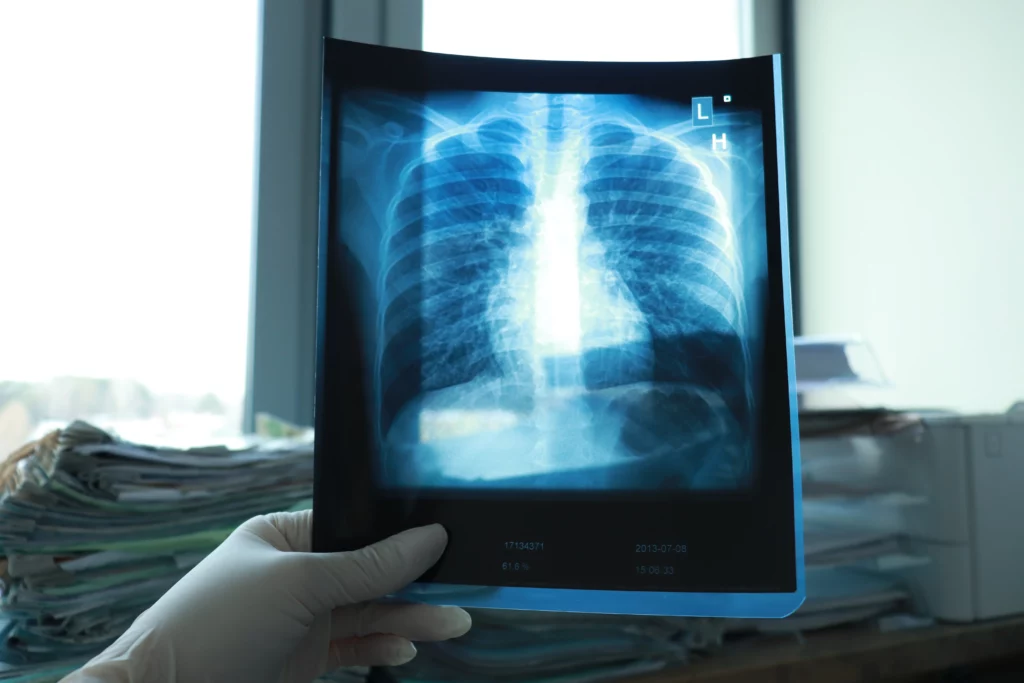
Pulmonary fibrosis is a chronic respiratory disease characterized by progressive thickening and scarring of lung tissue (fibrosis), leading to a gradual decline in lung function.
The rate at which the disease progresses varies considerably from person to person, but it always worsens over time. As it advances, patients experience an increasingly persistent and debilitating shortness of breath.
What Causes Pulmonary Fibrosis?
Pulmonary fibrosis can develop from several causes, which are broadly divided into two categories.
Idiopathic pulmonary fibrosis (IPF) is the most common form and has no identifiable cause.
Secondary pulmonary fibrosis, on the other hand, develops as a result of other conditions, including exposure to environmental toxins such as asbestos, infections, autoimmune diseases like lupus, and, in some cases, the use of certain medications such as antibiotics or chemotherapy agents.
Symptoms of Pulmonary Fibrosis
Pulmonary fibrosis is frequently misdiagnosed, as its presentation can closely resemble other lung conditions such as pulmonary emphysema. The most common symptoms include:
- Dyspnea — shortness of breath or difficulty breathing
- Persistent dry cough
- Weakness or fatigue
- Loss of appetite
- Unintentional weight loss
- Chest discomfort or pain
- Joint or muscle pain
- Clubbing — a widening and rounding of the fingertips and toenails on both the hands and feet
Diagnosis of Pulmonary Fibrosis
Unfortunately, the rate of progression of pulmonary fibrosis is highly unpredictable. In some patients, symptoms remain moderate and develop gradually over months or years. In others, the condition can deteriorate rapidly, within days or weeks, and if left untreated, it can be fatal.
While a pulmonary infection can sometimes trigger a sudden acceleration of the disease, in many cases, no clear precipitating cause is identified.
If any of these symptoms are present, seeing a specialist is an important first step toward an accurate diagnosis. The evaluation will generally involve some combination of the following:
- Complete patient medical history
- Physical examination
- Assessment of exposure to toxic or environmental agents
- Pulmonary function tests, such as spirometry, lung volume testing, diffusion capacity testing, or pulse oximetry
- Imaging studies, including chest X-rays, CT scans, or echocardiograms
- Tissue sampling via surgical biopsy or bronchoscopy
- Blood tests
Is There a Cure for Pulmonary Fibrosis?
There is currently no cure for pulmonary fibrosis. The thickening and scarring of lung tissue cannot be reversed. However, certain treatments have been shown to slow disease progression and improve symptoms, most notably antifibrotic medications, which help reduce the rate of fibrosis.
Oxygen therapy
may also be prescribed. While it does not alter the course of the disease itself, it can make breathing easier, help prevent complications from low blood oxygen levels, improve sleep quality, and contribute to an overall sense of well-being.
Pulmonary rehabilitation
helps patients manage symptoms and maintain their ability to carry out everyday activities.
In some cases,
lung transplantation
is an option that can improve quality of life, though it carries its own serious risks and potential complications.
What Is the Final Stage of Pulmonary Fibrosis?
End-stage or advanced pulmonary fibrosis represents the final phase of the disease, marked by a significant decline in lung function and the emergence of symptoms that profoundly affect quality of life.
At this stage, the damaged lungs are no longer able to efficiently exchange oxygen and carbon dioxide. Patients may experience severe dyspnea, chronic hypoxemia (persistently low blood oxygen levels), respiratory failure, extreme fatigue, and chest pain.
A person who has reached this stage of the disease typically has a life expectancy ranging from a few months to a couple of years, depending on how quickly the disease continues to progress.
At this point, the focus of care shifts toward palliative management, relieving symptoms and providing psychological and emotional support to both the patient and their loved ones.
ABC Medical Center’s Internal Medicine Department offers specialized care for pulmonary fibrosis. Contact us today!
Fuentes
ALA, MedlinePlus, Secretaría de Salud