
Vitamin D is an essential nutrient that functions more like a prohormone than a conventional vitamin, playing a critical role in nearly every system of the human body. Among the many supplement formulations available, vitamin D3 5000 IU stands out as a high-potency dose used primarily to correct severe deficiency or to manage specific clinical conditions under close medical supervision.
What Is Vitamin D3 5000 IU and What Is It Used For?
Vitamin D3, technically known as cholecalciferol, is the form of vitamin D that the human body produces naturally when the skin is exposed to ultraviolet B (UVB) radiation from the sun. It is also found in certain animal-based foods, though in limited amounts.
When we refer to vitamin D3 5000 IU, two components are at play:
- Vitamin D3: The supplemental form (cholecalciferol) that has been shown to be more effective at raising and maintaining serum vitamin D levels compared to vitamin D2.
- 5000 IU: Stands for “International Units,” a measure of the biological potency of the preparation. To put it in perspective, 5000 IU is equivalent to 125 micrograms of vitamin D3.
Its primary function is to facilitate the absorption of calcium and phosphorus in the small intestine. Without adequate vitamin D levels, the body cannot extract these minerals from the diet and is forced to draw calcium from the bones to maintain vital functions, gradually weakening the skeletal system in the process.
Who May Need Vitamin D3?
Despite the body’s ability to synthesize it, vitamin D deficiency has become a global health concern. Supplementation at doses such as 5000 IU is typically considered for specific groups at elevated risk of insufficiency:
- People with limited sun exposure: Due to office-based work, consistent use of sunscreen, or living at latitudes with reduced solar radiation during winter months.
- Older adults: With age, the skin’s capacity to produce vitamin D declines significantly, as does the kidneys’ efficiency in converting it to its active form.
- People with darker skin tones: A higher concentration of melanin acts as a natural filter, reducing UV-driven vitamin D synthesis.
- People with obesity: Vitamin D is fat-soluble, meaning it tends to be sequestered in adipose tissue, reducing its bioavailability in the bloodstream.
- Patients with intestinal malabsorption: Those with celiac disease, Crohn’s disease, or a history of gastric bypass surgery often require higher doses to compensate for impaired absorption.
Whether assessing vitamin D3 needs in women, particularly during postmenopause, or in men, a laboratory test measuring serum 25-hydroxyvitamin D levels is essential before initiating supplementation.
How Is Vitamin D3 Taken, and What Dose Does an Adult Need?
The appropriate dose of vitamin D3 for adults varies considerably depending on the goal, whether for preventive maintenance or therapeutic correction.
While general health guidelines suggest a daily requirement of 600-800 IU for the general healthy population, the 5000 IU dose is classified as a therapeutic intervention.
- Frequency: Typically taken once daily, preferably with the largest meal of the day, since the presence of healthy dietary fats, such as olive oil or avocado, can enhance absorption by as much as 30–50%.
- Individualization: There is no universal dose. What constitutes a necessary loading dose for a patient with severe deficiency may be excessive for an otherwise healthy individual over the long term. The question of how to take vitamin D3 should always be answered by a physician following a thorough clinical assessment.
Vitamin D2 vs. Vitamin D3: What’s the Difference?
Two forms of vitamin D are commonly found on supplement labels: ergocalciferol (D2) and cholecalciferol (D3). While both serve similar roles, they are not identical:
- Vitamin D2 (ergocalciferol): Derived from plant sources and UV-exposed fungi. Most commonly used in fortified foods.
- Vitamin D3 (cholecalciferol): The form produced by humans and animals. Multiple clinical studies suggest that D3 is superior at raising and sustaining total vitamin D levels in the bloodstream.
For this reason, vitamin D3 is the form most frequently prescribed in clinical practice to correct deficiency.
Where Does Vitamin D Come From?
The human body has three primary pathways for obtaining this nutrient:
- Sun exposure: The primary source. It is estimated that 15 minutes of direct sunlight exposure on the arms and legs at least three times per week can be sufficient for healthy individuals. However, factors such as air pollution, cloud cover, and sunscreen use can complicate this process.
- Diet: Few foods contain vitamin D naturally. The richest sources include fatty fish (salmon, mackerel, sardines), cod liver oil, egg yolks, and certain mushrooms.
- Supplements: When diet and sun exposure are insufficient to reach optimal levels, generally considered to be above 30 ng/mL, vitamin D supplements become an essential tool for preventing health deterioration.
When Is Vitamin D3 5000 IU Recommended?
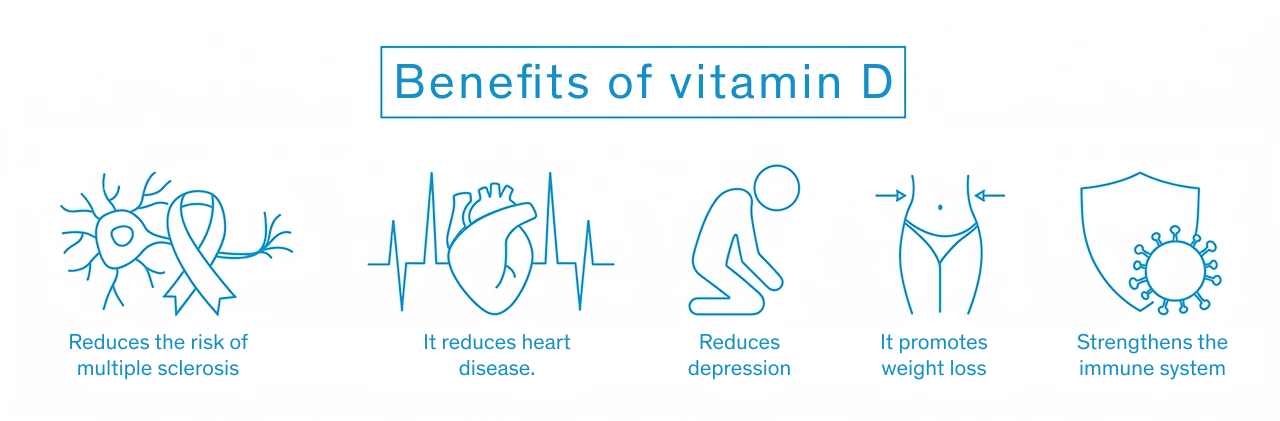
The use of vitamin D3 5000 IU is typically reserved for confirmed deficiency. Its prescription is aimed at:
- Correcting insufficiency: Rapidly raising levels in patients presenting symptoms such as chronic fatigue, bone pain, or muscle weakness.
- Supporting bone health: Preventing fractures in patients with established osteopenia or bone fragility.
- Complex clinical contexts: Patients with autoimmune or metabolic conditions in which the physician determines that higher vitamin D levels would benefit immune regulation.
It is important to emphasize that this dose should not be taken as self-care without a prior medical diagnosis, as excess vitamin D can have serious consequences.
Risks of Taking Vitamin D3 Without Medical Guidance
Unlike water-soluble vitamins (such as vitamin C), vitamin D is stored in body fat. This means that taking high-dose vitamin D3 supplements indiscriminately can lead to toxic accumulation, known as hypervitaminosis D.
Risks associated with unsupervised supplementation include:
- Hypercalcemia: Excess calcium in the bloodstream, which can cause nausea, vomiting, weakness, and frequent urination.
- Kidney problems: Elevated calcium levels can contribute to kidney stone formation or, in severe cases, impaired kidney function.
- Soft tissue calcification: Calcium can deposit in arteries or tissues where it does not belong, negatively affecting cardiovascular health.
The goal is not simply to take vitamin D, but to take precisely the amount that each individual’s metabolism actually requires.
Medical Evaluation and Specialized Care
Determining whether 5000 IU of vitamin D3 is appropriate requires a thorough clinical evaluation beyond a simple blood test. The most suitable specialist to oversee this treatment is typically an endocrinologist, who manages hormonal and metabolic disorders, or a rheumatologist when bone density concerns are present. In older adults, a geriatrician is best positioned to adjust dosing based on the patient’s degree of frailty, while in cases of nutrient malabsorption, a gastroenterologist should supervise supplementation. These specialists will not only measure 25-hydroxyvitamin D levels but also monitor kidney function and calcium levels to ensure the treatment is both effective and safe.
Before starting any vitamin D3 5000 IU supplementation regimen, a medical evaluation is essential. A specialist can order blood tests to assess your current levels and determine whether this dose is appropriate for your situation or if an adjustment is needed.
In preventive medicine, monitoring vitamin levels is a fundamental part of ensuring long-term health and a resilient immune system. If you are experiencing persistent muscle aches, brittle nails, or extreme fatigue, consult your physician to develop a safe, personalized supplementation plan.
ABC Medical Center’s Internal Medicine Department offers specialized care to help you determine whether vitamin D3 5000 IU is right for you. Contact us today!
Fuentes: NIH, MedlinePlus, Healthy Children