ABC Medical Center > Síntomas > Wounds That Won’t Heal: When to Worry, Possible Causes, and What to Do

Wounds That Won’t Heal: When to Worry, Possible Causes, and What to Do

9 July 2026

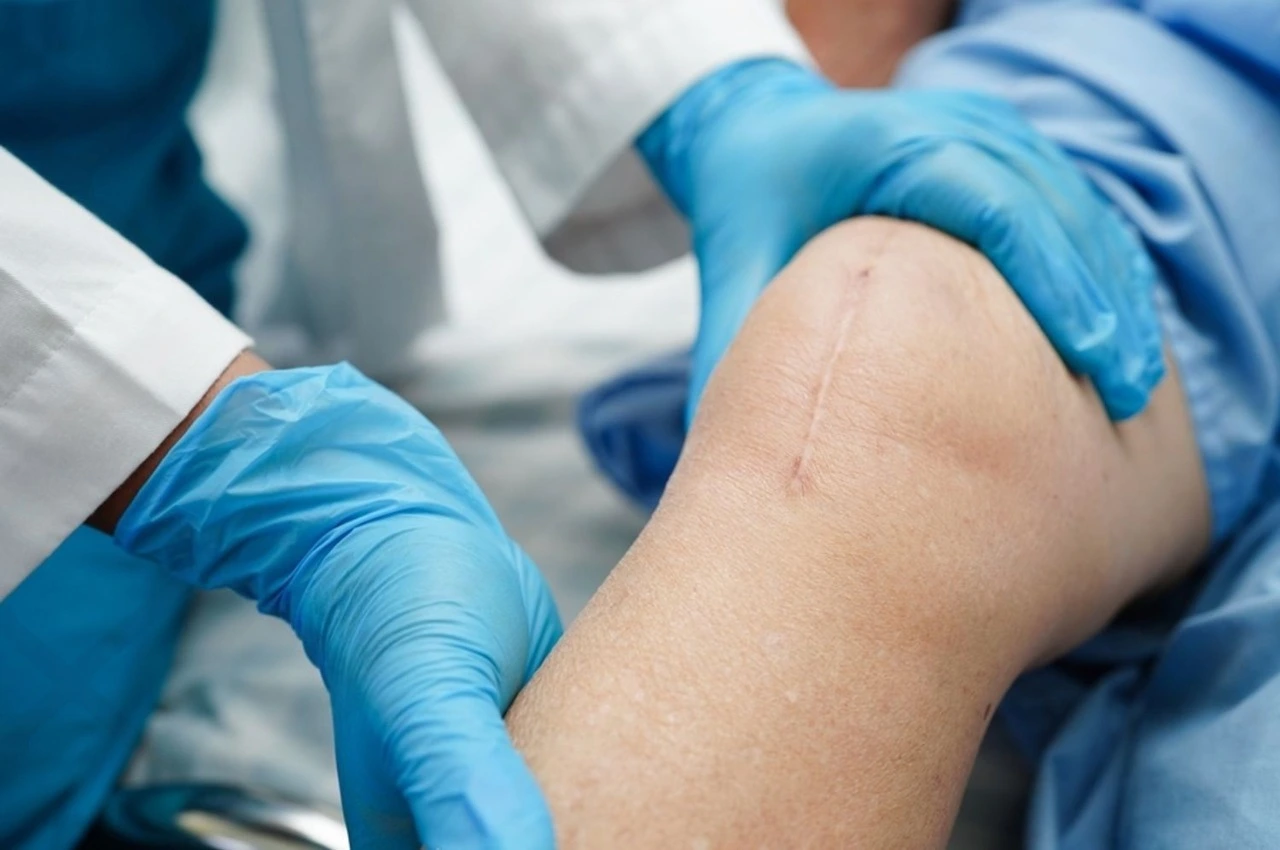
Paciente que había presentado heridas que no cicatrizan, en consulta con un médico para su revisión.

Wounds that take too long to close, reopen without obvious cause, or form scabs that repeatedly fall away and return can be unsettling, and rightly so. While many have a simple explanation such as irritation or mild infection, a lesion that continues without improvement is one that should not simply be left to resolve on its own.

It’s worth emphasizing that not every non-healing wound is linked to something serious. However, when a wound lasts longer than expected, seeking medical evaluation to identify the cause and prevent potential complications is the right course of action.

This Is a Medical Emergency If…

Seek immediate evaluation if you notice:
  • Heavy bleeding or bleeding that won’t stop
  • Fever or clear signs of infection (intense redness, pus, increasing pain)
  • Severe pain or significant swelling
  • Rapid changes in size, color, or shape
  • General weakness or significant general discomfort

What Does It Mean When a Wound “Won’t Heal”?

In practical terms, a wound is considered slow to heal when it:

  • Shows no improvement after 2 to 3 weeks (the timeframe may be shorter depending on size and origin)
  • Keeps reopening
  • Forms a scab that falls off and reappears repeatedly
  • Bleeds easily without an apparent cause

When a wound does not follow the expected healing process, it means more than simply “taking longer.” It indicates that the tissue is not progressing normally through the phases of repair: inflammation, regeneration, and remodeling. This can present as a lesion that appears stalled, partially improves, and then regresses, or remains open without forming visible new tissue.

A medical article on chronic wounds published in PubMed Central notes that when the healing process is interrupted or fails to progress within the expected timeframe, both local and systemic factors that may be interfering must be evaluated.

Wound or Lesion/Mole? An Important Distinction

Before assuming you’re dealing with a common wound, it’s important to consider how the lesion first appeared. There is a meaningful difference between a recent cut or scrape and a spot, mole, or small ulcer that developed without any prior injury.

Making this distinction helps guide evaluation and determine whether you’re dealing with a traumatic injury or a skin change that requires dermatological assessment. In some cases, the lesion may be:

If a lesion looks and behaves like a wound that refuses to close, but there was never an injury to explain it, no cut, scrape, or impact, it is important to look beyond the obvious. Other causes need to be considered, and skin cancer is one that cannot be overlooked.

Possible Causes of Non-Healing Wounds

While no diagnosis can be made from symptoms alone, the following are common causes that should be considered:

Ongoing Trauma or Irritation

Constant movement or friction can prevent the skin from closing properly:

  • Repeated rubbing: Constant contact with clothing, footwear, or surfaces can prevent complete wound closure
  • Sustained pressure: Prolonged pressure on the same area can reduce blood supply and delay healing
  • Picking or manipulating the wound: Touching it, removing scabs, or squeezing the area can reopen the wound and prolong recovery

Infection

Bacterial infections can delay healing. Common signs include:

  • Spreading redness: An expanding red area around the wound may indicate active inflammation
  • Increasing pain: Discomfort that intensifies rather than improves over time may signal a complication
  • Discharge or pus: Thick yellowish or greenish fluid suggests infection
  • Unusual odor: An unexpected smell coming from the wound may indicate bacterial overgrowth

Circulatory Problems

Poor blood supply can prevent tissue from receiving adequate oxygen to heal, particularly in the legs and feet:

  • Slow-healing wounds on the legs or feet: Circulatory problems are more common in the lower extremities
  • Cold skin or color changes: May indicate insufficient oxygen delivery to the area
  • Persistent swelling: Fluid accumulation can interfere with tissue repair

Diabetes

Diabetes can impair the healing process, even with minor wounds:

  • Small wounds that don’t improve: Even minimal injuries can take weeks to close
  • Reduced sensation: Decreased ability to feel damage delays treatment
  • Recurrent infections: Elevated blood glucose promotes bacterial growth

Inflammatory or Autoimmune Conditions

Certain dermatological conditions can mimic non-healing wounds:

  • Appearance without a traumatic cause: The lesion develops without prior injury
  • Persistent pain or itching: Inflammation may remain active for weeks
  • Similar lesions in other areas: Suggests a systemic condition

Skin Cancer (a Possibility to Rule Out)

When non-healing wounds are discussed, skin cancer is a concern that naturally arises. While not all persistent lesions are cancer-related, a wound that does not improve, changes in appearance, or bleeds easily must be evaluated to rule out this possibility. Warning signs include:

  • Persistence beyond 3 to 4 weeks without visible improvement
  • Easy or spontaneous bleeding , even from light contact
  • Irregular borders or progressive growth, changes in shape, size, or color
  • Recurring scab, repeatedly falls off and reforms

According to the American Academy of Dermatology, a lesion that bleeds and does not heal can be one of the early signs of skin cancer, particularly basal cell or squamous cell carcinoma.

What Varies from Case to Case?

Every persistent lesion has its own set of characteristics that can point toward a cause and help gauge the level of concern. The more precisely these details can be described, the better equipped the specialist will be to evaluate the situation accurately:

  • Location (face, legs, back, hands)
  • Size
  • Presence of recurring scab
  • Spontaneous bleeding
  • Pain or itching
  • Risk factors (sun exposure, family history, age, diabetes)

What to Record About a Wound or Lesion

The more information you can bring to your consultation, the more efficient and targeted the evaluation will be. A clear record of how the lesion has evolved, including any patterns, changes, or potential contributing factors, gives the specialist a significant head start. Consider noting the following before your appointment:

  • Days or weeks of evolution
  • Approximate size (in millimeters or centimeters)
  • Dated photographs
  • Whether it bleeds and how frequently
  • Presence of pain or itching
  • Exact location
  • Frequent sun exposure
  • Personal or family history of skin cancer

Bringing this information to your consultation will help the specialist evaluate your situation more quickly and accurately. If at any point these details raise a concern you do not want to wait on, ConsultABC, ABC Medical Center’s walk-in service, is available to provide an early assessment at your convenience.

What to do today What to avoid today
  • Keep the area clean
  • Do not scratch or manipulate the wound
  • Protect from sun exposure
  • Use clean dressings if needed
  • Do not apply home remedies
  • Do not self-medicate with antibiotics
  • Do not delay seeking care if there is no improvement

When to Seek Care and Who to See

While many wounds respond well to general care measures, others send signals that warrant a closer look. Persistent lesions, changes in appearance, or associated symptoms are all reasons to move beyond home management and seek a specialized evaluation capable of ruling out causes that require specific medical treatment.

  • If the lesion does not improve within 2 to 4 weeks, bleeds, or changes in appearance, consult a Dermatology specialist at ABC Medical Center. A dermatological evaluation can determine whether the lesion is benign, inflammatory, infectious, or requires ruling out skin cancer.
  • If bleeding is heavy, does not stop after several minutes of applied pressure, or is accompanied by intense pain, significant swelling, or signs of infection, go immediately to the ABC Medical Center’s Emergency Unit for prompt evaluation.

What to Expect at Your Appointment

Visiting a specialist for a non-healing wound does not necessarily mean something serious is going on, but it does allow for a structured evaluation to identify the cause and determine the most appropriate next step for each individual case.

During the consultation, the specialist may:

  • Examine the lesion with a dermatoscope
  • Assess relevant risk factors
  • Recommend follow-up monitoring
  • Order further tests if necessary

Fuentes:

How can we help you?

    Ricardo Ostos

    Ricardo Ostos

    Content Creator

    Ricardo can convey complex medical information in an accessible and friendly way so that all of our patients can understand and benefit from it. In addition, he has an empathetic approach, offering information and practical advice that really makes a difference in people's lives. #lifebringsustogether.

    Learn more about Ricardo on LinkedIn

    The dissemination of the content of this material is for informational purposes only and does not replace, under any circumstance or condition, a consultation with a specialist doctor, for which the ABC Medical Center is not responsible for the different use that may be given to it. If you require more information related to the subject, we suggest you contact the specialist doctor you trust directly.

    Index

    Content