Creatine has become a cornerstone supplement in fitness, backed by hundreds of scientific studies confirming its effectiveness and safety. This compound, which our bodies produce naturally, is essential for generating quick energy during high-intensity activities.
Understanding the importance of creatine monohydrate supplementation matters today more than ever, since modern lifestyles and the demands of high-intensity training often exceed the body’s natural production capacity. Addressing this isn’t just about aesthetics, it’s about metabolic optimization. While some foods naturally provide certain levels of this compound, the amount the liver and kidneys synthesize isn’t enough to reach the optimal concentrations needed for high performance, making supplementation a strategic tool for overall wellbeing.
Today, creatine is no longer seen strictly as a product for “people who lift weights”, it’s increasingly recognized as a nutrient with cognitive benefits and protective effects against age-related muscle loss. Looking ahead, research suggests its use will expand into areas like neurological health and post-illness metabolic recovery. Gym supplements are evolving beyond the gym to become key components of longevity and overall quality of life for the general population.
Main Benefits of Creatine for Athletic Performance
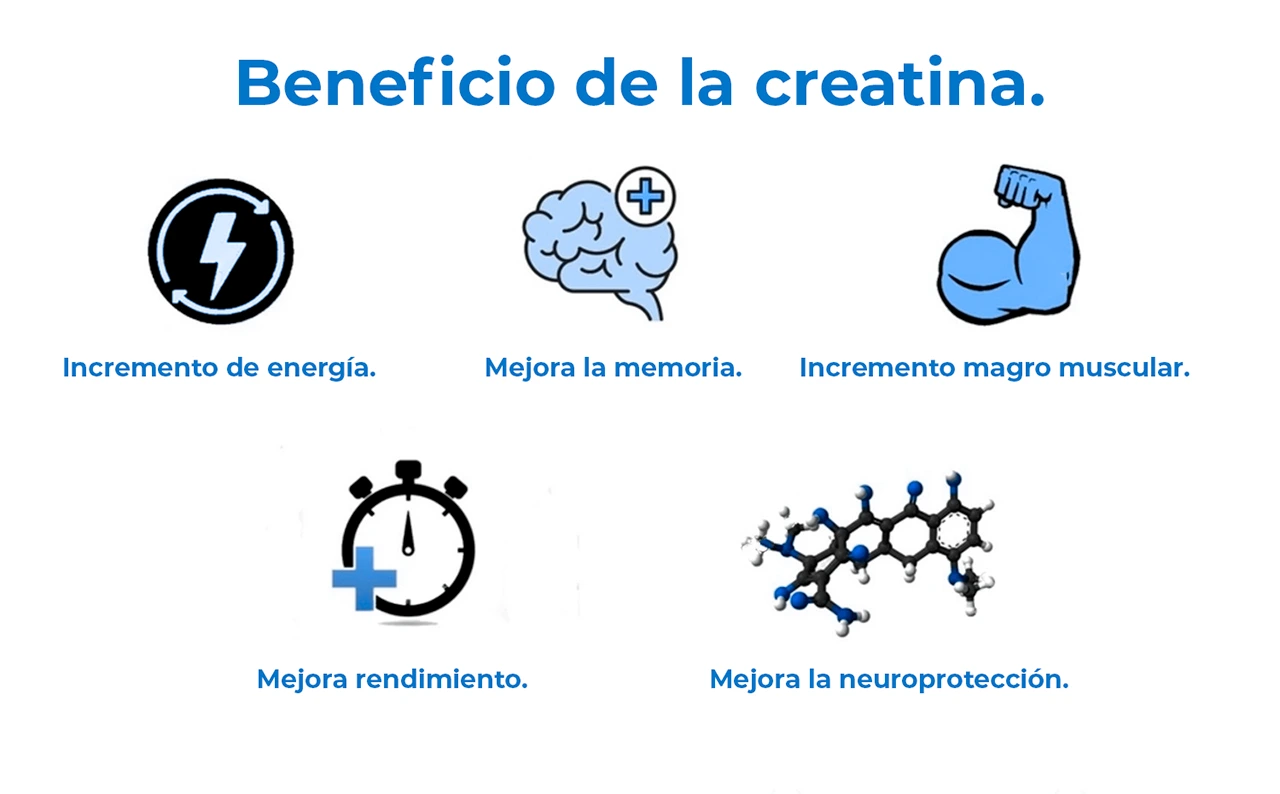
Creatine is an amino acid primarily synthesized in the liver and stored in the muscles, where it’s used as an immediate energy source. Among its most notable benefits is its ability to regenerate adenosine triphosphate (ATP), the body’s main energy currency at the cellular level. During explosive effort, like lifting weights or sprinting, your body depletes its ATP reserves within seconds; supplementation makes a real difference by helping you train harder for longer.
Improved Strength and Explosive Power
A common question, especially for those less familiar with its use, is what creatine monohydrate is actually for. The answer lies in its direct impact on muscular strength. By increasing phosphocreatine stores in muscle tissue, athletes can often complete one or two extra reps during strength training. This small gain, accumulated over weeks, translates into more significant muscle hypertrophy and a noticeable improvement in explosive power for sports that require bursts of speed.
Muscle Recovery and Reduced Oxidative Stress
Beyond energy production, this supplement also plays a vital role in tissue repair. Amino acids are the building blocks of life, and creatine helps reduce inflammation and cellular damage that occurs after intense exercise. By speeding recovery, users can return to training at the same intensity sooner, optimizing progress and reducing the risk of overtraining-related injuries.
Increased Muscle Mass and Cell Volume
It’s common to wonder what creatine does at the gym beyond just strength. The answer lies in cellular hydration. Creatine draws water into muscle cells, a process known as cell volumization. This not only makes muscles look denser and fuller but also creates a favorable anabolic environment for protein synthesis, supporting more efficient and sustained muscle growth.
Types of Creatine: Which One Is Right for You?
In the world of gym supplements, you’ll often see various chemical forms of this compound, which can be confusing when deciding what to buy. While all forms aim to increase phosphocreatine levels in muscle, their structure and solubility vary. Here’s a breakdown of the most common options:
- Creatine Monohydrate: the industry gold standard, consisting of a creatine molecule bonded to a water molecule. It’s the most studied, affordable, and effective form available. If you’re looking for results backed by solid science, creatine monohydrate is the logical choice. A “micronized” version also exists, which has simply been processed into a finer powder for easier dissolving, without altering its properties.
- Creatine Hydrochloride (HCl): here, the amino acid is bonded to a hydrochloride group. It’s marketed as more soluble, theoretically allowing smaller doses to achieve the same effect, although current scientific evidence hasn’t shown it to be superior to monohydrate for muscle gain.
- Alkaline Creatine: this version has an adjusted pH to make it less acidic, aiming to prevent early breakdown in the stomach before reaching muscle tissue. It’s often recommended for people who experience digestive sensitivity or bloating with conventional forms.
- Creatine Nitrate: here, the compound is bonded to a nitrate molecule. This combination aims to improve blood flow efficiency through nitric oxide production, while also providing creatine’s characteristic energy boost, making it a popular choice in pre-workout supplements.
- Creatine Ethyl Ester: a form that’s been esterified to improve its ability to pass through cell membranes. However, several studies suggest it’s less stable than other forms and can break down into inactive byproducts more quickly.
Despite this variety, experts generally agree that creatine monohydrate remains the top recommendation. This is because most research on creatine’s benefits for athletic performance and health has used this specific form. Choosing more complex versions rarely leads to better physical results, unless someone has a very specific gastric intolerance to the traditional form.
How to Take Creatine: Recommended Dosage and Best Timing
Knowing how to take creatine correctly is what separates users who see poor results from those who transform their physique. While the body naturally produces creatine from glycine, arginine, and methionine, external supplementation helps keep intramuscular stores consistently at their peak. Creatine monohydrate remains the most recommended and well-studied form, thanks to its high absorption rate and lower cost than other variants.
Before adding this or any other supplement to your daily routine, seek guidance from a qualified nutritionist or dietitian. While creatine has an excellent safety profile, everyone has different metabolic needs and health conditions that only a nutrition professional can properly evaluate. Consulting an expert not only gives you peace of mind that the supplement is right for you, but also lets you fine-tune your dosage based on your weight, activity level, and personal goals, ensuring your investment in your health is both safe and effective.
The Importance of Consistent Daily Dosing
Unlike other supplements with an immediate effect (like caffeine), creatine works through saturation. This means you don’t feel its benefits from a single dose, but from the compound building up in your muscles over several days. The general recommendation is to take 3 to 5 grams daily. A “loading phase” isn’t strictly necessary, although some athletes use one to saturate their stores more quickly during the first week.
The “Perfect Time” Myth
Many people wonder if there’s an exact time of day to take creatine. Consistency matters more than timing. That said, some studies suggest taking it after training, along with a source of carbohydrates or protein, may slightly improve absorption due to the insulin response. For most people, the most practical approach is to work it into a daily routine so you don’t forget, whether at breakfast or in a post-workout shake.
Combining with Food and Other Supplements
Although creatine isn’t found in high concentrations in food (only in lean meats and fish), taking it alongside protein-rich meals can help support amino acid transport to the muscles. It’s a very versatile supplement that can be mixed with water, natural juices, or even added to a whey protein shake without losing its properties, making it easy to incorporate into any lifestyle.
Creatine in Women: Specific Benefits and Considerations
There’s a persistent myth that “gym supplements” are only for men, but creatine offers exceptional benefits for women as well. Because of hormonal fluctuations and lower natural creatine stores, supplementation can significantly improve quality of life and physical performance.

Support for Bone and Hormonal Health
At different stages of life, such as menopause, women’s bone density can become compromised. By supporting more intense strength training, creatine indirectly helps strengthen bones and prevent sarcopenia (muscle loss). Additionally, recent studies suggest this amino acid may help ease some of the mental fatigue associated with the menstrual cycle.
Muscle Definition Without Excess “Bulk”
A common concern is whether creatine will cause a bloated appearance. It’s important to clarify that creatine’s fluid retention is intracellular (inside the muscle), not subcutaneous. This means it helps muscles appear firmer and more defined, improving muscle tone without making a person look “puffy” or overweight. It’s a top-tier tool for both aesthetics and function.
At ABC Medical Center’s Nutrition and Obesity Center, we can provide you with specialized care. Contact us!
Frequently Asked Questions
- What is creatine used for?
It’s mainly used to increase the availability of quick energy (ATP) in the muscles, helping improve physical performance, build strength, and support muscle growth.
- When should you take creatine?
You can take it at any time of day, but it’s best to keep a consistent schedule. Many experts recommend taking it post-workout to take advantage of the metabolic window.
- Who shouldn’t take creatine?
People with pre-existing kidney conditions should avoid it without medical supervision. While it’s safe for healthy adults, it’s always a good idea to consult a nutritionist before starting any new supplement.
- What’s the best time to take creatine?
For optimal absorption, take it after training with a meal that slightly raises insulin levels, but the most important thing is not skipping your daily dose.
- Is it good to take creatine every day?
Yes, that’s the general recommendation. Since it works through saturation, skipping it on weekends or rest days lowers the amount stored in the muscles, reducing its effectiveness.
- How should creatine be taken correctly?
It’s recommended to dissolve 5 grams of creatine monohydrate in water or your beverage of choice. Stay well hydrated throughout the day to support its metabolic function.
- When do you start noticing the effects of creatine?
If you use a loading phase, you may notice strength effects within 5 to 7 days. With a consistent 5g daily dose, results are usually noticeable within 2 to 4 weeks of continued use.
- Creatine vs. whey protein: which should you choose, or how do you combine them?
They’re not mutually exclusive. Protein provides the building blocks for muscle, while creatine provides the energy for the work. Combining them in the same shake is a common and highly effective practice.
- What negative effects does creatine have?
At recommended doses, it’s safe. Some users may experience mild stomach discomfort if it isn’t fully dissolved or is taken in excess without enough water. It doesn’t cause kidney damage in healthy individuals.