Frida Kahlo painting © Museo Frida Kahlo Collection / AHCMABC
Who Is Frida Kahlo?Frida Kahlo was born on July 6, 1907, in Mexico City, and is recognized as the most influential Mexican painter of the 20th century. Her style is defined by the surrealist touch she brought to her work, along with her singular portrayal of Mexican culture and human pain. Her paintings often featured self-portraits, animals, flowers, and everyday objects.
Frida lived alongside tragedy from an early age, at just six years old, she developed polio, which left her right leg thinner than her left. As if that weren’t enough, at 18, while returning home from the National Preparatory School, which she had entered intending to study medicine, she was in a traffic accident that left her with several injuries to her spine and pelvis.
During one of her hospital stays, Frida was admitted to Hospital ABC in Mexico City in 1950, now known as ABC Medical Center. Her time at the hospital stands as a testament to her determination and perseverance. Despite her pain and hardships, she never stopped creating or finding beauty in the world around her. Her spirit and her art continue to inspire people around the world today.
Frida Kahlo’s Beginnings in PaintingIn 1925, the bus Frida Kahlo was riding, along with a fellow student, was struck by a streetcar, causing more than ten fractures to her spine, pelvis, and right leg, two dislocations, and a wound from a handrail that pierced her lower back. While recovering from the surgeries required after the accident, she began to paint.
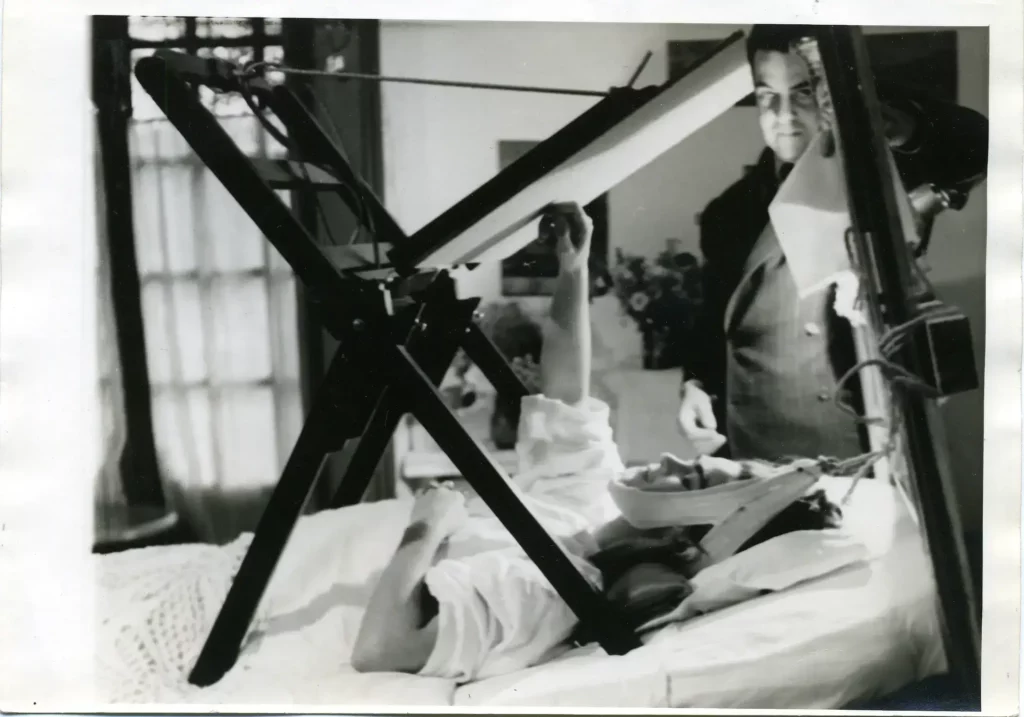
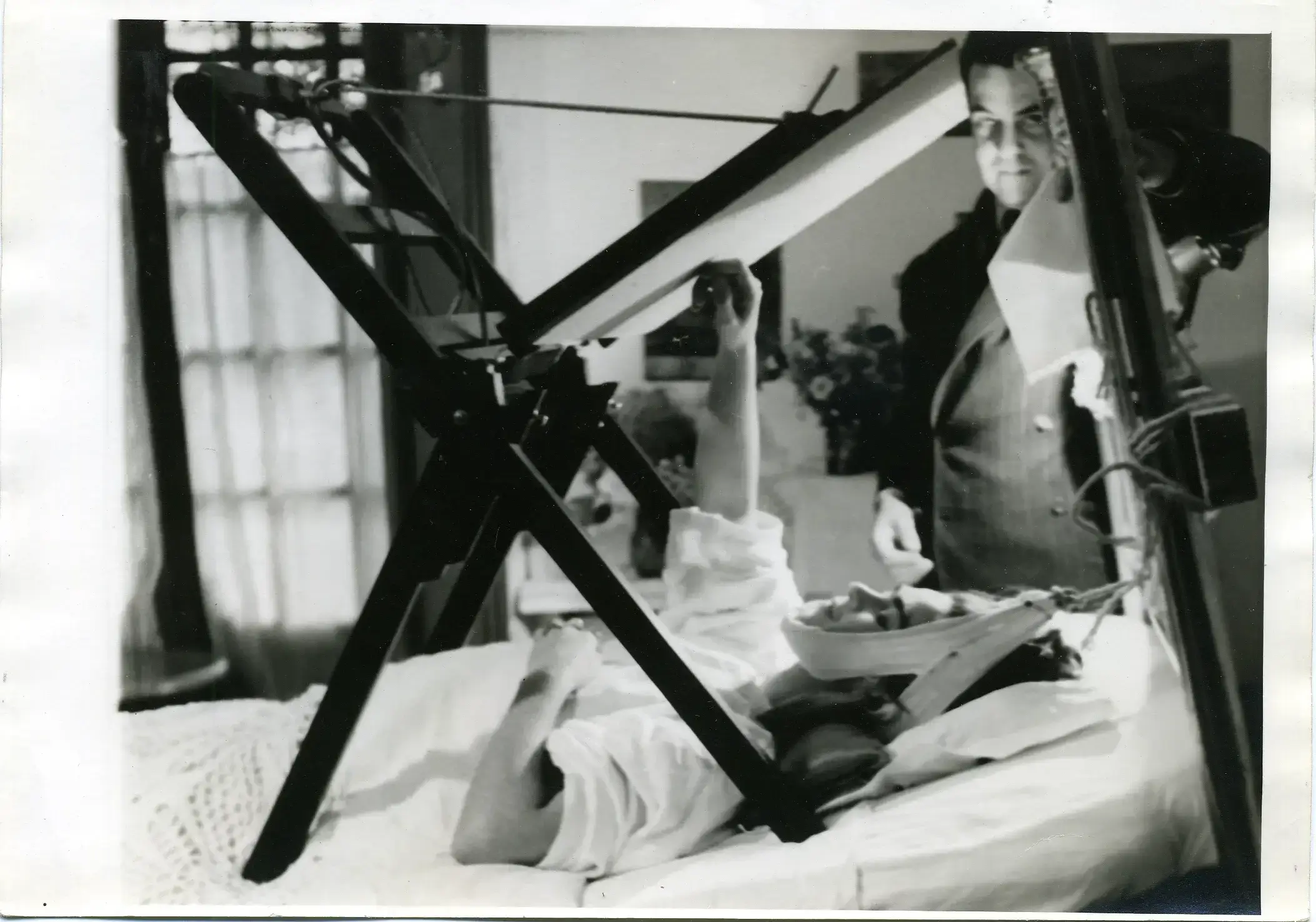
In her own words, from her personal diary (1950–1952), she recalled that her father had long kept a box of oil paints, some brushes, and a palette tucked away in a corner of his small photography studio, and that she had always had her eye on that box of paints. Spending so much time in bed while ill, she took the opportunity to ask her father for it, and her mother had a carpenter build an easel that could be fitted onto her bed, since the plaster cast she wore wouldn’t let her sit up, and that was how she began painting her first picture, a portrait of a friend of hers.
After the accident, Frida regained the ability to walk, but the event marked her for the rest of her life. Because of her injuries, she underwent more than thirty surgeries and various treatments throughout her life, with pain and fatigue remaining constant companions.
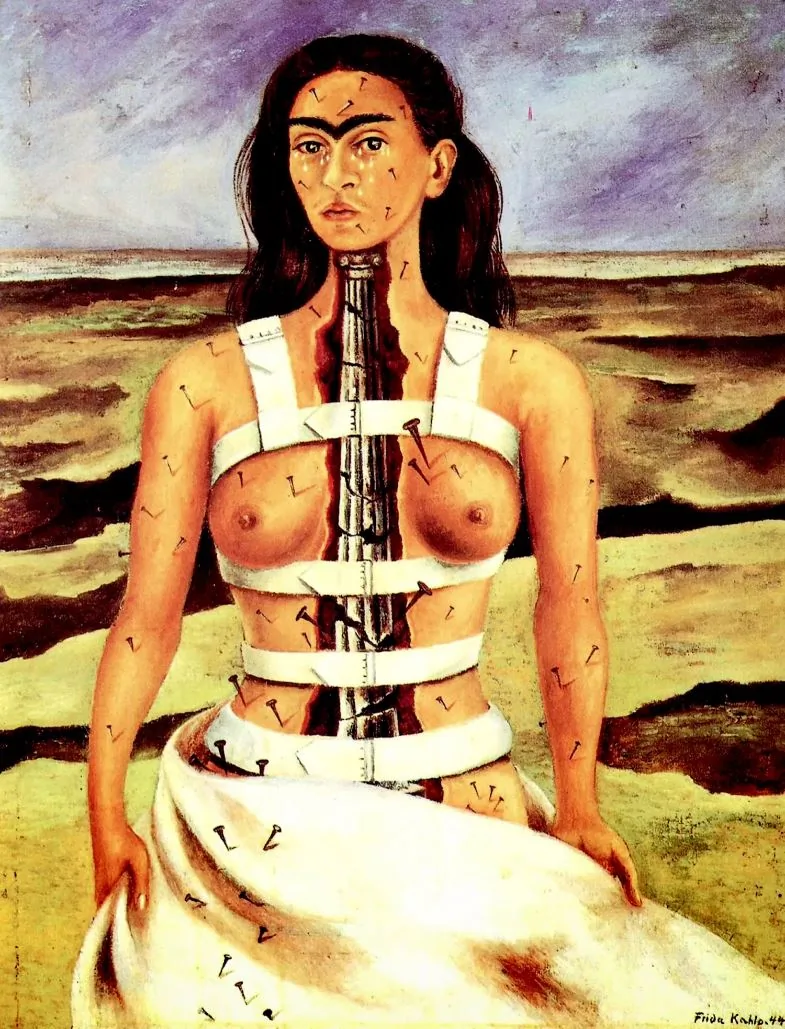
That “state of pain” brought her close to the renowned surgeon, medical advisor, and friend, her “dear little doctor,” as she called him, Leo Eloesser, whom she met in the United States in 1931. Her oil paintings El venado herido (“The Wounded Deer”) and La columna rota (“The Broken Column”) reflect the physical pain she endured.
Later research suggests that the true cause of Frida’s chronic condition was a rheumatic disease unknown at the time, called post-traumatic fibromyalgia, which causes fatigue, pain, and periarticular stiffness in the muscles and bones, sleep disturbances, and tender points in well-defined anatomical areas.
Frida Kahlo at ABC Medical CenterIn 1950, Frida underwent seven spinal surgeries and remained hospitalized for nine long months, under the care of Dr. Juan Farill. She was ultimately left with no choice but to rely on a wheelchair to continue her “normal” life.
Writing about her time at ABC Hospital in 1950, during one of the dozens of surgeries that followed, she noted in her diary that she had been sick for a year, undergone seven surgeries on her spine, and that Dr. Farill had saved her.
During her stay at Hospital ABC, Frida was in a difficult situation: her health was extremely fragile, and she couldn’t move easily. Even so, this didn’t stop her from remaining the creative artist she had always been, not even being confined to bed kept her from continuing to paint and draw with whatever materials and surfaces she had available. Proof of this is Portrait of Frida’s Family (unfinished), one of the paintings she created during this time, which she reworked several times up until her death.
In this piece, we can see her father, Guillermo Kahlo, her mother, Matilde Calderón, and her paternal grandparents, of Hungarian-German descent, along with her maternal grandparents, of Mexican descent. Also shown, from left to right, are her sisters Matilde and Adriana, Frida herself, and her sister Cristina, along with Cristina’s children, Isolda and Antonio, and one other unidentified figure. It’s also worth noting that between Adriana and Frida appears the enigmatic figure of a baby—perhaps representing the brother Frida lost before she was born.
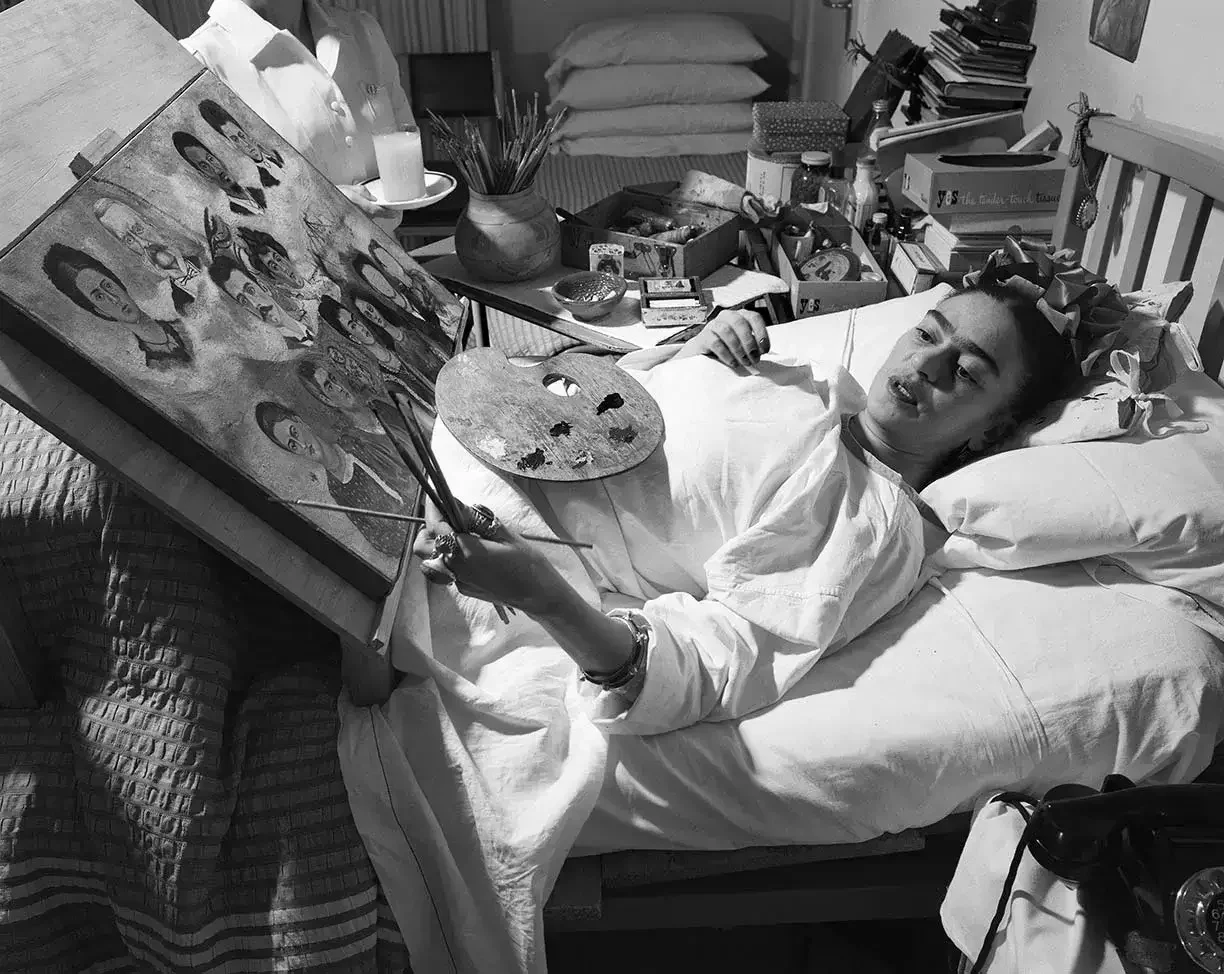
Frida Kahlo painting “Portrait of Frida’s Family,” Juan Guzmán, 1950–1951
As a tribute to her work, Lola Álvarez Bravo organized an exhibition in April 1953 at the Galería de Arte Contemporáneo in Mexico City, which drew a large crowd. Attendees heard a siren and watched an ambulance arrive with a motorcycle escort: lying on a hospital bed, the artist made her way to the center of the gallery. Throughout the afternoon, she greeted her admirers, told jokes, sang, and drank. The opening was a resounding success, and, in the eyes of many, a surrealist act in its own right.
Shortly afterward, due to gangrene that developed in her right foot, Dr. Farill was forced to amputate her leg. Deeply depressed, she attempted suicide. Her diary bears witness to her pain; its final pages express that she was looking forward to leaving this world, joyfully, and hoped never to return.
It wasn’t until a year later, due to bronchopneumonia, that she passed away on July 13, 1954, at the Casa Azul in Coyoacán, the house where she was born, and where her ashes remain today.