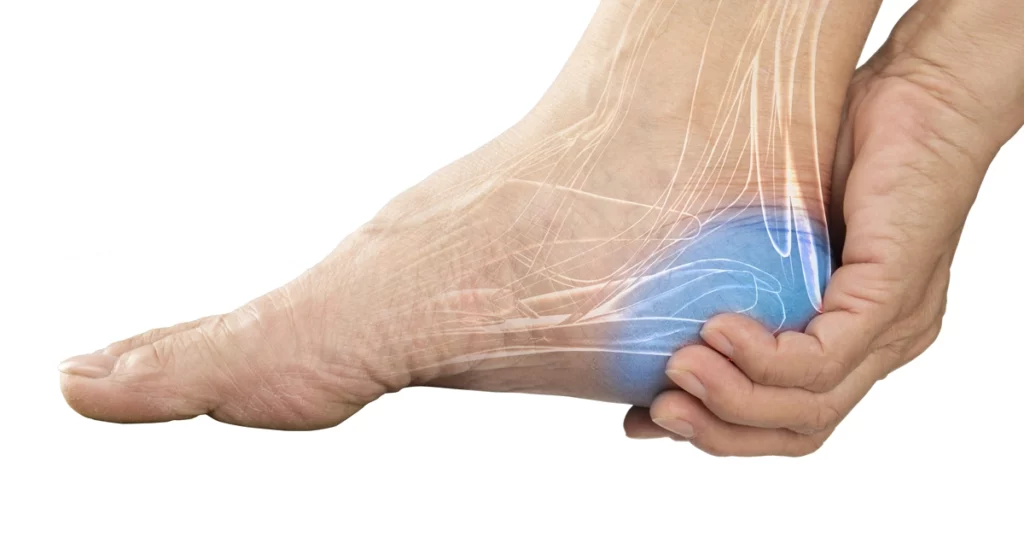
A heel spur is a type of bone spur, an abnormal bony growth that develops around the heel bone. It most commonly results from prolonged stress on the foot’s ligaments and tendons, leading to new bone formation. Ill-fitting footwear is a frequent contributing factor and can make the condition significantly more painful.
Several factors contribute to the development of heel spurs:
- Repetitive stress and overuse: Activities that place excessive strain on the feet, such as running or standing for extended periods, increase the risk.
- Poor foot biomechanics: Structural issues such as high arches or flat feet alter weight distribution and place added stress on the heel.
- Inadequate footwear: Shoes that lack proper support or cushioning contribute directly to the development of heel spurs.
- Aging: As a person ages, the plantar fascia naturally becomes less flexible and more susceptible to damage, increasing the likelihood of developing a heel spur.
Heel Spur Symptoms
A heel spur can present with a range of symptoms, though the most common include:
- Sharp pain in the heel, particularly in the morning or after a prolonged period of rest
- Pain that worsens with weight-bearing activities such as walking or standing
- Tenderness and swelling in the affected area
- Difficulty walking due to persistent discomfort
Heel Pain: Not Always a Heel Spur
Before assuming that heel pain is caused by a spur, it is worth noting that this area of the foot is prone to a variety of conditions, ranging from mild discomfort to severe, debilitating pain.
While heel spurs are among the most common causes of heel pain, other conditions may also be responsible:
- Plantar fasciitis: Inflammation of the plantar fascia, the thick band of tissue connecting the heel to the rest of the foot. This condition is frequently associated with heel spurs, and both may coexist.
- Achilles tendinitis: Inflammation of the Achilles tendon, located at the back of the heel.
- Heel bursitis: Inflammation of the bursa, a small, fluid-filled sac that cushions the bones and tendons near the heel.
- Stress fracture: Small cracks in the heel bone caused by repetitive overuse.
Heel Spur Treatment
The goals of treatment are to relieve pain, reduce inflammation, and address the underlying causes of the condition.
Depending on the patient’s individual circumstances, one or more of the following approaches may be recommended:
- Rest: Avoiding activities that aggravate the pain and allowing the foot time to recover.
- Ice therapy: Applying ice to the affected area to reduce inflammation and ease discomfort.
- Medication: Anti-inflammatory medications or corticosteroid injections may be prescribed to manage pain and swelling.
- Stretching exercises: Targeted stretching improves the flexibility of the plantar fascia and the surrounding foot muscles.
- Physical therapy: A physical therapist may be involved to help restore proper foot function.
- Orthotic insoles: Specially designed insoles are a cornerstone of heel spur management.
- Surgery: In more severe cases where conservative treatments have not provided sufficient relief, surgical intervention may be considered.
For the best outcomes, treatment may involve input from specialized physicians, such as an orthopedic specialist or a rheumatologist, when the spur is related to an inflammatory or arthritic condition.
Orthotic Insoles for Heel Spurs
Orthotic insoles help provide support and cushioning to the foot, relieving pressure on the heel and reducing pain. Choosing the right insole requires professional guidance. The most commonly used types include:
- Arch support insoles: Help distribute body weight more evenly across the foot.
- Cushioned insoles: Designed to absorb the impact of each step and reduce strain on the heel.
- Silicone or gel insoles: Provide additional cushioning and are especially beneficial for individuals who spend long hours on their feet.
- Custom orthotics: Made with the guidance of a podiatrist, these offer a personalized level of support and fit tailored to each patient’s specific needs.
Before selecting any type of insole, seeking medical evaluation is important, not only to treat the heel spur itself, but also to identify and address the underlying causes driving it.
Heel spurs are a common condition that, while capable of causing significant discomfort, can be effectively managed through a range of conservative or, when necessary, surgical treatments.
ABC Medical Center’s Orthopedics and Traumatology Center offers specialized care. Contact us today!