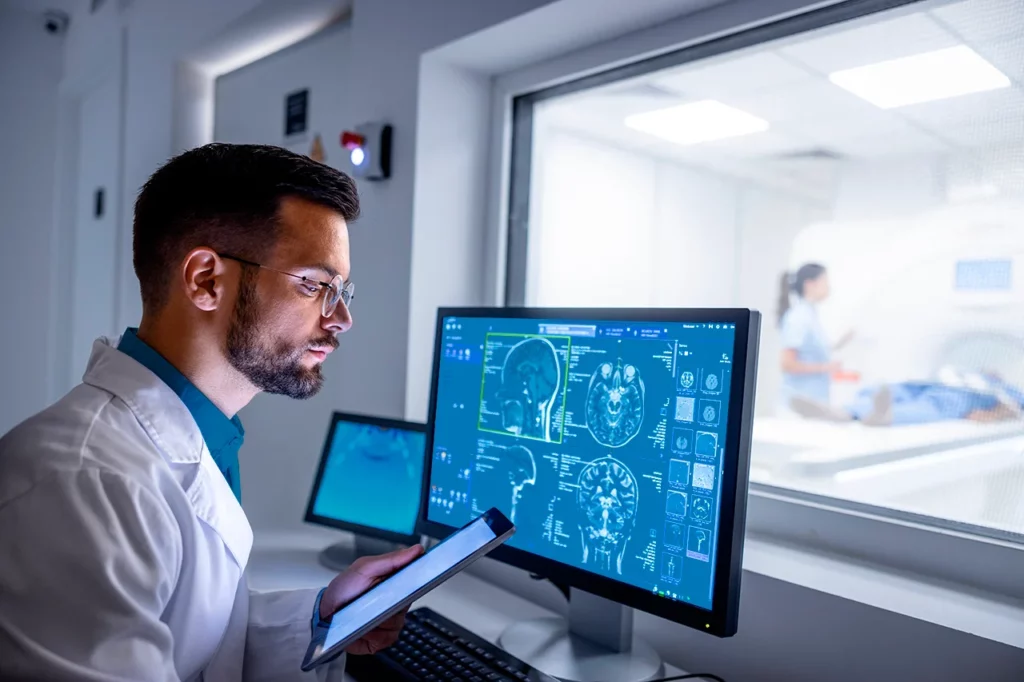
Neuroradiology is a medical subspecialty that has helped revolutionize both the diagnosis and treatment of neurological diseases.
It uses advanced imaging techniques that allow detailed visualization of the brain, spinal cord, and peripheral nervous system.
Neuroradiology combines neurology and radiology to interpret imaging studies of the nervous system.
Techniques used in this subspecialty include magnetic resonance imaging (MRI), computed tomography (CT), and angiography, together forming part of comprehensive radiologic imaging.
The neuroradiologist interprets these studies to diagnose conditions such as aneurysms, strokes, brain tumors, multiple sclerosis, and other disorders that affect the nervous system.
What is a neurologist
Neurology is one of the specialties that plays a key role in neuroradiology. A neurologist specializes in diagnosing, treating, and managing disorders of the nervous system, including the brain, spinal cord, and peripheral nerves.
Neurologists evaluate clinical symptoms and perform physical and neurological examinations to diagnose conditions such as migraines, neurodegenerative diseases, epilepsy, or peripheral neuropathies, among others.
Radiologist
The other specialist involved in neuroradiology is the radiologist; this physician uses imaging techniques to diagnose and, in some cases, treat different diseases.
Radiology is an essential discipline in modern medicine, enabling early disease detection and monitoring treatment response.
Interventional neuroradiology
Interventional neuroradiology provides minimally invasive treatment options for certain neurological conditions.
This is achieved through image-guided techniques that allow direct intervention in nervous system structures and blood vessels. For example, interventional neuroradiology can be used to guide a catheter into an artery affected by a brain aneurysm, avoiding open cranial surgery.
Mechanical thrombectomy helps treat ischemic strokes; vertebroplasty is used to treat vertebral compression fractures, such as those caused by osteoporosis; and angioplasty can be performed to open narrowed carotid arteries.
The use of neuroradiological techniques has drastically reduced the need for invasive surgical procedures, resulting in safer alternatives, shorter recovery times, fewer surgical complications, and shorter hospitalizations.
Neuroradiologists near me
At ABC Medical Center’s Neurology Center, we have a team of highly trained neuroradiology specialists dedicated to providing comprehensive, personalized imaging care.
Our neuroradiologists in Mexico City are committed to your well-being and use the latest technology and advanced treatments to manage conditions such as brain aneurysms, arteriovenous malformations, brain tumors, and more.
Fuentes:
Elsevier, SENR, MedlinePlus