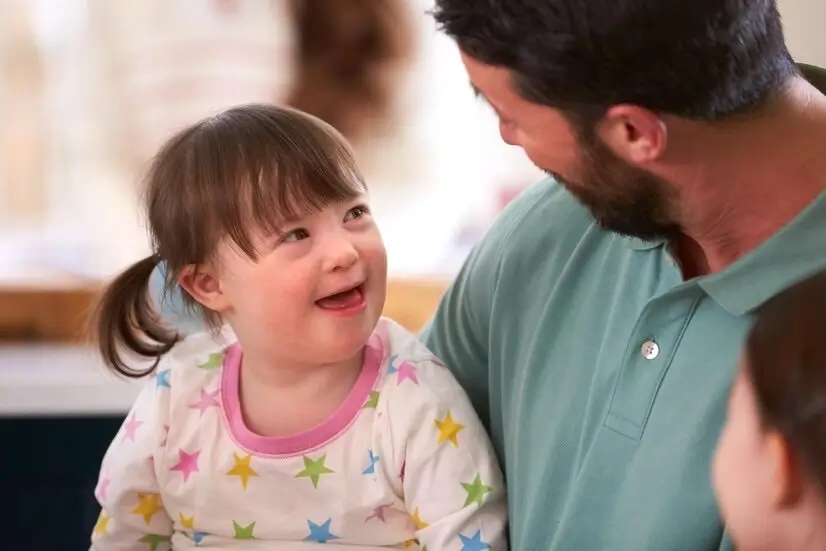
Down syndrome is a genetic condition that occurs when a person develops an extra copy of chromosome 21, which can result in distinctive physical features and some medical characteristics.
Why are babies born with Down syndrome?
To answer the question of what Down syndrome is, we must first talk about chromosomes. Chromosomes are structures made up of DNA and proteins that contain a large amount of genetic information, including how the body will form and function.
In general, babies are born with 46 chromosomes, which are 23 pairs and provide functions such as regulating growth, controlling the cell cycle, immune system functions, hormonal regulation, among many other characteristics.
Chromosome 21, which is related to Down syndrome, is normally involved in brain functions, metabolism, and growth.
Babies with Down syndrome have an extra copy, either complete or partial, of chromosome 21. This is known as trisomy 21 and means they have three copies of chromosome 21 instead of the usual two.
This extra chromosome disrupts the person’s normal development and affects their physical appearance, mental abilities, and development.
What causes Down syndrome?
To this day, the cause of trisomy 21 is not fully understood, but some risk factors have been identified:
- Maternal age: there are higher risks of having a baby with Down syndrome if the mother is over 35 years old.
- Environmental factors: to a lesser extent, it has been observed that some environmental factors such as exposure to toxic substances or certain types of radiation can slightly increase the risk of developing this syndrome.
- Genetic factors: Down syndrome is not strictly hereditary, but it is possible that one of the parents has a balanced chromosomal alteration that does not affect them, but does increase the risk of having a baby with this syndrome.
It’s important to understand that, although these risk factors can increase the likelihood of developing trisomy 21, they are not exclusive and not everyone with one or more of these factors will have a child with Down syndrome, nor are all people with Down syndrome related to these factors.
Characteristics of a person with Down syndrome
Children with Down syndrome will have distinctive physical and cognitive characteristics, but these may vary in intensity from person to person and it is not necessary to present all of them.
In Down syndrome, features such as:
- Facial features: there are distinctive facial features such as almond-shaped eyes with skin folds at the inner corners (epicanthal folds); flat nose, small mouth, larger than normal tongue that may protrude from the mouth, small ears with a slightly different shape from other people.
- Physical development: a person with Down syndrome usually has a shorter stature than average and lower muscle tone, which may result in coordination problems; hands and feet also tend to be smaller.
- Cognitive development: they often have a delay in cognitive development, affecting both learning and intellectual development; the degree can vary considerably and can range from mild to moderate.
- Communication skills: frequently, a person with Down syndrome may have difficulty articulating the face, which can affect communication and language skills.
- Health problems: unfortunately, people with this syndrome have a higher risk of developing health issues such as thyroid problems, congenital heart defects, hearing and vision problems, or gastrointestinal problems.
It is also important to understand that each person with Down syndrome has their own personality, interests, and abilities, so, like everyone else, they are unique individuals with particular tastes.
With the right support, in many cases, a person with Down syndrome can live a full and integrated life in the community.
At how many months can Down syndrome be detected?
To diagnose Down syndrome, the doctor may perform prenatal care through different tests.
Prenatal screening tests
These tests show whether there is a probability that the baby has Down syndrome; here only the risk is determined.
Screening can be done from the first trimester with a clinical blood test that looks for markers in certain proteins related to Down syndrome in the mother. Ultrasound can also look for fluid at the back of the baby’s neck, which has been associated as a sign of this syndrome.
During the second trimester, another blood test can also be performed, focusing on three or four markers.
Based on the first and second trimester tests, an estimated risk of Down syndrome will be indicated.
Prenatal diagnostic tests
If a diagnosis is sought, a test can be performed to check the chromosomes in a sample of cells. These tests have a small risk of causing miscarriage, so they are only done after the screening test and if the specialist deems it necessary.
Diagnosis after birth
If Down syndrome was not detected, for any reason, before birth, the doctor can make a diagnosis after birth by observing the physical characteristics related to this condition. Genetic tests can also be performed to confirm.
Treatment for Down syndrome
As a genetic condition, Down syndrome has no cure, so treatment will depend on the specific manifestations presented by each patient, whether due to congenital heart disease, hypothyroidism, speech problems, etc.
Beyond this, medical care and follow-up, inclusive education, emotional and social support, and training for independence should also be included.
With the proper support, people born with Down syndrome can live a full and adequate life.
In the Obstetrics area of the Women’s Center at Centro Médico ABC we can provide specialized care for prenatal detection of Down syndrome. Contact us!
Fuentes:
MedlinePlus, MSD Manuals