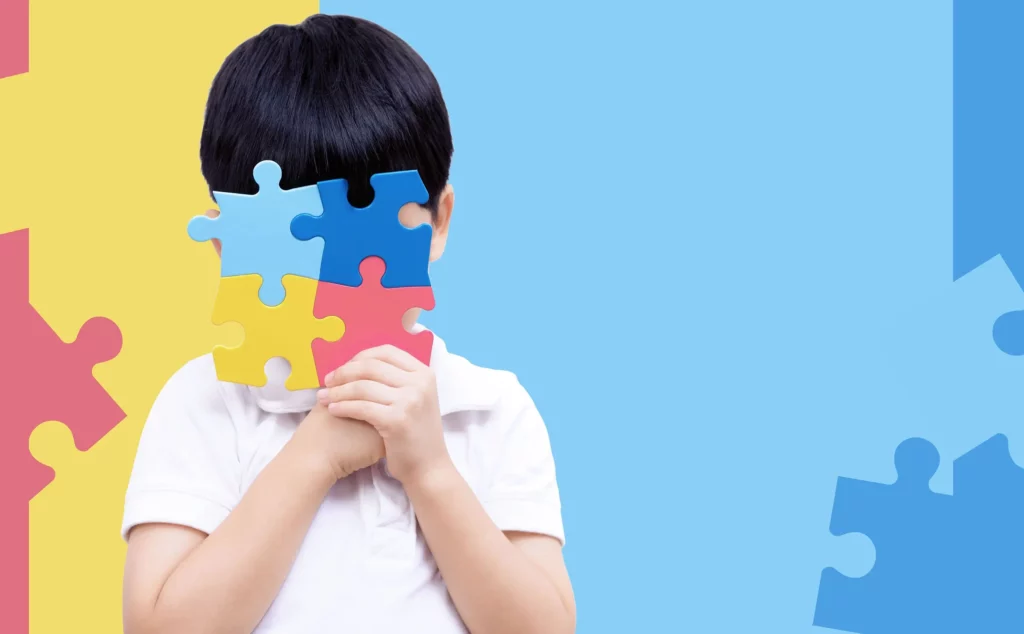
The autism in children, and also in adults, is a condition related to brain development that affects perception and sociability, causing difficulties in communication and social interaction.
A person with autism spectrum disorder may also present repetitive and restricted behavior patterns, as well as different ways of moving, learning, or paying attention.
Although there are adults with Autism Spectrum Disorder (ASD), commonly known as autism, it is during the early years of childhood when it usually begins, generally in the first year of life, without ruling out cases in which development occurs between 18 and 24 months of age.
What is autism in children?
Autism is not a disease, but rather a disorder in the development of brain functions, which is why there is no cure; however, it is possible to achieve a reduction in the behaviors caused by this disorder.
Symptoms in children with autism
In general terms, children with autism present some common characteristics, although the level of intensity may vary:
- Difficulty with social interaction.
- Lack of empathy.
- Language characteristics that may make understanding difficult; speech may also seem very formal or pedantic.
- Difficulties with nonverbal communication.
- Motor clumsiness.
- Literal interpretation of messages; they do not understand jokes, irony, or double meanings.
- Overreaction to sensory stimuli such as sounds, textures, lights, or even foods.
- Repetitive or stereotyped movements, which are repetitive movements without a clear purpose.
- Difficulty recognizing the emotional states of others, which may result in indifference to their emotional states, although they can develop affection in their own way.
Autism and its treatments
As previously mentioned, autism spectrum disorder has no cure, but there are treatments aimed at reducing symptoms and, consequently, improving daily functioning and quality of life.
Each child with autism experiences a unique and individual situation, which is why it is often necessary to include multiple areas in the treatment plan and possibly involve several professionals working together.
Among the most common treatments are:
- Behavioral: seeks to change behavior by understanding what happens before, during, and after the behavior.
- Developmental: focused on improving skills such as physical abilities and language.
- Educational: this type of treatment is used in the classroom and is based on helping the child reach their maximum potential through consistency and visual learning.
- Pharmacological: although there is no medication specifically for ASD, some medications may be used to manage energy levels, concentration, or prevent self-harm.
- Psychological: help manage anxiety, depression, and other mental health–related problems.
- Social: aim to improve social skills and create emotional bonds.
- Complementary: depending on the case, some children may receive alternative treatments such as animal-assisted therapy, art therapy, chiropractic care, among other options.
Tips for caring for a child with autism
Having a son or daughter with autism can be very overwhelming for parents, but there are some tips that can help manage this situation more easily:
- Seek an early professional diagnosis if you notice that the child’s behavior or development is unusual or different from what is expected.
- Each child within the autism spectrum has particular characteristics, therefore no single treatment is suitable for all cases. An individualized plan must be developed.
- Early intervention by specialists increases the possibility of reducing symptoms.
- Patience and consistency in caring for a child with autism can help foster reciprocity between parents and the child.
- It is common for the child to be unaware of dangers or even pain. As a parent, it is important to keep dangerous items out of their reach.
- It is important to use rewards to encourage good behavior, learning a new skill, or behaving appropriately.
- A parent should never assume that their child is insensitive or does not have emotions; they simply express them differently. For this reason, it is important to learn and encourage a bonding language with the child.
At the Neurological Center of ABC Medical Center, we can provide you with specialized care. Learn more about autism in children. Contact us!
Fuentes:
American Academy of Pediatrics, The Nemours Foundation