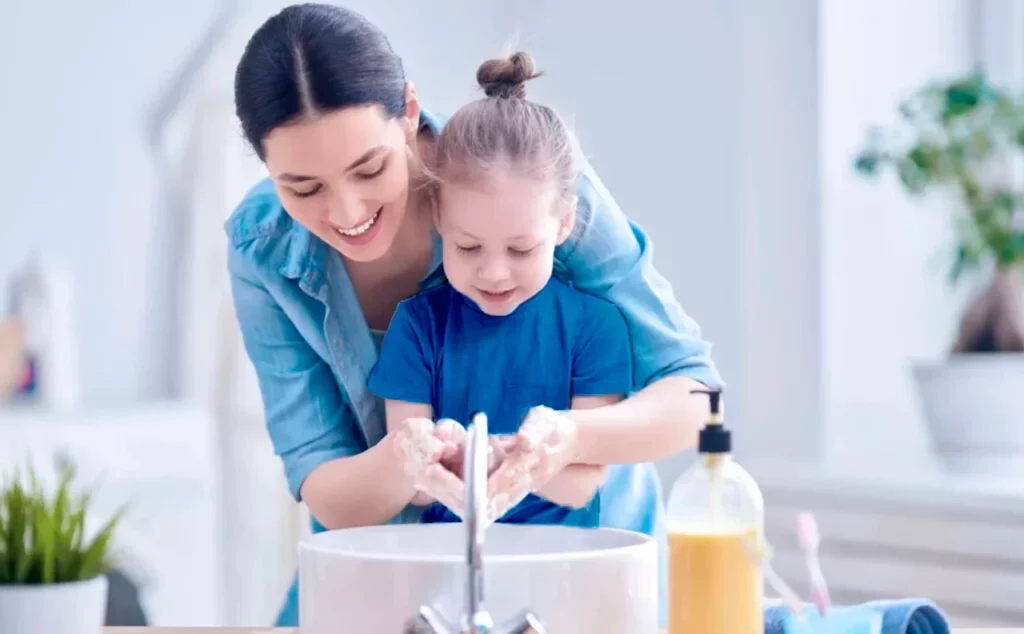
Hygiene habits for children are a series of practices that bring great benefits throughout their growth and adult life. Good hygiene is essential to prevent the spread of various infectious diseases.
Personal Hygiene
As a basic concept, personal hygiene habits for children include body care, cleanliness, and grooming, all aimed at maintaining or improving health and preventing possible illnesses.
Establishing solid foundations is key to developing good hygiene habits in children, and this becomes a fundamental responsibility for parents or caregivers.
Hygiene goes beyond simply washing hands and brushing teeth, it also involves teaching children how to bathe properly, how to clean each part of their body correctly, which products or tools they need, and how to dry themselves afterward.
After taking a shower, they should have clean clothes ready to wear and know where to place dirty laundry. These small steps help foster cleanliness and responsibility.
Types of Hygiene
Caring for teeth, nails, and hair are other essential areas of hygiene. Overall, the main hygiene practices for children include:
- Changing underwear and clothes every day.
- Washing hands before eating.
- Cleaning ears carefully.
- Keeping shoes and clothes clean.
- Keeping nails clean and trimmed.
- Bathing after moderate or intense physical activity to remove sweat and dirt.
Beyond personal cleanliness, children should also maintain good hygiene at home and school. Keeping the house, study area, and personal belongings clean not only promotes a pleasant environment but also reduces the risk of illness.
While parents are primarily responsible for a child’s health and hygiene, as children grow, they can learn and gradually adopt these habits on their own.
Some key practices to teach children include:
- Wash hands with soap and water before eating or preparing food, after using the bathroom, or after touching dirty or potentially contaminated items.
Daily showers.
Brush teeth after every meal.
Cover the nose when coughing or sneezing.
Sort trash properly.
Never litter outside trash bins.
Keep their surroundings clean and organized.
Bathe pets regularly.
Drink purified water.
Disinfect fruits and vegetables before eating.
Depending on each child’s age, these and other habits can be taught and reinforced, not only to maintain good hygiene but also to instill lifelong healthy behaviors.
Oral Hygiene for Children
Oral hygiene is fundamental from the earliest years of life. It should include a consistent cleaning routine, regular check-ups with a pediatrician or pediatric dentist, and an age-appropriate diet.
It is recommended that children begin dental check-ups at around six months of age and continue every six months to monitor oral development and detect issues such as cavities early.
Diseases Caused by Poor Hygiene
If children do not maintain proper personal and environmental hygiene, they may develop conditions such as diarrheal diseases, dental cavities, fungal infections, influenza, COVID-19, or scabies, among others.
Maintaining good hygiene habits, together with an up-to-date vaccination schedule, helps ensure that children live as healthily as possible during their development.
At the ABC Medical Center’s Pediatrics Center, we can provide you with specialized care. Contact us!
Fuentes:
UNICEF, IMSS, Children’s Health