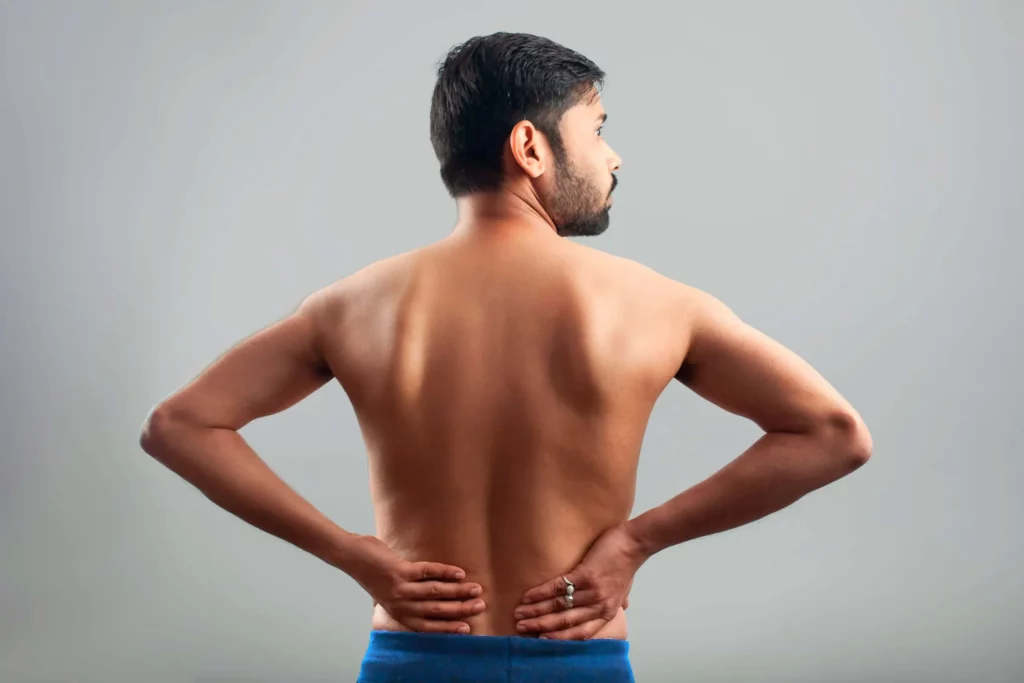
Lumbar scoliosis is an abnormal lateral curvature of the spine located in the lumbar region, the lower portion of the vertebral column.
The lumbar spine is one of three sections into which the vertebral column is divided for study. It forms the lower back and consists of five lumbar vertebrae. Scoliosis can develop in any region of the spine, and when it occurs in this lower section, it is specifically referred to as lumbar scoliosis.
Lumbar scoliosis describes a spinal curve that may take on either a “C” or “S” shape, and its severity can range from mild to severe.
What Causes Lumbar Scoliosis?
Lumbar scoliosis can arise from several different causes, which are generally grouped into four categories:
- Idiopathic: The most common type, with no identifiable cause. It most frequently develops during adolescence and, while its specific origin has not been determined, genetic or hereditary factors are believed to play a role.
- Congenital: Present from birth, resulting from a malformation of the vertebrae that occurs during fetal development, such as incomplete vertebral formation or abnormal vertebral fusion.
- Degenerative: Occurs primarily in older adults and develops as a result of wear and deterioration of the joints or intervertebral discs due to aging, arthritis, or osteoporosis.
- Neuromuscular: Associated with underlying conditions affecting the muscles or nerves, such as spinal muscular atrophy, cerebral palsy, spina bifida, or muscular dystrophy.
Other possible causes include trauma, infections, tumors, prior surgeries, and uneven growth rates in the lumbar region of the spine.
Symptoms of Lumbar Scoliosis
Symptoms vary depending on the severity of the condition and its underlying cause. The most common signs include:
- Physical asymmetry: In lumbar scoliosis, one leg may appear longer than the other due to the spinal imbalance.
- Lower back pain: Either persistent or intermittent.
- Postural problems, limited range of motion, and fatigue.
In severe cases, neurological symptoms may also develop, including leg weakness, numbness, or loss of coordination, due to nerve compression from the abnormal curvature.
Can Lumbar Scoliosis Be Cured?
In most cases, particularly when the curvature is significant, lumbar scoliosis does not have a definitive cure. However, a range of treatment options are available to manage symptoms and limit long-term consequences. For this reason, early and proactive treatment is the best approach, one that can substantially improve quality of life.
How Is Lumbar Scoliosis Treated in Adults?
Treatment depends on the underlying cause and is determined after a thorough diagnostic evaluation, which typically includes a medical history review and physical examination (visual inspection and palpation). Depending on the findings, an orthopedic surgeon or neurologist may order imaging studies such as X-rays, MRI, or CT scans.
Lumbar scoliosis and lumbar lordosis are sometimes confused before a definitive diagnosis is reached, but they are fundamentally different conditions. Scoliosis involves an abnormal lateral curvature of the lumbar vertebrae, typically forming a “C” or “S” shape when viewed from behind. Lordosis, by contrast, refers to the spine’s natural inward curve in the lower back, a normal and healthy feature of spinal anatomy. It is only when that inward curve becomes exaggerated that it constitutes a problem, at which point it is referred to as hyperlordosis.
Because lumbar scoliosis may be associated with neuromuscular conditions, neurological testing to evaluate nerve function may also be required.
Once a diagnosis has been established and the progression of the condition assessed, the physician can recommend the most appropriate treatment approach:
- Observation: In children and adolescents with mild curves, monitoring progression over time may be the only initial step needed. If advancement is minimal, no further intervention may be required.
- Physical therapy and exercise: For mild cases, stretching, targeted strengthening exercises, and rehabilitation can help improve lower back muscle strength and flexibility, relieve pain, and correct posture.
- Bracing: A spinal brace may be recommended for moderate lumbar scoliosis during adolescence to prevent the curve from worsening during periods of growth. It is important to note that bracing does not correct an existing curvature, but it can slow or halt its progression.
- Medication: While medications do not directly address scoliosis itself, they are a valuable tool for managing pain and inflammation when present.
- Surgery: In severe cases, surgical intervention may be necessary to correct or stabilize the spine. This typically involves the use of rods, screws, and other specialized orthopedic hardware.
While lumbar scoliosis cannot be prevented or cured outright, early diagnosis and appropriate treatment make it possible to manage the condition effectively, allowing patients to live with minimal pain and maintain their daily activities.
ABC Medical Center’s Spine Clinic offers specialized care for lumbar scoliosis. Contact us today!
Fuentes: MedlinePlus, StanfordChildrens.org, CIGNA