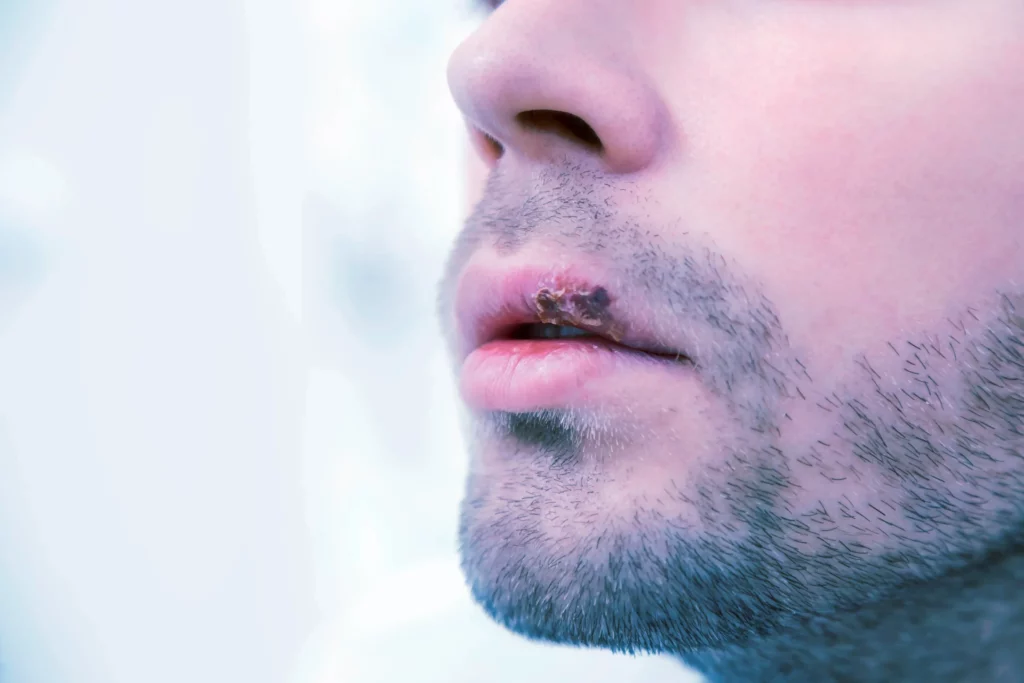
Herpes is an infection caused by the herpes simplex virus, which is where it gets its common name. In some cases, the infection goes completely unnoticed, while in others it produces painful ulcers or fluid-filled blisters. Its primary mode of transmission is skin-to-skin contact.
There are eight types of herpes viruses that can infect humans:
- Herpes simplex virus 1 (HSV-1)
- Herpes simplex virus 2 (HSV-2)
- Human herpesvirus 3
- Varicella-zoster virus
- Epstein-Barr virus
- Cytomegalovirus
- Human herpesvirus 6
- Human herpesvirus 7
- Kaposi’s sarcoma-associated herpesvirus
The two most common types are the herpes simplex viruses:
- HSV-1 (herpes simplex type 1): Typically spreads through oral contact and causes infections in and around the mouth, though it can also cause genital herpes.
- HSV-2 (herpes simplex type 2): The most frequent cause of genital herpes, though it can also infect the mouth.
An important point to understand about herpes simplex is that most adults have already been exposed to the virus, often with mild or no symptoms. In others, however, symptoms are noticeable and can be uncomfortable or painful.
What Triggers a Herpes Outbreak?
Herpes infection is common and can affect anyone, regardless of their lifestyle or daily habits.
In people who do develop symptoms, the infection typically appears as blisters, ranging from a single sore to several, which can emerge on the mouth, genitals, rectum, or even around the eyes. These blisters grow and eventually rupture, forming sores that generally heal within about a week.
Once an outbreak resolves, the virus becomes dormant, but it remains in the body permanently and can reactivate at any time. This is why herpes has no cure.
Outbreaks can occur sporadically or multiple times a year, and they are often preceded by a burning or tingling sensation in the area where the blisters will appear.
Can Herpes Be Treated?
As mentioned, there is currently no cure for herpes. However, antiviral medications are available that can help prevent outbreaks, reduce their frequency and duration, speed up the healing of sores, and lower the risk of transmitting the virus to others. Some of these medications are taken daily as suppressive therapy.
What About Topical Treatments for Oral Herpes?
For cold sores (oral herpes), certain antiviral creams can help manage initial outbreaks or treat certain types of ulcers. To be effective, the topical treatment must be antiviral and specifically designed to inhibit the virus’s spread in the affected tissue.
Herpes Simplex vs. Herpes Zoster: What’s the Difference?
A common source of confusion is the distinction between herpes simplex and herpes zoster, also known as shingles.
Herpes simplex generally causes blisters that, while recurring over time, are typically not a serious health concern for most people. Herpes zoster, on the other hand, is a distinct condition that occurs only once in a lifetime, usually in people over 50, and represents a reactivation of the varicella-zoster virus, the same virus that causes chickenpox. While shingles can be a serious and potentially severe illness in immunocompromised individuals, it is generally not dangerous for otherwise healthy people.
ABC Medical Center’s Internal Medicine Department offers specialized care for herpes and related conditions. Contact us today!
Fuentes
MedlinePlus, MSD Manuals, NIH