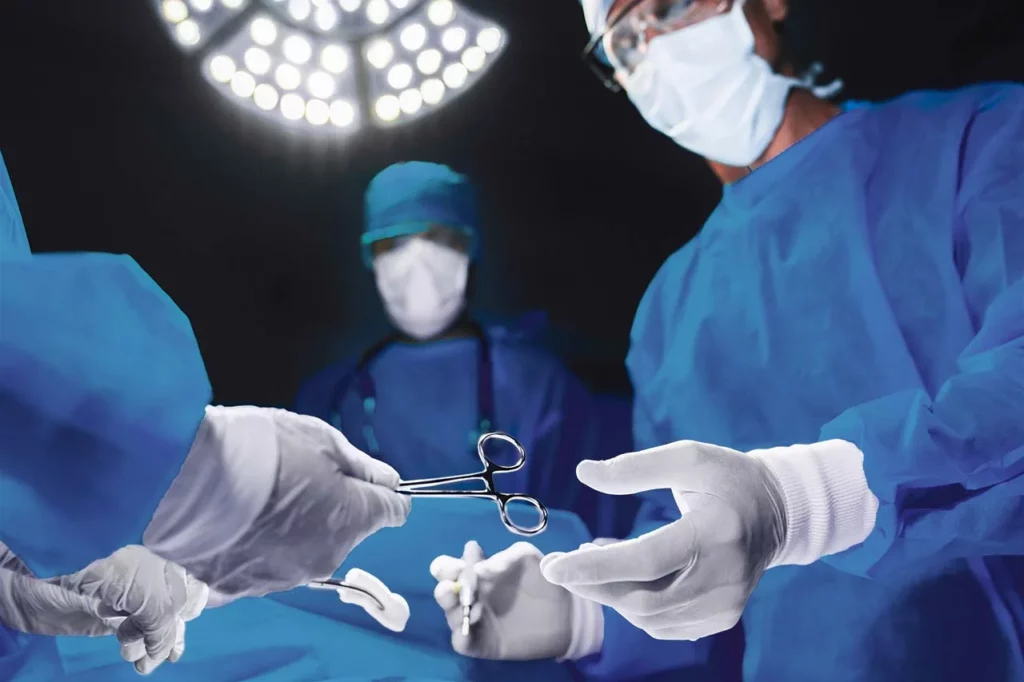
Cardiac surgery is a medical specialty that treats serious heart conditions through surgical procedures to repair damaged structures or correct congenital heart diseases that put the patient’s health at risk.
Heart surgery
Heart surgery, properly called cardiac surgery, refers to any type of surgical procedure performed on the heart as well as on the nearby great vessels, with the goal of improving organ function and preventing future cardiac problems.
The heart is one of the most important organs in the human body and can be affected by various diseases or conditions that compromise its proper functioning.
Given the complexity of these conditions and the vital importance of the organ, the cardiac surgeon is a specialist in high-risk interventions. The cardiac surgeon is the specialist who provides this type of care, while pediatric cardiac surgery does the same but for young patients who are still in their developmental stage.
Although technological advances and surgical techniques are becoming safer and more effective every day, the decision to subject a person to this type of intervention currently requires careful evaluation to identify the risks and benefits.
Serious heart diseases
Although many conditions affect the health of the heart and nearby vessels, not all require surgical treatment. However, among the most common that do require surgery are:
- Coronary Artery Disease (CAD): one of the most common reasons for cardiac surgery. It occurs when the arteries that supply blood to the heart become blocked or narrowed by plaque buildup, preventing the heart from receiving enough oxygen and causing angina, heart failure, or myocardial infarction.
- Congestive Heart Failure: a syndrome that occurs when the heart cannot pump blood effectively to meet the body’s needs; surgery may be indicated as a treatment option in advanced cases.
- Damaged Heart Valves: the heart has four valves that control blood flow through its chambers. Due to infections, aging, or other diseases, these valves may become damaged and require repair or replacement.
- Congenital Heart Defects: a congenital defect is considered to be any abnormality present from birth that, in this case, affects the structure of the heart; among the most common defects are atrial septal defects (ASD) and ventricular septal defects (VSD).
Types of heart surgery
Because multiple conditions may require cardiac surgery, there are different surgical approaches to address them. Some of the most common procedures include:
- Coronary bypass surgery: one of the most widely used procedures to treat coronary artery disease. A blood vessel from another part of the body is used to create a bypass around the blocked artery and restore blood flow to the heart; this may be considered, in simple terms, a type of surgery to unblock heart arteries.
- Heart valve repair or replacement: depending on the severity of the case, heart valve surgery may be performed to repair the valve and preserve the heart’s original structure. If repair is not possible, a mechanical or biological prosthesis is used for replacement.
- Heart transplant: this surgery replaces a damaged or diseased heart with a healthy heart from a deceased donor. It is intended for patients with end-stage heart failure and only when other treatments have not been successful.
- Aortic aneurysm repair: consists of removing the weakened and bulging portion of the aorta and replacing it with a synthetic graft; this procedure is essential to prevent a rupture that could be fatal.
Other procedural options include cardiac catheterization or surgery for cardiac arrhythmias.
A term frequently heard is open-heart surgery, which may be performed on adults, children, or even infants. In reality, this is not a specific type of surgery, but rather a procedure in which an incision is made in the chest, allowing surgeons to perform operations such as coronary artery bypass surgery.
On the other hand, minimally invasive surgery has also become an option that allows procedures to be performed through smaller incisions, providing faster recovery and less pain.
Cardiac surgery is a specialty that makes it possible to save lives in patients for whom other conservative treatments have not been effective. However, because it is a high-risk area, it is always considered the last option among treatment alternatives.
Cardiac surgeon near me
At ABC Medical Center’s Cardiovascular Surgery department, we have a team of highly trained cardiac surgery specialists dedicated to providing comprehensive, personalized care for all your surgical needs.
Our specialists in cardiac surgery in Mexico are committed to your well-being and use the latest technology and the most advanced treatments to manage conditions such as coronary bypass, valve replacement, heart transplant, and more.
Fuentes:
NIH, MedlinePlus, Texas Hearth Institute